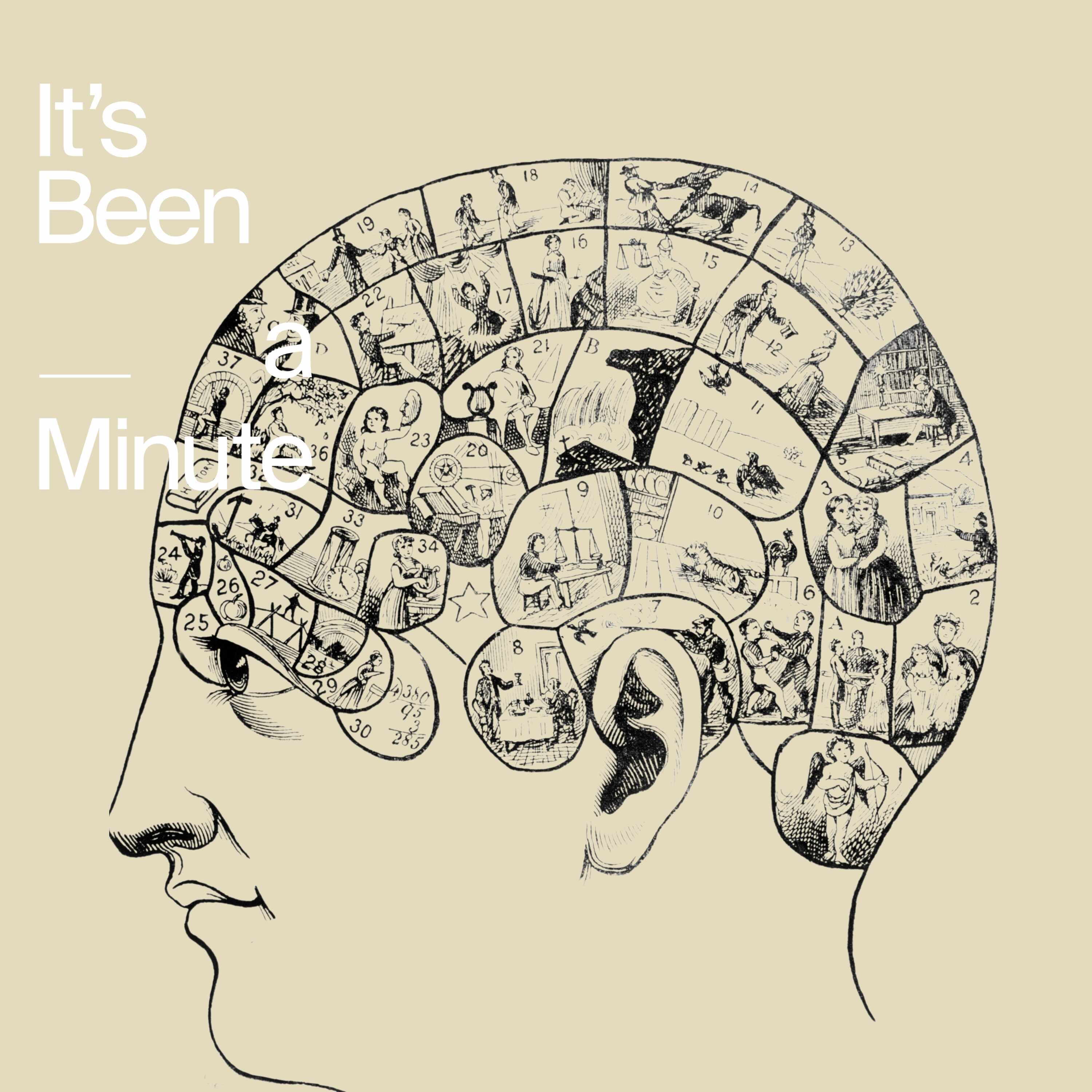
Overview of Does a high IQ make you smart?
This NPR crossover episode between Code Switch and It’s Been a Minute examines the cultural obsession with IQ, especially in politics and Silicon Valley, and asks a deeper question: what do we actually mean by “smart”? Through conversation with authors Quinn Slobodian and Angela Saini, the hosts trace IQ testing back to eugenics, unpack how IQ has been used to justify exclusion and inequality, and argue that intelligence is far broader than what a test score can capture.
Main Themes and Takeaways
IQ as a tool of power, not just measurement
- The episode argues that IQ has often been used less as a neutral metric and more as a way to rank, sort, and exclude people.
- In contemporary politics and tech, IQ language is used to:
- glorify elites,
- dismiss opponents as “low IQ,”
- justify meritocracy as if it were objective and natural.
- The hosts and guests suggest this reflects a broader commitment to inequality as normal, rather than a genuine belief in intelligence as a single measurable trait.
The historical roots: eugenics and “race science”
- Angela Saini explains that modern intelligence testing grew out of eugenics, especially through the work of Francis Galton.
- Early IQ ideas were tied to the belief that:
- intelligence is hereditary,
- some people should reproduce more than others,
- society should be organized around “breeding” better humans.
- This history matters because IQ testing has long been linked to racial hierarchy, not just academic evaluation.
The Bell Curve and the revival of IQ politics
- Quinn Slobodian discusses The Bell Curve (1995), which helped bring IQ discourse back into mainstream debate.
- The book argued that racial inequality and social inequality reflected natural, biological differences.
- The episode frames it as a major moment in the modern resurgence of IQ-based thinking in politics and media.
Silicon Valley’s fixation on measurable intelligence
- The episode critiques tech culture’s tendency to value:
- mathematical ability,
- coding skill,
- analytical speed,
- standardized test performance.
- Guests argue this is self-serving: it elevates the kinds of intelligence most prized by the tech industry while devaluing other forms.
- The result is a narrow vision of talent that fits a computerized economy, but not human life more broadly.
IQ tests are culturally loaded
- Angela Saini explains that IQ tests often reward specific cultural knowledge, not raw intelligence.
- Examples discussed include:
- questions based on literary references,
- vocabulary and cultural familiarity,
- assumptions shaped by upbringing and class.
- That means some groups are advantaged simply because the test reflects their environment and education.
Intelligence vs. knowledge vs. skills
- The hosts draw a useful distinction:
- Knowledge = what you’ve learned,
- Intelligence = how you process, solve, or adapt,
- Skills/talent = what you can do in practice.
- A person may be strong in one area and weak in another.
- The episode stresses that someone can be brilliant in ways that standardized tests do not recognize.
The “Black Intelligence Test of Cultural Homogeneity”
- The episode highlights Robert Williams’s 1972 test, created to expose how culturally biased standard IQ tests can be.
- One example question demonstrates how answers depend on cultural context, not universal intelligence.
- The point is that tests often reflect who the test-maker expects to know the material, not some pure measure of mind.
Environmental support matters
- Saini emphasizes that genetics does not determine everything.
- Childhood support, education, nutrition, care, and opportunity strongly affect outcomes.
- The episode pushes back hard against the idea that people or communities are fixed by biology and therefore not worth investing in.
AI and the new obsession with “superintelligence”
- The conversation expands from human IQ to AI.
- The hosts note the eerie parallel between:
- the fetish for ranking human intelligence,
- and the tech world’s worship of AI intelligence.
- They discuss how AI is increasingly framed as “superintelligence,” raising questions about whether machines are being treated as the next step beyond humans.
- The episode suggests this mirrors the same old logic: intelligence as the supreme value.
Notable Insights
On hierarchy and meritocracy
- IQ often functions as a “one number to rule them all,” but that number hides social inequality behind the appearance of objectivity.
- The episode argues that the real issue is not the score itself, but the belief that people can and should be permanently ranked.
On valuing different kinds of intelligence
- The hosts make room for forms of intelligence that are often ignored:
- emotional intelligence,
- practical intelligence,
- creativity,
- care work,
- physical and social know-how.
- These are real forms of capability, even if they are harder to quantify.
On why the question matters
- The episode makes clear that this is not just about testing.
- It is about:
- who gets access to power,
- which talents society rewards,
- and how “science” can be used to legitimize inequality.
Key Examples Mentioned
- Donald Trump using “high IQ” and “low IQ” language to praise allies and insult enemies.
- Silicon Valley treating IQ as a way to sort useful people from less useful ones.
- William Shockley, a transistor pioneer, promoting extreme and racist ideas tied to IQ and sterilization.
- Charles Murray and Richard Herrnstein’s The Bell Curve, which used statistical language to argue for biological inequality.
- Germany’s far-right use of IQ rhetoric to justify anti-immigration and anti-Muslim views.
Bottom Line
The episode’s central argument is that IQ is not a neutral measure of human worth or intelligence. It has a long history rooted in eugenics, has been used to justify racism and inequality, and still shapes politics, tech culture, and educational sorting today. The guests ultimately argue for a broader, more humane understanding of intelligence—one that values diverse skills, lived experience, and environmental support rather than reducing people to a number.