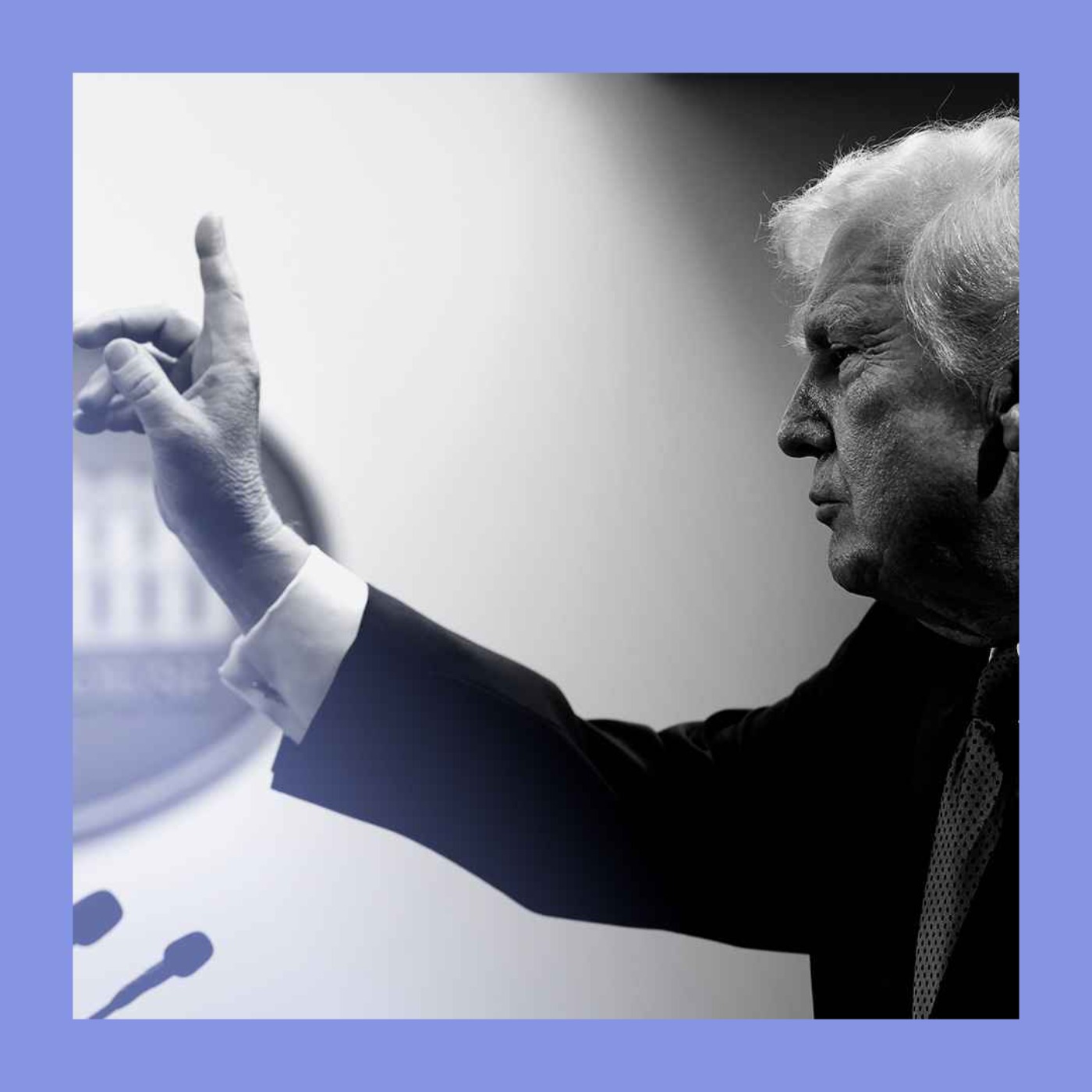
Overview of When the levy brakes: Trump’s tariffs struck down
This episode of The Intelligence (The Economist, hosted by Jason Palmer) covers three main stories: the U.S. Supreme Court decision that invalidated President Trump’s use of a 1970s emergency statute to impose broad tariffs; the political upheaval on Australia’s centre-right caused by the rise of Pauline Hanson’s One Nation and so‑called “teal” independents; and a short cultural piece on why Agatha Christie remains the world’s best‑selling novelist. The bulk of the episode focuses on the legal, economic and political fallout from the tariffs ruling and Washington’s immediate responses.
U.S. tariffs: the ruling and its fallout
The Supreme Court decision
- The Supreme Court struck down the Trump administration’s use of the International Emergency Economic Powers Act (IEEPA) to impose broad, peacetime tariffs.
- Six of nine justices (including three conservatives) ruled that the power to set peacetime tariffs lies with Congress, not the president.
- Estimates cited in the episode suggest the ruling could cut America’s effective tariff rate by roughly half.
Presidential response and legal workarounds
- Mr. Trump publicly criticised the decision and called some justices “unpatriotic.”
- He announced a temporary global tariff initially at 10%, then raised to 15%.
- The administration is invoking Section 122 of the Trade Act of 1974 (allows temporary duties up to 150 days on claimed balance-of-payments grounds) — a rarely used authority that itself may invite litigation.
- Other options for reimposing targeted tariffs include Sections 232 (national security) and 301 (remedies for unfair trade practices). These require investigations and offer less presidential flexibility than the struck-down IEEPA approach.
- The transcript notes the politically difficult alternative: returning to Congress for explicit tariff authorisation (unlikely, given electoral sensitivity to higher consumer prices).
Economic and business implications
- The ruling creates substantial uncertainty for firms: who wins and loses will shift, affecting hiring, investment and bilateral deals negotiated to avoid previous tariffs.
- Countries that may benefit from the temporary regime include China, Brazil, India, parts of Southeast Asia, Canada and Mexico (some extra tariffs such as the “fentanyl emergency” ones were declared illegal).
- Countries that struck early bilateral deals — e.g., the UK, which negotiated a 10% rate — could be disadvantaged if the new temporary tariffs are higher.
- Administrative headaches: companies reportedly paid more than $100 billion under the prior tariffs; refunds are necessary but the process, paperwork and timing are unclear. Rapid refunds could paradoxically boost the economy ahead of midterms.
Political and constitutional significance
- The ruling is portrayed as a notable check on presidential trade power — a high-profile policy of the president struck down by the ordinary docket of the Court.
- The episode flags a follow-up case to watch: the administration’s attempt to remove Fed governor Lisa Cook (implications for central bank independence and executive power).
Australia: the fracturing of the centre‑right
Political background
- Postwar Australian politics usually alternated between Labor and a centre‑right coalition (Liberals + Nationals).
- Recently that stability has been eroded from both flanks:
- “Teal” independents (urban, fiscally liberal but pro‑climate action) have captured former Liberal urban strongholds.
- Pauline Hanson’s One Nation (harder right, anti‑immigration) is eating into the Nationals’ rural base.
Current dynamics and consequences
- Polls described in the episode made One Nation the (by polling) most popular conservative party, creating acute pressure on the coalition.
- The Liberal Party suffered major defeats (May 2025 referenced) and leadership turmoil (the episode names Sussan Ley being ousted; Angus Taylor is quoted after becoming leader).
- The Nationals have twice split from and rejoined the coalition, signalling deep instability.
- If the right is split across Liberals, One Nation and teals, forming a coherent centre‑right alternative to Labor becomes harder — opening the prospect of Labor governing unchallenged for longer.
Key uncertainties and outlook
- One Nation’s long‑term viability depends on its ability to retain members and integrate figures like Barnaby Joyce (recently reported to have joined One Nation).
- Australia’s compulsory preferential voting might blunt extreme outcomes, but upcoming by‑elections will be an early test.
- Strategic options for the Liberals include shifting right on immigration to stem losses, or trying to reclaim urban voters without abandoning climate policy — both risky.
Culture: why Agatha Christie endures
John Ffrench (culture correspondent) outlines three reasons Christie remains popular despite longstanding critical sniping:
- Unlikely, memorable sleuths: characters like Miss Marple and the prim, meticulous Hercule Poirot make for distinctive, relatable investigators who succeed where police in her books often fail.
- Constrained, nostalgic settings: country houses, locked rooms, islands and the Orient Express create small casts where everyone is suspect; the closed world makes the resolution satisfying and restorative.
- Mastery of plot plus sheer productivity: Christie specialised in tightly paced mysteries with concealed but fair clues and dramatic reveals. Her enormous output (dozens of novels, many short stories and plays) reinforced her place in popular culture even if not every work is flawless.
Noted critics (Edmund Wilson, Julian Symons) found her work banal or formulaic; the episode argues popularity stems from craft, economy and reliability rather than high literary ambition.
Key takeaways
- The Supreme Court curtailed a major presidential trade tool (IEEPA), forcing the administration to seek alternate, legally more fragile routes (Section 122; Sections 232/301) and creating short‑term uncertainty.
- Trump announced a temporary 15% global tariff under Section 122, limited to 150 days, but that approach is legally contestable and politically fraught.
- The ruling triggers complex refund questions for more than $100bn in previously collected tariffs and reshuffles winners and losers among trading partners.
- In Australia, the centre‑right coalition is under strain from both the populist right (One Nation) and urban pro‑climate independents (teals), threatening the coalition’s ability to regroup as a coherent opposition.
- Agatha Christie’s enduring appeal comes from distinctive detectives, tightly bounded settings that promise restored order, clever plotting and exceptional productivity.
Notable soundbites from the episode:
- Trump: “I’m ashamed of certain members of the court” (criticising the majority).
- Angus Taylor (new Liberal leader): “The Liberal Party is in the worst position that it has been since it was founded in 1944.”