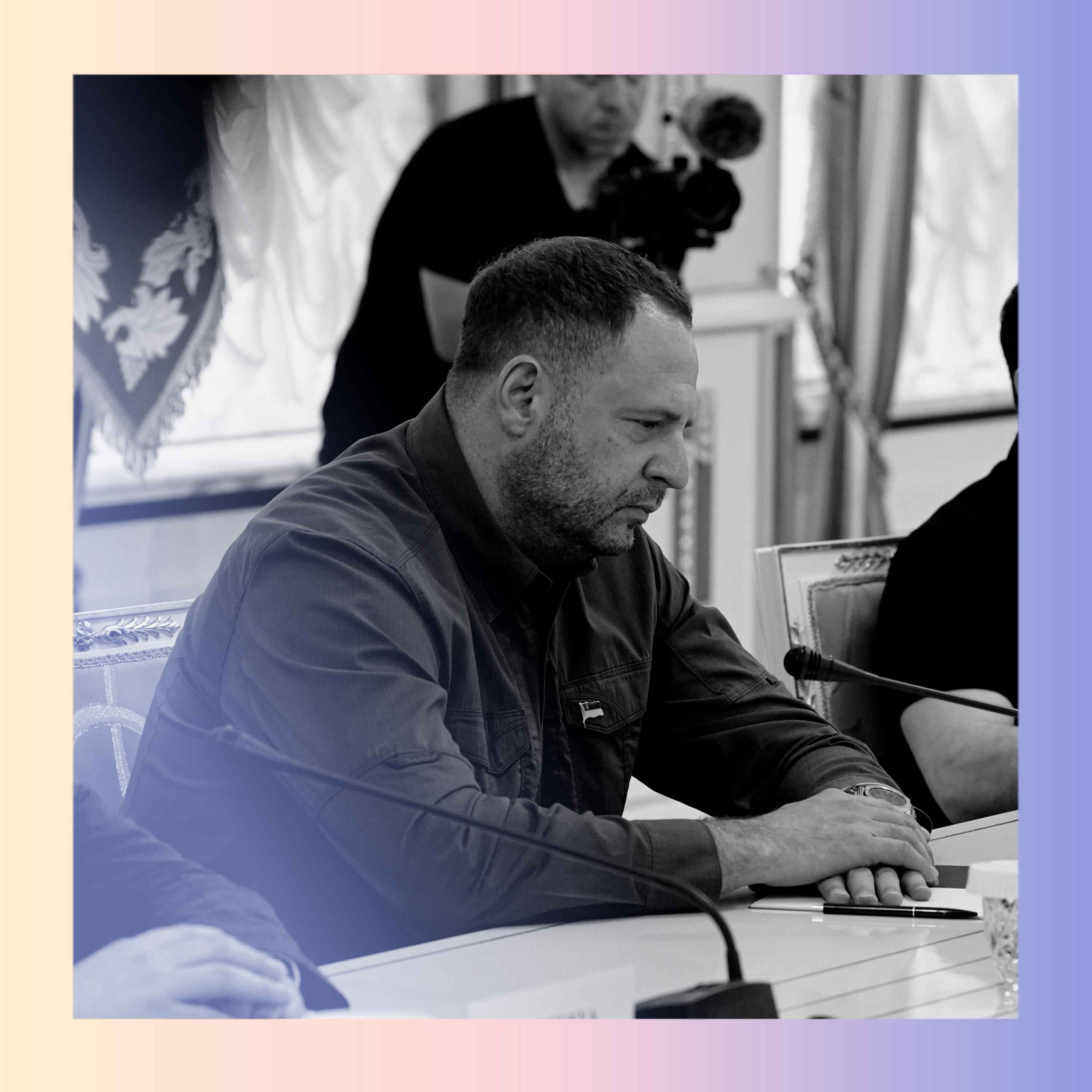
Overview of The Weekend Intelligence: Operation Midas
This episode (reported by Oliver Carroll for The Economist) investigates "Operation Midas" — a multi‑agency probe into large‑scale corruption centred on Ukraine’s state nuclear power company, Energoatom. Using leaked audio, covert surveillance and months of detective work, Ukraine’s anti‑corruption bodies (NABU, SAPO and the High Anti‑Corruption Court) have traced at least $100m in kickbacks and exposed a sprawling syndicate that siphoned public contracts during wartime. The scandal has triggered arrests, high‑level resignations, a political fight over anti‑corruption institutions and wider questions about national security and the future of Ukraine’s leadership.
Key takeaways
- Investigators have documented at least $100m in kickbacks tied to Energoatom contracts; the real total is expected to rise.
- The scheme allegedly skimmed 10–15% from large public tenders; suppliers paid surcharges or were excluded.
- Evidence includes months of covert recordings (bugs placed in flats/offices), seized devices, and forensic triangulation of nicknames and meetings.
- The probe reached into the president’s inner circle: tapes use codenames (e.g., “Che Guevara,” “Ali Baba,” “Rocket,” “Tenor”); senior figures appear implicated in conversations and property schemes.
- Political pushback followed: arrests and proposed legislation aimed at curbing NABU/SAPO, mass protests, and a reshuffle that forced chief of staff Andriy Yermak to resign after his office was searched.
- The scandal poses an acute national‑security problem: corruption allegedly weakened protections for energy infrastructure during an active war.
Timeline (concise)
- Late 2023: Sting around a corrupt property developer kickstarts inquiries.
- Summer 2024: NABU’s formal Operation Midas investigation into Energoatom corruption begins.
- 2024–2025: Months of covert surveillance, bugs and device forensics accumulate evidence.
- June–July 2025: First public charges (deputy PM charged); countermeasures from the presidential office; arrests of some NABU detectives and raids on whistleblowers and investigators; a parliamentary bill proposed to put anti‑corruption agencies under the prosecutor general.
- November 2025: Searches of Andriy Yermak’s office; Yermak resigns (no charges filed at time of reporting); some suspects flee the country.
Main actors, codenames and roles
- NABU (National Anti‑Corruption Bureau) — lead investigative detective work (public face: Alexander Abakumov).
- SAPO (Specialized Anti‑Corruption Prosecutor’s Office) — prosecution arm (head: Oleksandr Klymenko mentioned as driving prosecutions).
- VAKS / High Anti‑Corruption Court — judicial element in the anti‑corruption triad.
- Energoatom — Ukraine’s state nuclear power company; central target of the skimming scheme.
- Codenames from tapes:
- “Rocket” — government advisor (recorded discussing underspending on energy protection).
- “Tenor” — security manager at Energoatom (discussing kickback splits).
- “Che Guevara” — alias attributed to a deputy prime minister (alleged recipient of funds).
- “Sugarman” — businessman involved in handling/distributing cash (identified as Oleksandr Tsukerman in reporting).
- “Ali Baba” — codename reported as referring to Andriy Yermak (president’s chief of staff); Yermak appears in tapes but faced no formal charges at time of report.
- “Karlsson” — alias linked to Timur Minich (co‑founder of Quartal 95; photographic evidence of extravagant spending/“golden toilet” cited).
- Oleksandr Kubrakov — infrastructure minister who participated in an early sting and later lost his post.
(Note: transliterations vary; the episode uses codenames heavily. The summary follows the reporting but flags that some spellings vary.)
How the investigation worked (methods & evidence)
- Old‑fashioned tradecraft: NABU/SAPO avoided electronic dependencies that risked leaks, instead physically planting bugs in flats and offices, covert surveillance, targeted searches and device forensics.
- Triangulation: investigators matched nicknames to people using meeting times, locations, travel records and conversational slip‑ups on tapes.
- Seized digital devices and messages (from earlier sting arrests) opened further leads to a “back‑office” that laundered and disbursed funds.
- Evidence types: recorded conversations, cash‑transport descriptions, photos of properties, tracing of laundering routes and financial flows.
- Investigators reported operational sabotage attempts by suspects: document destruction, wiping fingerprints, and accessing CCTV to monitor investigators.
Political consequences and stakes
- Immediate: arrests (including of a deputy prime minister), searches of senior offices, resignations (Yermak), and the flight of some suspects.
- Institutional: a political campaign to subordinate NABU/SAPO to the prosecutor general would have curtailed independent anti‑corruption power; mass protests helped block immediate dismantling.
- Electoral and diplomatic: public trust in President Zelensky reportedly dropped (polling shows trust roughly halved in the wake of the scandal), complicating re‑election prospects and any peace negotiations.
- National security: investigators argue corruption — particularly in energy and defense procurement — is the nation’s second‑largest threat after the war itself.
Notable quotes & moments
- Alexander Abakumov (NABU): “I was truly shocked by the cynicism of people who would steal during a war… This makes our state weaker. … corruption is one of the gravest threats to our national security.”
- Oleksandr Klymenko (SAPO): “You cannot fight corruption without showing actual cases.”
- Investigators’ internal motto cited by a source: “Don’t think about the consequences.”
- Leaked tapes include cold discussions about underspending on energy defenses and practical details of moving and counting large sums in cash — evidence of systemic brazenness.
What remains unresolved / watch list
- Final monetary tally: investigators have documented ~$100m so far; full sums likely higher after forensic accounting of seized materials.
- Legal outcomes: many low‑ and mid‑level defendants may cut deals; high‑level prosecutions (e.g., Yermak) are uncertain — military service or other statuses could delay trials.
- Extent of political protection: unanswered questions remain about who inside state structures facilitated the scheme or obstructed investigations.
- International links: some laundering traces reportedly run to Moscow; the scope and implications of these links are still to be established.
- Impact on peace talks: whether the scandal will be leveraged in diplomatic pressure (or affect ability to sign a deal) is an open political risk.
Implications / final assessment
- This is a high‑stakes story beyond simple corruption reporting: it ties corrupt profiteering directly to weakened wartime defenses and to the stability of Ukraine’s political leadership.
- The investigation demonstrates the continued importance (and fragility) of independent anti‑corruption institutions created after 2014; their survival and independence are now a major political battleground.
- For Ukraine, exposing the case offers an opportunity to strengthen institutions — but also short‑term reputational and political costs that may affect governance and negotiations.
Actions to follow (for readers tracking the story)
- Monitor formal charges and court filings from NABU/SAPO over the next 12 months (the covert phase has ended and prosecutions are continuing).
- Watch for testimony deals from lower‑level defendants that could implicate further senior figures.
- Track parliamentary or executive moves that could alter the independence of NABU/SAPO/VAKS — and public protests/responses.
- Note impacts on Zelensky’s approval and any timeline changes to peace negotiations or elections.
Produced by Oliver Carroll and colleagues, the episode combines first‑hand reporting inside Kyiv, leaked audio, and interviews with investigators to map a complex and still‑unfolding scandal that intersects corruption, war, and politics.