Overview of Gang-buster: Can Sheinbaum beat Mexico crime?
This episode of The Intelligence from The Economist (host Rosie Bloor) covers three main stories: an in-depth look at Mexico’s new president Claudia Sheinbaum’s first year tackling violent crime; the start of the trial in Japan of Yamagami Tetsuya, who assassinated former prime minister Shinzo Abe; and an obituary profile of veteran bomb‑disposal expert Peter Gurney. The largest segment evaluates early evidence that Sheinbaum’s security policies are improving outcomes in parts of Mexico while highlighting major remaining challenges.
Can Sheinbaum beat Mexico crime?
What the episode covers
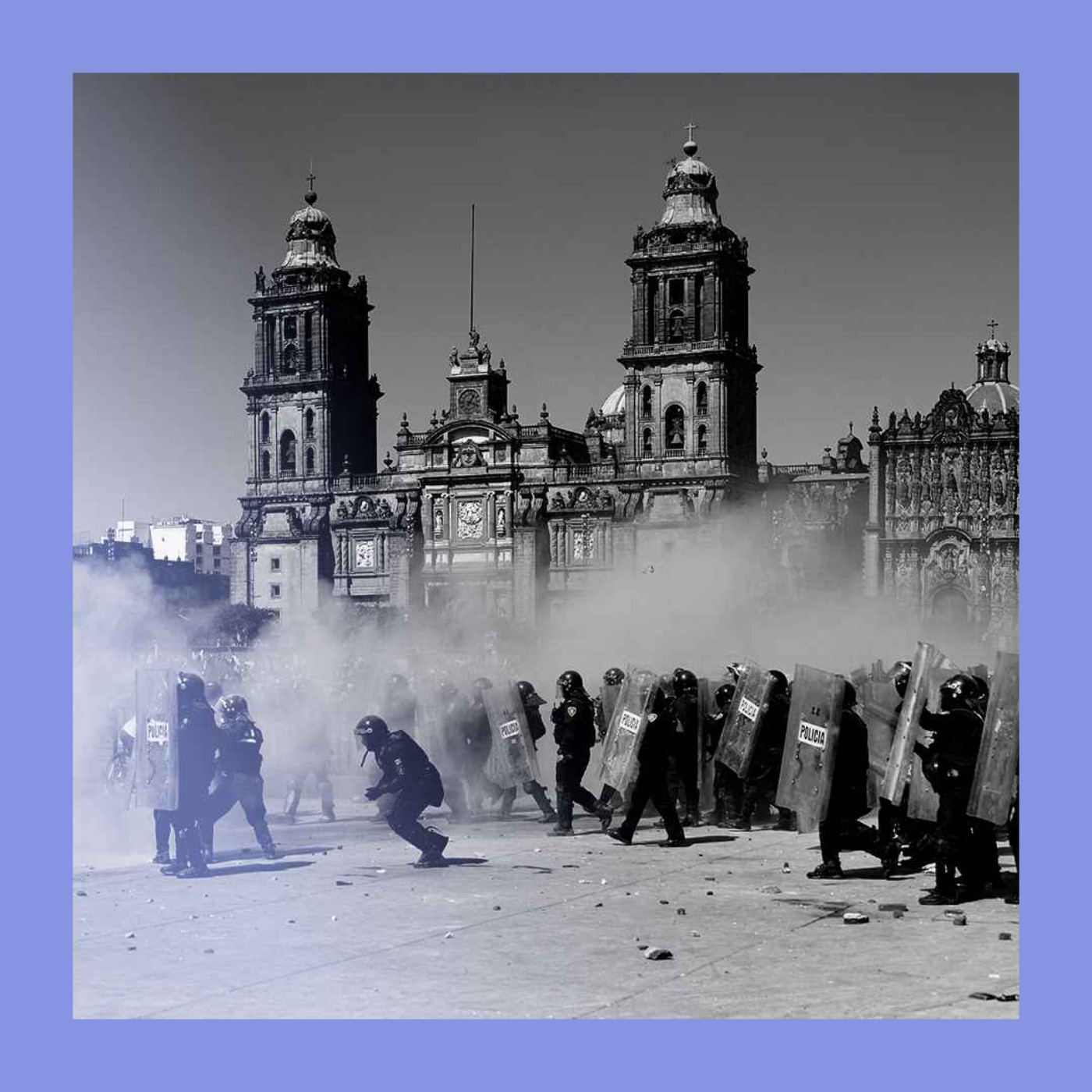
- Context: Large protests in Mexico City after the assassination of Carlos Manzo (a popular mayor known for cracking down on gangs) and weeks of public anger about cartel violence. Clashes at the National Palace injured around 120 people.
- Central question: Has President Claudia Sheinbaum’s first year in office produced a meaningful reduction in violent crime?
Key numbers & trends
- Government claim: murder rate down 32% in the year since Sheinbaum took office (October 2024).
- The Economist’s analysis (Sarah Burke): homed-in figures show a smaller fall — murders down ~14%; a broader aggregate measure (murders, femicides, manslaughter, disappearances) down ~6% in Sheinbaum’s first year.
- Projected murders for the year: roughly 24,300 — still extremely high but below the recent annual average of >30,000.
- Enforcement results: record levels of arrests and a more than doubling of firearm seizures since she took office.
What Sheinbaum has done differently
- Appointed Omar Harfusch (Harfush) — a 43‑year‑old, former policeman and data-driven security minister with authority over coordination and intelligence.
- Strengthened institutions: empowered the Financial Intelligence Unit (traces dirty money), purged corrupt local police, recruited new officers (including transfers from other states), created special forces units, and instituted unified command in the most violent municipalities.
- Emphasis on targeted arrests and intelligence-led operations rather than purely militarised tactics.
Regional variation: patchwork security picture
- Zacatecas: used as a hopeful example — steep falls in the murder rate, restoration of citizen reporting and improved police confidence after purges and new policing measures.
- Sinaloa (Culiacán): remains highly insecure. Internecine cartel violence increased killings; heavy federal deployments (armoured convoys, drones, checkpoints) secure infrastructure but struggle to stop a steady stream of homicides. Local life remains deeply affected by fear and social withdrawal.
Major challenges & risks
- Legacy of militarization: previous administration’s heavy military role left weak civilian police forces.
- Corruption and cartel‑politician collusion: two‑thirds of murders linked to organised crime; tackling political protection of cartels is politically sensitive but necessary.
- Underfunding: Mexico spends <1% of GDP on security; proposed 2026 budget cuts to the security ministry would be a backward step.
- Dependence on U.S. cooperation: relationship with Washington (and Donald Trump) is politically fraught — success in keeping migrant/cross‑border and anti‑cartel cooperation depends partly on U.S. perception of Mexican progress. There’s risk that U.S. hardline measures could escalate if results or political messaging falter.
Takeaways / Recommendations implied by the reporting
- Early indicators are positive in some states — intelligent, targeted policing and institution‑building can yield results — but national progress is uneven.
- To consolidate gains Sheinbaum needs: sustained and increased funding, continued anti‑corruption efforts targeting collusive local officials, expansion of civilian policing capacity, and consistent communication with international partners (notably the U.S.).
- The situation remains fragile: success in some regions can be offset by entrenched cartel violence in others.
Trial of Abe’s assassin (Yamagami Tetsuya)
What happened and why the delay
- Yamagami Tetsuya (assassin of former PM Shinzo Abe on July 8, 2022) went on trial more than three years after the killing.
- Delay reasons: psychiatric evaluations, extensive pre‑trial negotiations about witnesses and evidence, and legal framing of the case.
Legal issues at play
- Weapon classification: Yamagami used a homemade firearm assembled from parts ordered online; defense argues it may not legally qualify as a “gun,” which would affect sentencing severity.
- Mental state and background: discussions about whether his troubled upbringing and family history (father’s suicide, brother’s suicide, mother’s heavy involvement and donations to the Unification Church) justify leniency.
- Possible sentences: death penalty or life imprisonment are both on the table; public empathy and his admissions complicate expectations.
Social implications
- Sympathy for the defendant: many Japanese expressed sympathy for Yamagami because of anger toward the Unification Church and its ties to politicians — Abe’s perceived closeness to the church inflamed sentiment.
- Broader issues exposed: alienation of the “lost generation” (middle‑aged people who suffered long-term economic insecurity), rising lone‑wolf political violence, and growing public concern about cults and political ties.
- Institutional response: police have created a new unit focused on lone‑offender attacks; public debate continues about social marginalisation and political accountability.
Notable quote from courtroom
- After prosecutors read a detailed account of the attack, Yamagami reportedly said, quietly and clearly: “Everything is true. I did it.”
Obituary: Peter Gurney, bomb‑disposal expert
Career highlights & character
- Peter Gurney (died aged 93) served ~40 years as a bomb disposal officer — in the army and later with the Metropolitan Police.
- Notable operations: clearing unexploded ordnance in post‑war Germany, checking mines near Suez (1955), and long campaigns defusing IEDs used by terrorists (including IRA devices) in the UK.
- Decorations: awarded the George Medal twice; famed for bravery, technical skill and emotional discipline under extreme danger.
Memorable anecdotes
- Narrow escape at Number 10 Downing Street: while defusing a mortar he experienced the device heating and had to jump away into a snowdrift.
- Oxford Street bombing (1981): found the body of his best friend and colleague Ken Haworth at a blast scene but continued work to defuse secondary devices — an episode demonstrating his capacity to compartmentalise emotion in order to save lives.
Themes & legacy
- Gurney described a paradoxical satisfaction in defusing bombs: the combination of skill, danger and the lives potentially saved made the work uniquely meaningful to him.
- He is remembered as steady, courageous and meticulous — an exemplar of the hidden, high‑risk public service of bomb disposal.
Final notes
- The episode mixes reporting and analysis across security, social and judicial issues in three countries. The Mexico segment offers cautious optimism about targeted, intelligence‑led crime reduction under Sheinbaum but stresses the scale of the problem and political/economic constraints. The Japan segment highlights how one assassination trial exposes social grievances and institutional strains. The obituary profiles a life defined by bravery and technical mastery in countering terrorism.