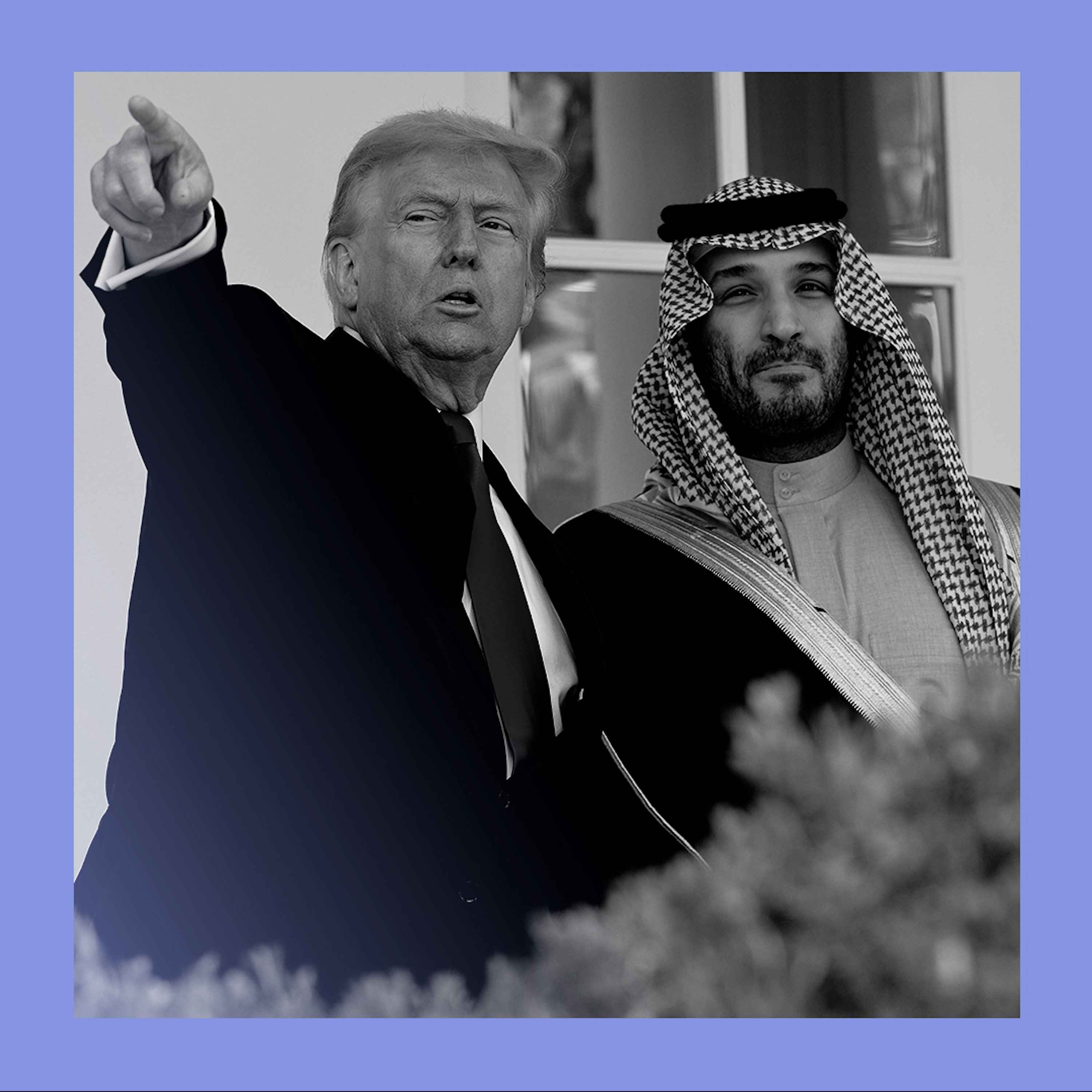
Overview of The Intelligence from The Economist — "Crown prince arming: Trump sells jets to MBS"
This episode of The Intelligence covers three main stories: the high‑profile White House visit by Saudi Crown Prince Mohammed bin Salman (MBS) and major U.S.–Saudi arms and investment deals; mounting pressure on Hong Kong’s LGBT community after a failed legislative attempt to recognise same‑sex couples; and a lighter‑sounding but consequential investigation into UK landlords using sham “urban farms” (often with snails) and shell companies to avoid business‑rates liability. The programme mixes geopolitics, domestic policy consequences and a local tax‑avoidance exposé, drawing out political, legal and economic implications.
Main story — Trump welcomes Mohammed bin Salman (MBS)
-
What happened
- President Donald Trump publicly and warmly welcomed Saudi Crown Prince Mohammed bin Salman at the White House — his first visit to the U.S. since the 2018 murder of Jamal Khashoggi.
- The visit featured ceremonial pageantry (including F‑35s flying overhead) and announcements of deepened defence and economic cooperation.
-
Key agreements and announcements
- Saudi Arabia designated a "major non‑NATO ally."
- A strategic defence agreement was announced to facilitate U.S. defence firms’ activity in Saudi Arabia.
- The U.S. agreed to sell 48 F‑35 fighter jets to Saudi Arabia — a major shift in Middle East armaments (previously only Israel — and planned UAE deliveries — had F‑35s).
- MBS pledged up to $1 trillion in investment related to the U.S. (previously promised $600 billion); specifics and directness of the investments remain unclear.
- Trump publicly downplayed the Khashoggi assassination, accepting MBS’s denial.
-
Context and implications
- MBS, made crown prince in 2017, drives Vision 2030 (economic diversification, social reforms) but remains internationally tainted by U.S. intelligence findings (2021) that he authorized Khashoggi’s killing.
- Sale of F‑35s changes regional military balances and raises concern in Israel about its qualitative edge.
- The visit boosts MBS’s international rehabilitation and repositions Saudi Arabia as a closer U.S. partner; it’s politically useful for Trump as well.
- Saudi progress toward joining the Abraham Accords saw discussion but no commitment; Saudi officials condition recognition of Israel on meaningful progress toward a Palestinian state.
Secondary story — LGBT rights under pressure in Hong Kong
-
What happened
- Hong Kong’s legislature rejected a limited bill offering legal recognition only to same‑sex couples married abroad. The government now promises vague administrative protections instead.
- The story follows a 2‑year‑old top‑court ruling that ordered some legal recognition but fell short of mandating full marriage equality.
-
Key facts and context
- Public acceptance has grown: a survey two years ago found ~60% support for gay marriage (up from ~38% a decade earlier), and LGBT‑friendly events have occurred in the city.
- Since 2020, however, Hong Kong has seen erosion of civil society under the national security law and governance by lawmakers loyal to Beijing (“patriots only”).
- Many legislators invoked mainland‑style arguments (family values, concerns about schools), aligning policy with Beijing’s stance.
- LGBT activists and many within the community see little prospect for meaningful change in the near term — expecting generational shifts (e.g., Gen Z leadership) before substantive reform.
-
Implications
- The outcome highlights tensions between Hong Kong’s international image and political reality under Beijing’s influence.
- Civil‑society constraints make legal and social progress uncertain; activists may be forced to rely on slow cultural change.
Feature — Snail farms and business‑rates avoidance in Britain
-
What’s going on
- Landlords of vacant commercial properties are using sham “urban farms” (sometimes literally crates with a few snails) and shell companies to claim exemptions from business rates, reducing local tax liabilities.
- Example figures: The Economist’s office pays about £65,000/month in business rates for its 20,000 sq ft London site; landlords face liability if buildings remain vacant beyond a 91‑day grace period.
-
How schemes work and legal gaps
- Shell companies lease properties, set up nominal “farms” (snails, crates) or place boxes/Bluetooth devices to claim occupancy and obtain empty property relief (EPR).
- When local authorities challenge legitimacy, the shell companies often declare insolvency; pursuing landlords through courts is time‑consuming and costly.
- Government changed rules in 2023–24 to require a 13‑week occupation period for some relief, but loopholes persist by letter of the law.
-
Scale and stakes
- Business rates raise ~£25 billion for government coffers (collected mainly by local authorities). Abuse reduces revenues that fund local services.
- Westminster City Council collects a disproportionate share (cited as ~10% of England’s business rates), with much recycled to central government, so losses are widespread.
-
Policy takeaway
- Authorities want stronger powers to treat egregious avoidance as evasion and to pierce the veil of shell companies; closing the loopholes would protect strained local finances.
Notable quotes and soundbites
- On the White House reception: Trump — “We have an extremely respected man in the Oval Office today and a friend of mine for a long time.”
- On Khashoggi: Trump (paraphrased) — “He knew nothing about it... and we can leave it at that,” effectively brushing off responsibility.
- On Saudi intentions: MBS — “We want peace for the Israelis. We want peace for the Palestinians. We want them to coexist peacefully in the region.”
- From Hong Kong activist Priscilla: Same‑sex marriage is crucial so LGBT people “can form their own family and enjoy the love from the family.”
Key takeaways and what to watch
- Middle East geopolitics: The U.S.–Saudi rapprochement (F‑35s, strategic defence pact, major‑ally status) could reshape regional security balances and complicate Israel’s strategic calculations. Watch for delivery timelines, operational restrictions, and Israel’s diplomatic responses.
- U.S. politics and human rights: The visit signals U.S. administration willingness to prioritise strategic and economic ties over accountability for human‑rights abuses; this may affect U.S. credibility on rights issues.
- Hong Kong human rights: Expect slow, generational progress on LGBT rights; legal victories face political limits in the current governance framework aligned with Beijing.
- Local finance and tax policy (UK): Persistent exploitation of business‑rates rules by shell companies and sham farms risks materially reducing local government revenue — lawmakers may pursue stronger anti‑avoidance measures.
For policymakers and stakeholders (recommended focus)
- Diplomacy and arms controls: Clarify transparency, safeguards and regional consultation around advanced arms sales to avoid inadvertent escalation.
- Human‑rights strategy: Balance strategic partnerships with consistent mechanisms for accountability to prevent erosion of norms.
- Regulatory reform: Strengthen legal tools for local authorities to challenge sham occupancy and pierce shell‑company protections; tighten criteria for exemptions such as EPR.
- Civil society support: International and local actors should continue to support vulnerable communities (e.g., LGBT groups in Hong Kong) through legal aid, visibility and long‑term advocacy.
This episode combines headline geopolitics with domestic‑level stories that illustrate how political choices — from arms deals to tax rules and civil‑society constraints — have real economic and social consequences.