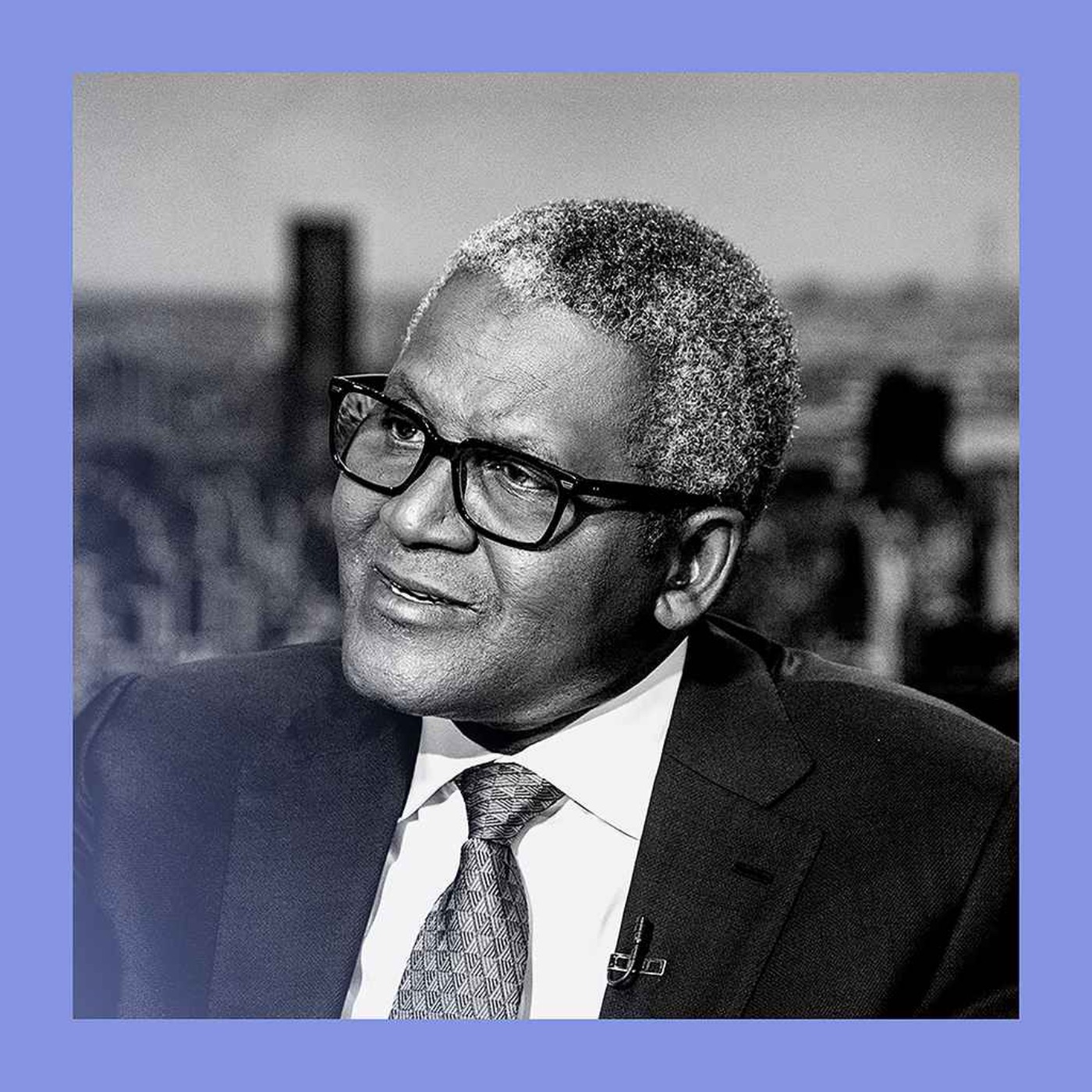
Overview of The Intelligence — "Barrel vault: a Nigerian refining giant rises"
This episode of The Economist’s The Intelligence covers three distinct stories: a deep dive into Aliko Dangote’s new mega-refinery in Nigeria and its regional implications; reactions inside Los Angeles’s Iranian-American community to recent US strikes on Iran; and a surprising social-science finding that a cancer diagnosis is associated with a long-term rise in offending. The programme mixes on-the-ground reporting, an interview with an Africa correspondent, and a review of recent research.
Aliko Dangote and the new refinery: scale, benefits and concerns
What happened
- Aliko Dangote, Africa’s richest man and head of a broad conglomerate (cement, food processing, infrastructure, mining), opened a massive refinery in 2024 just outside Lagos.
- The refinery cost about $20 billion, sits on land roughly half the size of Manhattan, and—since February—has processed about 650,000 barrels per day.
- Outputs include gasoline, jet fuel and urea fertilizer. Dangote plans further expansion and aims to be among the world’s largest refining capacities.
Economic and strategic benefits
- Reduces Nigeria’s need to export crude and re-import refined products, saving scarce foreign exchange.
- Eases chronic fuel shortages that produced long queues for decades.
- Increases regional energy security: Dangote plans to export to neighboring African countries (e.g., Cameroon, Angola) and beyond (Europe, America).
- Fertilizer production helps agriculture amid global shipping chokepoints (e.g., Strait of Hormuz) and finds buyers such as Brazil.
- Dangote plans an IPO (possible dual listing in Lagos and London), and is expanding into steel, mining, power and copper smelting.
Criticisms and risks
- Market concentration: regulators have temporarily frozen new petrol import licences, making the country heavily reliant on a single private operator—raising monopoly concerns.
- Employment and skills transfer: the plant runs “lean,” relying on high-skilled foreign contractors (notably Indian managers) for technical roles. Local workforce development appears limited.
- Political economy tactics: Dangote’s business model has historically used tax breaks, import bans and political levers (e.g., in cement) to secure market dominance—raising questions about competitive fairness.
- Centralization risk: delegating national energy security to one corporate actor concentrates geopolitical and economic risk.
Notable quote
- Dangote: “There’s nobody… there’s no African that can build a refinery.” (Used in the interview as both a boast of achievement and a statement of competitive deterrence.)
Iranian diaspora in Los Angeles (Tehrangeles): reactions to bombing
Community snapshot
- Roughly half of Iranian-Americans live in California; about 230,000 are in the Los Angeles area (the community sometimes called “Tehrangeles”).
- The diaspora is multi-ethnic, multi-religious and multi-generational; many émigrés arrived after the 1979 revolution, including a substantial Iranian-Jewish population.
- Westwood Boulevard and surrounding areas feature Persian businesses, restaurants and cultural life.
Reactions to US strikes on Iran
- Initial public celebrations in Westwood (e.g., restaurant-owner Ruzba Farhanapur, an exile and former opposition leader, popped champagne).
- The community is divided:
- Some activists (e.g., Elham Yaguvian) urge continued pressure to topple the regime—supporting sustained US action.
- Others fear US involvement might become a “forever war” like Iraq or Afghanistan and prefer the bombing to stop so Iranians can determine their own outcome.
- Shared concern: neither camp wants outside powers to install a puppet regime; they prefer Iranians to decide their leadership.
- Momentum and public enthusiasm appear to be waning as the conflict continues; cultural responses (a concert opened with a funeral march) reflect sorrow and resilience.
Study: cancer diagnosis and increased crime risk
Study overview
- Researchers (Denmark/Netherlands) used Danish administrative data spanning 1980–2018.
- They compared individuals’ criminal activity before and after a cancer diagnosis.
Key findings
- Overall, people diagnosed with cancer were about 14% more likely to commit crimes after diagnosis compared with their pre-diagnosis period.
- Short-term dip: in the year of and immediately after diagnosis, offending falls (likely due to treatment/illness).
- Long-term rise: starting a few years post-diagnosis and lasting up to a decade, offending increases.
- Largest absolute increases were in “economic crimes” (drug dealing, burglary). Violent crime rose substantially too—violent offending increased by about 21% (largest percentage rise).
- Effect did not depend on prior criminal history—both first-time and repeat offenders showed increases.
- Stronger effects among financially vulnerable groups (renters, single people) and in municipalities that reduced welfare generosity.
- Patients with worse prognoses (more lethal cancers) showed larger increases—possibly reflecting altered risk calculus.
- Gender: the effect was larger in men (men generally have higher base rates of offending).
- Authors suggest the effect might be larger in places with weaker social safety nets.
Implications
- Financial stress and reduced employment following cancer appear important mediators; reduced welfare exacerbates the effect.
- Policy implication: health crises can have downstream social consequences (crime) that public health and welfare policy should anticipate—e.g., strengthened income support, employment protection, mental-health services and targeted interventions for high-risk groups after diagnosis.
Conclusions and takeaways
- Dangote’s refinery is transforming Nigeria’s energy landscape and regional resilience, but it concentrates economic power and raises questions about competition and local capacity-building. Policymakers should balance energy security gains with measures to nurture competition and local skills transfer.
- The Iranian-American community in Los Angeles reflects deep divisions about foreign intervention: many want regime change but are split on the means. Diaspora sentiment is complex and likely to evolve as conflicts drag on.
- The cancer–crime link highlights an under-appreciated social consequence of major health shocks: weakened financial and social supports after diagnosis can increase offending. Strengthening welfare, employment supports and targeted post-diagnosis programs could mitigate these risks.
Notable for listeners: the episode blends geopolitics, domestic social dynamics and social-science research, showing how large-scale economic and health shocks can ripple through societies in unanticipated ways.