Overview of CIW: The Magazine, Issue One
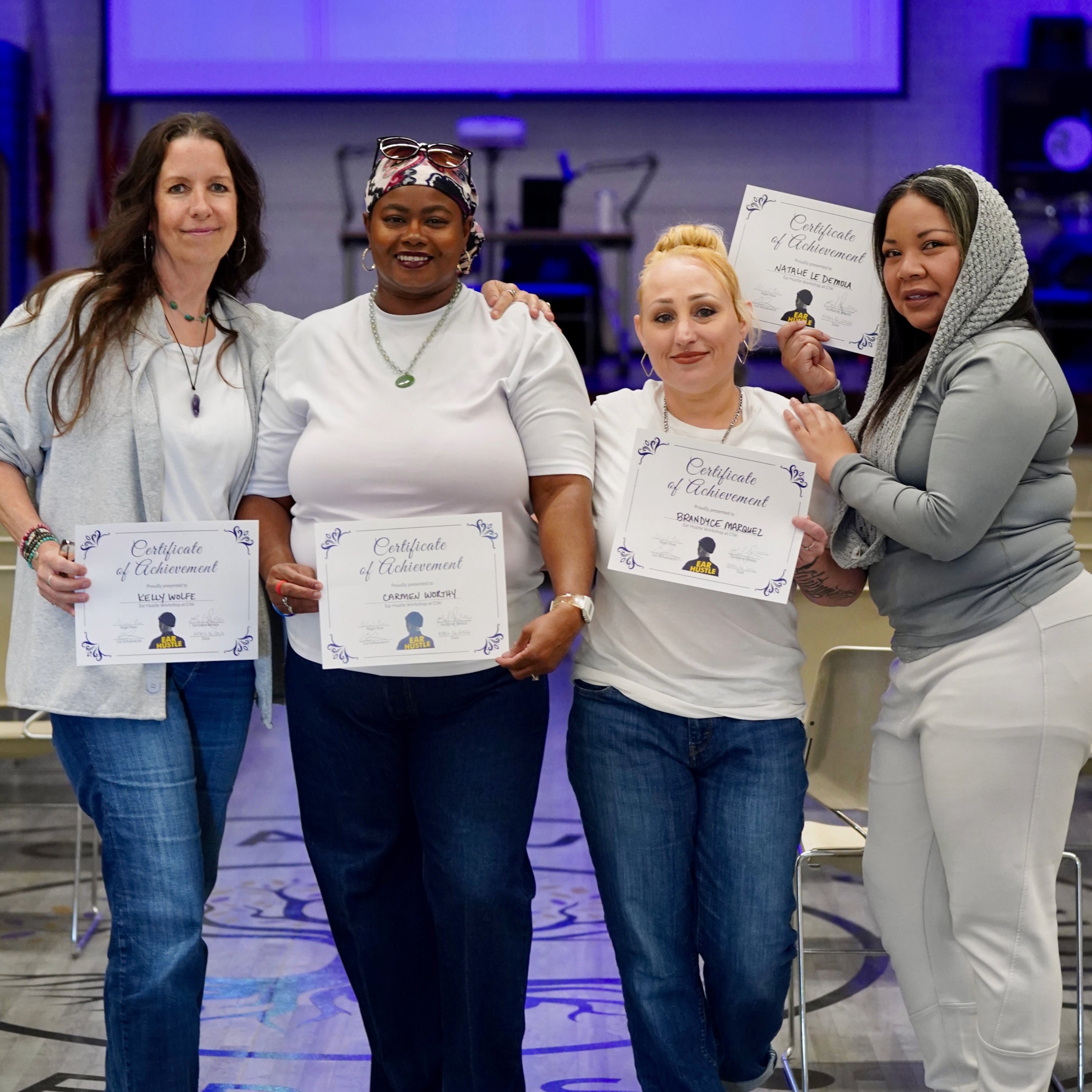
This Ear Hustle episode is a special magazine-style showcase of the first storytelling workshop cohort at the California Institution for Women (CIW). Over 10 months, four incarcerated women learned the full Ear Hustle storytelling process — interviewing, writing for audio, structuring narratives, recording, and editing — and each produced a reported story about life inside CIW. The episode is both a showcase of their work and a reflection on memory, loss, adaptation, and connection in prison.
What the Workshop Was About
Building a storytelling program at CIW
- Ear Hustle launched a new women’s-prison workshop after years of wanting to expand beyond San Quentin.
- Because CIW didn’t have a studio, the team partnered with Uncuffed and built out the recording setup.
- The first cohort was intentionally small: four women.
- Training covered:
- interviewing
- writing “for the ear”
- story structure
- script writing
- editing in Pro Tools
What the participants produced
Each woman created a short magazine segment about something meaningful or newsworthy in CIW:
- Natalie Leidemola — the emotional cost of new prison tablets
- Kelly Wolf — CIW’s forgotten history of having a swimming pool
- Chyna Worthy — what it means to be rejected by bunkies/roommates in prison
- Bea Marquez — the power of love letters and grief
Story Highlights
Natalie Leidemola: Tablets, memory, and losing irreplaceable media
Natalie’s story centers on California’s rollout of new prison tablets and the fear that personal photos and videos might not transfer over.
- One inmate, Cuba, describes a sunset/ocean video from a friend as a source of peace and emotional escape.
- Debbie fears losing a video of her niece winning a jiu-jitsu tournament — a clip connected to the memory of her daughter, who died years earlier.
- Natalie shares her own painful loss: videos of her father, Dr. Angel DiMola, who recorded loving messages to her before his death.
- When the tablet system changed, those memories vanished.
Main takeaway:
Digital media inside prison can function as emotional lifelines — and a tech transition can feel like an irreversible loss of family, grief support, and identity.
Kelly Wolf: CIW used to have a swimming pool
Kelly investigates a surprising piece of CIW history: the prison once had a swimming pool.
- Former residents recall:
- swimming, sunbathing, and hanging out by the pool
- smoking, music, guitar playing, and a looser social atmosphere in the 1970s
- The pool was eventually drained and cemented over in the 1980s.
- Former residents describe other improvised ways they adapted:
- hose-downs
- backyard lounging
- homemade slip-and-slides
- sewing their own swimsuits
- using kitchen butter as tanning lotion
Main takeaway:
The loss of the pool symbolizes the broader erosion of normalcy and small freedoms over time in prison.
Chyna Worthy: Rejection, housing, and belonging
Chyna’s story focuses on the social reality of being refused a bunk or roommate in prison, especially for people entering a new housing unit.
- Prison guarantees shelter “on paper,” but not always in practice.
- The story follows:
- Allison, a new arrival who is initially refused by bunkies
- Michelle, a tall trans woman and one of the first in California transferred from a men’s prison to a women’s prison under SB 132
- Michelle says many women fear living with her, but she also understands their fear because she once feared male prison violence herself.
- She eventually finds a room where people welcome her and plays cards with them.
Main takeaway:
Housing in prison is not just logistical — it’s deeply tied to fear, identity, safety, and acceptance.
Bea Marquez: Love letters as intimacy and grief
Bea’s story explores the emotional and sensory power of love letters.
- Women describe letters as:
- a place to say what can’t be said aloud
- a way to be playful, romantic, and vulnerable
- a form of connection that feels physical and nostalgic
- Bea shares a letter she wrote to her partner Luciano, who has died.
- She blends English, Spanish, and Nahuatl, and describes cultural grief rituals:
- cutting hair
- leaving water and a snack for the dead
- Writing to him continues to help her grieve.
Main takeaway:
Letters are more than communication; they are a ritual of love, memory, and mourning.
Bigger Themes Across the Episode
Loss and preservation
A major throughline is what gets preserved and what gets taken away:
- family voices and videos
- old prison amenities
- housing stability
- romantic connection
- physical reminders of loved ones
Adaptation inside prison
The women repeatedly show how people adapt:
- making homemade swimsuits
- finding joy in limited spaces
- building emotional routines around letters or videos
- learning to live with constant change
Storytelling as agency
The workshop itself is an act of empowerment:
- participants are not just subjects; they are reporters and storytellers
- the stories are personal but also public, topical, and newsworthy
- the episode shows how incarcerated people can produce nuanced, powerful journalism
Closing and What’s Next
- The Ear Hustle team praises the four women for their strong reporting and storytelling.
- The program is set to continue with a new CIW workshop cohort.
- Ashley Ann Crickbaum will help lead the next round of interviews and training.
- The episode also credits CIW staff for supporting the project and points listeners to the workshop page and Ear Hustle newsletter, The Lowdown, for updates.
Bottom Line
This episode is a moving showcase of incarcerated women reporting on the realities of CIW: technological loss, institutional memory, social belonging, and intimate human connection. It’s also a proof-of-concept for the storytelling workshop itself — demonstrating that with support and training, people inside prison can produce rich, emotionally resonant journalism.