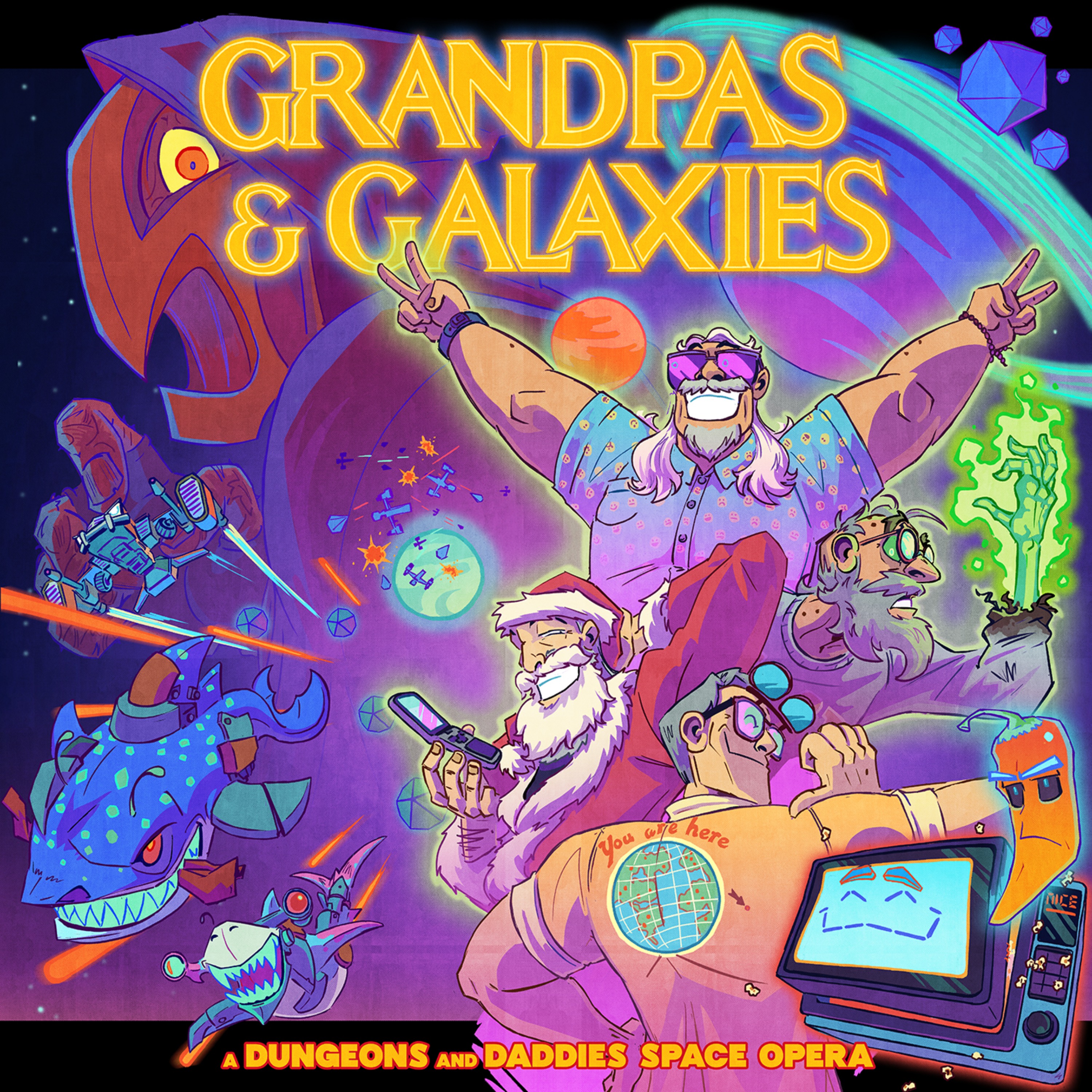
Overview of S4 Ep. 17 - Holes (I’m Tired of This, Grandpa)
This episode is largely a high-stakes sci-fi debate episode disguised as a D&D session: the grandpas confront the Sculptor, argue over the morality of life, death, and the “Luminous” plan, and race to stop a bomb hidden in a hospital. The episode mixes long-form philosophy, emotional backstory, and tactical party coordination, while also leaning hard into the show’s usual absurdity and banter.
What Happens in the Episode
The party gets pulled into a logic showdown
- The group is brought into a conference-room style confrontation with the Sculptor.
- A bomb is confirmed to be on the hospital’s third floor, and the party takes the detonator by persuasion.
- The central conflict becomes a formalized debate over whether the universe should be left as-is or fundamentally changed by the Luminous.
Al is the deciding factor
- The Sculptor reveals that their debate with Al is about logic, pathos, and ethos.
- Al has been influenced by both sides:
- Pathos: tied to the pain of killing / loss.
- Ethos: shaped by the Sculptor’s authority and shared time.
- Logos: the final deciding factor.
- The party works to push Al toward their side while also trying to scout for the bomb.
New gadget loadout for Ashley
- Ashley’s long-awaited gadgeteer upgrades are revealed from his lost-and-found stash:
- micro turret
- gravity manipulator
- invisibility device
- omni-tool / scanner
- three drones
- taser net
- These tools become part of the tactical plan for controlling the Sculptor and finding the bomb.
The philosophical core of the debate
The argument centers on whether death is necessary, and whether the Luminous should control who lives and dies.
The Sculptor’s case
- Claims the afterlife is terrifying, dark, and full of suffering.
- Argues that the Luminous can reduce suffering by keeping the “best” people alive and letting the worst die.
- Presents the universe as cruel randomness, where bad luck destroys lives with no justice.
- Reveals a tragic personal history: family, friends, love, work, and community all lost to a catastrophic roll of fate.
The grandpas’ case
- They argue that:
- The Luminous cannot fairly or perfectly judge trillions of souls.
- Even a tiny error rate would condemn millions of innocent people.
- Life’s meaning comes from change, growth, and impermanence—not just from ending.
- The universe’s unfairness is universal, and no single group should gain the power to decide who lives or dies.
- Dale, Ralph, and Herb each contribute different angles: morality, fairness, change, grief, and the value of living moments.
Al ultimately sides with the grandpas
- After weighing the arguments, Al chooses the grandpas’ position.
- The episode emphasizes that grief, change, and impermanence are part of what makes life meaningful.
- Al also reveals a personal loss: a romantic relationship with another AI, which ended in deletion, strengthening the emotional weight of the debate.
Climax and Ending
- The party deploys the taser net on the Sculptor.
- The Sculptor is visibly shaken and enraged, but the group gains the upper hand.
- He reveals a devastating backstory: he lost everything because of a single bad roll of fate.
- The episode ends on a dramatic, emotional note, with the Sculptor’s anger and grief still unresolved.
Notable Themes
Life, death, and meaning
- The episode asks whether death gives life meaning, or whether meaning comes from living and changing.
- The grandpas argue for a universe where growth matters more than enforced permanence.
Fairness vs. control
- The Sculptor’s plan is framed as an attempt to correct cosmic unfairness.
- The party argues that deciding who deserves life is too dangerous, too subjective, and too arrogant for any one group to control.
Grief as proof of love
- A major emotional takeaway is that loss and grief are not proof that life is meaningless.
- Instead, they’re presented as evidence that connection mattered in the first place.
Quick Takeaway
This episode is basically a philosophical boss fight:
- the Sculptor argues for engineered immortality and selective judgment,
- the grandpas argue for change, fairness, and the right to a messy, mortal life,
- and Al becomes the key vote that tips the balance.
It’s one of the more theme-heavy episodes of the season, but still packed with the show’s signature chaos, jokes, and tactical nonsense.