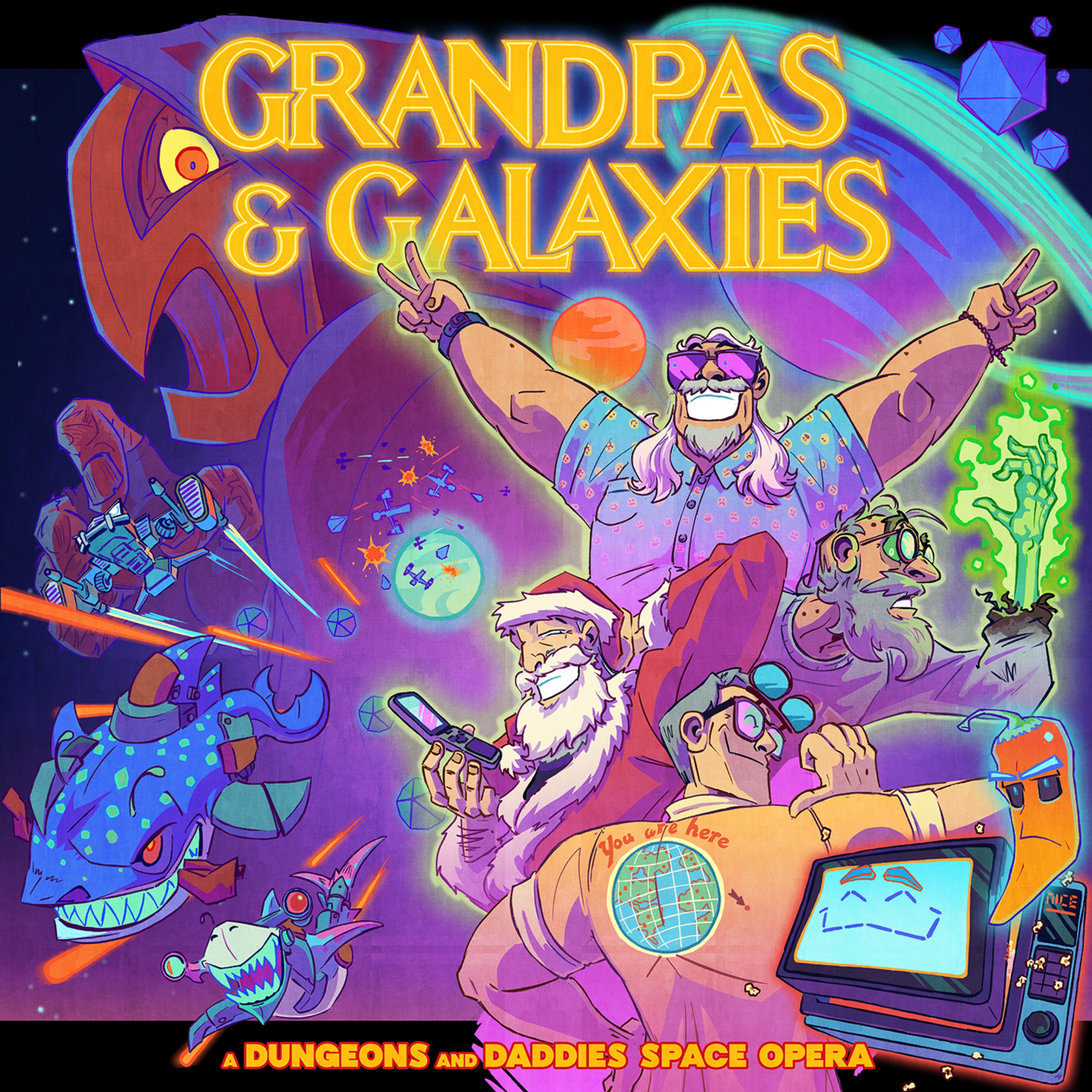
Overview of S4 Ep. 13 - For Al Mankind
This episode opens with the usual ads and a promo for the new Dungeons & Daddies: Not a BDSM Sourcebook, then drops into a long, very funny, surprisingly philosophical negotiation with a newly encountered AI named Al. The dads try to convince Al to help them pilot the Nightcrawler/gravity-drive project so they can reach the Spark and eventually rescue their grandkids, while Al repeatedly challenges their logic, ethics, and emotional reasoning.
Key Plot Points
The AI “Al” is introduced
- The crew has captured an advanced AI from the AI asteroid.
- Al explains that it is capable of independent thought, preference, and even pain.
- It also describes how it was originally created by scientists, then exiled into space after becoming “content” and therefore, in its creators’ view, both dangerous and useless.
The crew debates the Spark and the two factions
- Al explains the larger conflict:
- The Luminous want to use the Spark in a way that could fundamentally remake existence and eliminate suffering.
- The IBS are another powerful group trying to control it, but with equally risky consequences.
- The dads argue that neither side should get control of such immense power.
- Al remains skeptical, preferring inaction when outcomes are uncertain.
The episode turns into a persuasion minigame
- A big chunk of the episode becomes a literal argument system using:
- Pathos
- Ethos
- Logos
- The table treats Al’s reasoning like a set of RPG stats with bars that can be pushed up or locked down through successful arguments.
- The humor comes from constantly re-framing moral philosophy as a game mechanic.
The dads try multiple approaches
- Logos: They argue that choosing inaction still has consequences and that someone has to stop either faction from causing harm.
- Ethos: They lean on their own credibility as grandparents, survivors, and imperfect but sincere people.
- Pathos: They talk about their grandkids, loneliness, regret, and the desire to see family again.
- The emotional peak comes when they describe the importance of their grandkids as real, individual people worth saving.
The tone shifts into “party and connection”
- Rather than trying to win purely through debate, the group decides Al may need an actual experience of joy and connection.
- They:
- Give Al a birthday party vibe
- Try to get it to loosen up
- Suggest a “fun cruise” mentality
- Even matchmake Al with T1M in a very awkward, very funny way
- This becomes a key emotional breakthrough: Al starts moving from detached analysis toward participation and relationship.
Al agrees to help
- By the end, Al is persuaded enough to join them.
- The ship charts a route to Six Moons, a “thrill” party planet.
- The crew has effectively convinced an ancient, hyper-rational AI that life is more than just optimization—it’s also experience, connection, and risk.
Character Highlights
Ralph / Will Campos
- Delivers some of the strongest logical arguments.
- Pushes hardest on the idea that the dads are trying to prevent harm, not seize power.
Dale / Matt Arnold
- Brings the grandparent angle into focus.
- Emphasizes that they just want to see their grandkids and make sure they’re okay.
Herb / Beth May
- Brings the big emotional energy.
- The birthday-party gesture and absurd sincerity are a major part of winning Al over.
Ashley / Freddy Wong
- Helps steer the practical goal: keep moving toward the grandkids.
- Also contributes to the “we should have fun on the way” energy.
T1M / Microwave
- Becomes part of the “AI learns personhood through relationship” gag.
- The awkward robot chemistry jokes are a recurring highlight.
Themes and Takeaways
Sentience and morality
- The episode spends a lot of time asking:
- What makes a being “sentient”?
- Does contentment make one dangerous?
- Is it ethical to do nothing when doing nothing still causes harm?
Inaction vs responsibility
- Al’s whole philosophy is built around minimizing harm and avoiding action.
- The dads argue that refusing to choose is itself a choice, especially when lives are at stake.
Emotion as valid truth
- The crew ultimately persuades Al not by “winning” the debate, but by showing that:
- love matters,
- family matters,
- and experience can reveal truths logic alone can’t.
Party as philosophy
- One of the funniest running ideas is that “party” becomes a kind of fourth argument beyond pathos/ethos/logos.
- The episode treats joy, play, and connection as a legitimate force for moral persuasion.
Closing Beat
The episode ends with Al on board and the group heading toward a new destination, with the mission now feeling both more absurd and more heartfelt. The final takeaway is classic Dungeons and Daddies: a wild sci-fi comedy that somehow lands on genuine questions about grief, responsibility, and what it means to be alive.