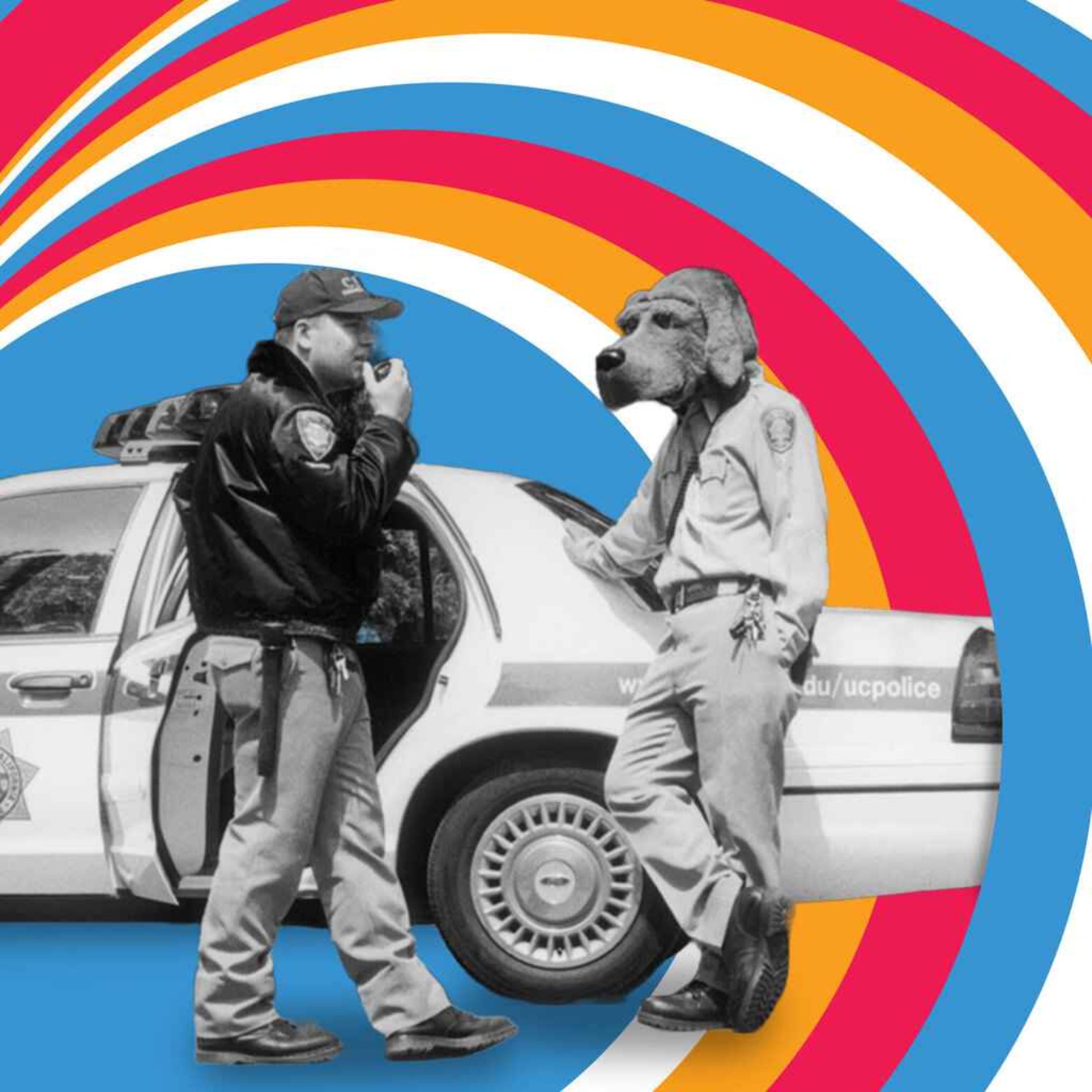
Overview of McGruff Takes a Bite Out of Crime, Part 1 (Encore)
This Decoder Ring episode traces the origin story of McGruff the Crime Dog and explains how a simple crime-prevention mascot became one of the most memorable public-service campaign characters in American media. The episode follows McGruff from his creation in the early 1980s, through the Ad Council’s anti-crime messaging strategy, and into the broader context of the war on drugs and “Just Say No” era that eventually led to the strange, catchy McGruff’s Smart Kids Album.
Key Points
How McGruff was created
- McGruff emerged in 1980 from a Department of Justice-funded crime-prevention campaign.
- The Ad Council and ad agency Dancer Fitzgerald Sample developed him after research showed:
- people wanted practical steps they could take to reduce crime,
- crime felt too large and overwhelming for many citizens.
- The now-famous slogan, “Take a bite out of crime,” came to creative director Jack Kyle in a flash of inspiration.
Why McGruff worked
- The campaign combined a memorable character, a clear message, and concrete behavior-based advice.
- Early McGruff PSAs told viewers to:
- lock doors and windows,
- keep lights on,
- have neighbors collect mail,
- join neighborhood watch.
- The episode distinguishes between:
- awareness/exposure campaigns and
- behavior-change campaigns.
- McGruff succeeded especially well at exposure: millions saw the ads, and large numbers requested informational pamphlets.
McGruff’s personality and design
- McGruff was designed as a trench-coat-wearing bloodhound with a serious, detective-like presence.
- The final design was chosen after multiple agency teams submitted dog concepts.
- He was intentionally made to feel like an authority figure—more like a wise investigator than a cute mascot.
- Jack Kyle’s voice helped define the character, with an audible resemblance to both Columbo and Kyle himself.
The broader political context: crime and drugs
- The episode situates McGruff inside the larger rise of crime anxiety in the late 1970s and the expanding war on drugs.
- It reviews:
- Nixon’s initial framing of drug abuse as a national enemy,
- Reagan’s much harsher punitive approach,
- the growth of mass incarceration,
- Nancy Reagan’s public anti-drug campaign and the rise of “Just Say No.”
- Anti-drug messaging became a major cultural force, crossing politics, schools, TV, and celebrity culture.
How McGruff became tied to anti-drug messaging
- Although McGruff started as a crime-prevention mascot, he was later folded into anti-drug messaging aimed at kids.
- The episode suggests this shift was partly driven by the cultural momentum around children, drugs, and prevention during the 1980s.
- McGruff’s appeal to kids was somewhat unexpected, but it made him useful in schools and classrooms.
The puppet and music world behind the album
- The episode introduces Puppet Productions, a Christian educational puppet company founded by Bill Hawes.
- The company made recorded puppet shows for churches and schools, often with music and pre-recorded dialogue.
- They had already produced educational anti-alcohol material before they encountered McGruff.
- A sheriff’s deputy in San Diego led them to create a crime-prevention puppet show.
- That work evolved into licensed McGruff content, including the eventual songs featured on McGruff’s Smart Kids Album.
Main Takeaways
- McGruff was not just a mascot; he was part of a serious behavioral public-safety strategy.
- His success came from being specific, practical, and memorable rather than abstract or moralizing.
- The episode argues that PSAs are hard to evaluate because exposure is easy to measure, but actual behavior change is much harder to prove.
- McGruff’s later anti-drug role reflects the way public messages can expand beyond their original purpose and become culturally sticky.
- The Smart Kids Album is presented as a bizarre but well-crafted artifact of this era—catchy, strange, and deeply tied to the political culture of the 1980s.
What This Episode Sets Up
- This is only Part 1 of a two-part story.
- The episode ends by setting up the creation and unexpected life of the McGruff’s Smart Kids Album.
- Part 2 will explore:
- how the album was made,
- why the songs sound so uncanny and effective,
- and what unintended consequences came from putting McGruff’s anti-drug message into music.
Notable People and Organizations
- Willa Paskin — host of Decoder Ring
- Daniel Danger — listener/story subject whose childhood memories help frame the episode
- McGruff the Crime Dog — the campaign mascot at the center of the story
- Jack Kyle — creative director who developed McGruff
- Sherry Nemers — ad executive involved in the campaign
- Ad Council — nonprofit PSA organization
- Department of Justice — funded the original anti-crime campaign
- Nancy Reagan — major public face of the anti-drug movement
- Puppet Productions — company that later created McGruff puppet/music materials
Bottom Line
This episode is a history of how a strange, beloved public-service mascot came to life—and why McGruff’s mix of warmth, authority, and catchy messaging made him a powerful tool in both crime prevention and anti-drug campaigns. It also shows how the cultural afterlife of a PSA can outlast and outgrow its original purpose, turning into something stranger and more enduring than anyone expected.