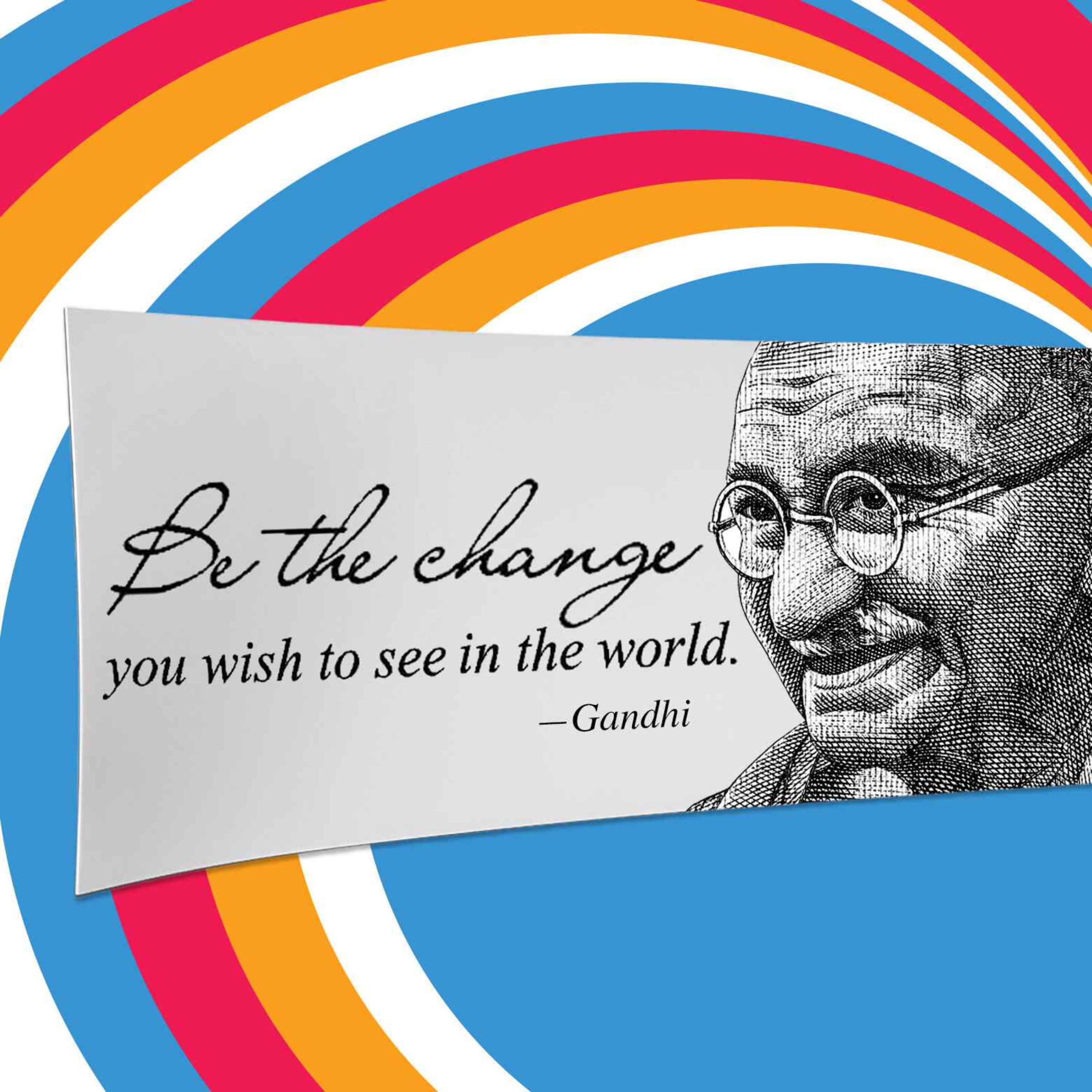
Overview of Decoder Ring’s “Gandhi Never Said ‘Be the Change’”
This episode investigates the famous quote “Be the change you want to see in the world,” showing that Mahatma Gandhi almost certainly did not say it. Instead, Slate traces the phrase to Arlene Lawrence (the transcript sometimes renders her name differently), a Brooklyn drama teacher and former actress who says the line came to her during a spiritual revelation in the early 1970s. The episode follows how her personal maxim spread through New Age and self-help circles, then gradually became misattributed to Gandhi.
The Origin Story of “Be the Change”
Arlene Lawrence’s unexpected path
- Lawrence grew up in Brooklyn, became an actress, and later taught theater and speech.
- After a traumatic experience surrounding her film debut, she became seriously ill.
- In 1969, while traveling in California, she had what she describes as a mystical experience at Big Sur involving a flower and a sudden sense of unity and enlightenment.
The “love principles”
- While teaching at Thomas Jefferson High School in Brooklyn in 1970, Lawrence says she received six principles “through a ray of light” in her office.
- The first and most important was:
- “Be the change you want to see happen instead of trying to change anyone else.”
- She used these principles to launch a schoolwide “Love Project,” including student groups, cookie giveaways, book drives, toy drives, and arts programs.
How the Quote Spread
Diane Kennedy Pike’s role
- Lawrence later met Diane Kennedy Pike, widow of controversial Episcopal Bishop James Pike.
- Pike and Diane had been involved in progressive religion, spiritual seeking, and public controversy.
- Diane helped Lawrence systematize and promote the “love principles”:
- She encouraged Lawrence to write about the story.
- She helped turn the Bishop Pike Foundation into the Love Project.
- They sent out cards with the principles printed on them, including the phrase “Be the change.”
From local motto to widespread slogan
- Through workshops, living-room gatherings, and word of mouth, the phrase spread across the U.S.
- The wording stuck because it was short, active, and inspirational.
- Eventually, people began using it without attribution, and it slowly became a standalone motivational slogan.
Why People Think Gandhi Said It
No evidence in Gandhi’s writings
- Researchers have searched Gandhi’s collected writings and found no instance of him saying the exact phrase.
- The episode notes that Gandhi did write something somewhat similar in a 1913 article about snakes and self-change:
- If we change ourselves, the world’s tendencies change too.
- But the podcast argues that this is not the direct source of the famous quote.
How the misattribution took hold
- The quote likely moved through New Age and spiritual circles, where sayings were freely paraphrased and blended.
- Gandhi’s growing image as a saintly moral authority made him a natural recipient of the quote.
- The 1982 film Gandhi helped elevate his public status even further.
- By the late 1980s and 1990s, the quote had spread into books, political speeches, posters, and merchandise.
Key Takeaways
- The quote is probably not Gandhi’s.
- Its likely origin is Arlene Lawrence, who says it came to her in a spiritual experience and became part of her “love principles.”
- Diane Kennedy Pike was crucial in helping it spread beyond Lawrence’s school and local circles.
- Gandhi’s name gave the quote added authority, which helped it become ubiquitous.
- The episode highlights how quotes evolve, get simplified, and acquire new authorship through repetition and cultural prestige.
Final Thought
The episode’s bigger point is not just “who said it first,” but how sayings become powerful. “Be the change” endured because it is compact, actionable, and morally resonant—and because attaching Gandhi’s name made it feel timeless. Even if the attribution is false, the phrase’s cultural life is very real.