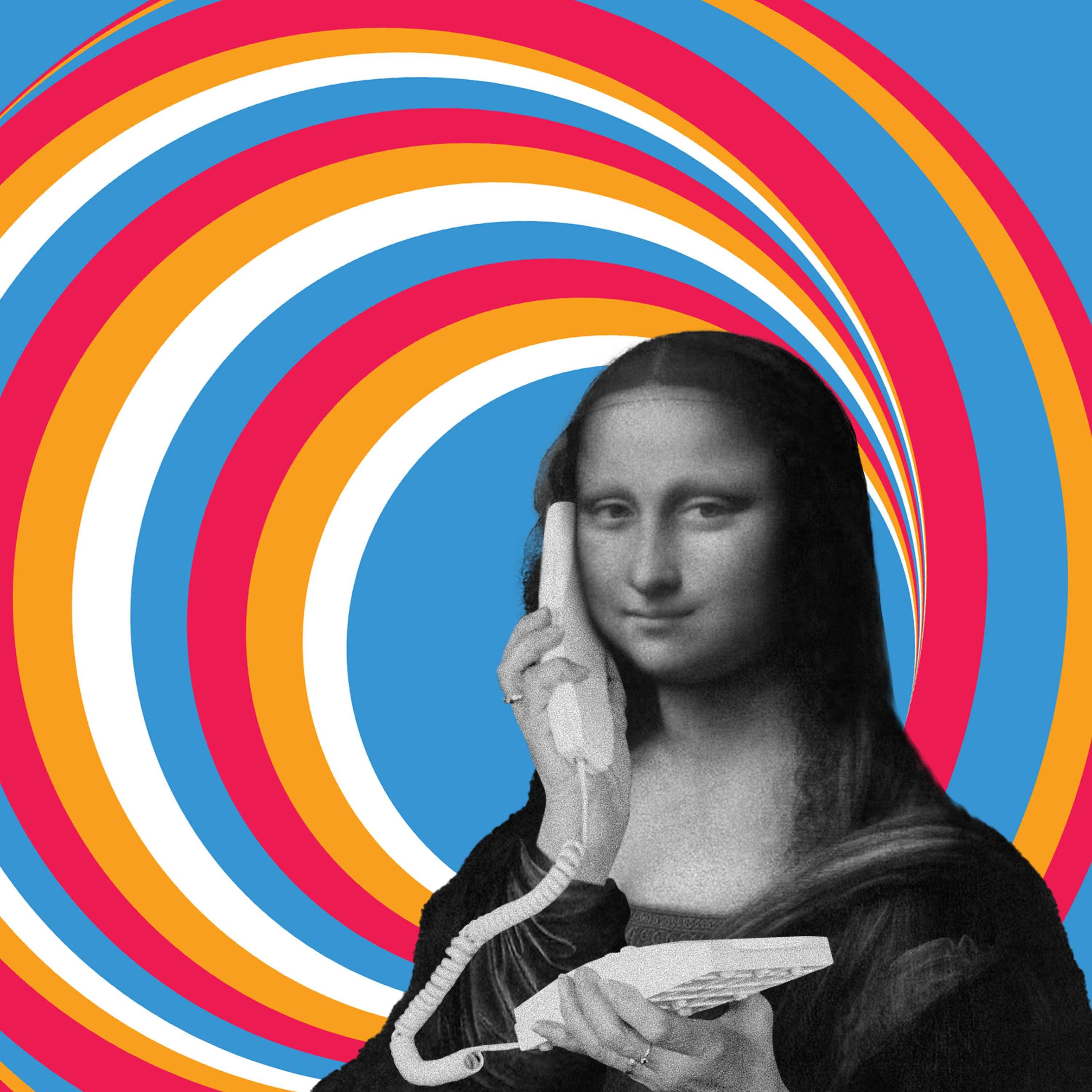
Overview of Decoder Rings Back — "Why the Mona Lisa?"
This episode (the inaugural installment of Slate’s new Decoder Rings Back segment, hosted by Willa Paskin) answers a listener’s question: how did Leonardo da Vinci’s Mona Lisa become the single most recognizable painting in the world? The episode traces the painting’s production and early reputation, then shows how a sensational 1911 theft, followed by 20th-century publicity, touring, reproduction and merchandising, turned a highly regarded Renaissance portrait into a global icon.
Key points and short timeline
- Painted by Leonardo da Vinci beginning around 1503 (likely worked on for years); sitter generally identified as Lisa Gherardini (wife of Florentine silk merchant Francesco del Giocondo) — hence La Gioconda / La Joconde / “Mona Lisa.”
- Executed on a poplar panel (small, about 77 × 53 cm), using techniques such as sfumato that create the painting’s soft modeling and enigmatic smile.
- Leonardo took the painting to France when he entered the court of Francis I; it remained in royal/French collections and then the Louvre by the late 18th century.
- August 1911: the painting was stolen from the Louvre (discovered the next day); the theft became an international media sensation.
- 1913: Vincenzo Peruggia (an Italian former Louvre employee) brought the painting back to Italy and was arrested; the publicity from the theft greatly increased public attention to the painting.
- 1919 onward: Dadaist Marcel Duchamp famously defaced a postcard reproduction (L.H.O.O.Q.), artists and media used the image as a target and symbol, and the painting was repeatedly reproduced and parodied.
- 20th century: major international tours (including to the U.S. in the 1960s and Japan later), museum merchandising and mass reproduction cemented its status as the archetype of “great art.”
Why the Mona Lisa became so famous — the multistep explanation
- Artistic merit and innovation: Leonardo’s use of sfumato, delicate modeling, and the ambiguous expression were appreciated by connoisseurs; the painting was a recognized masterpiece among many great Renaissance works.
- Museum placement and accessibility: Being in Paris — the emerging center of the art world — and hanging in the Louvre (the world’s most prestigious public museum) made it visible to many visitors and artists who studied and copied it.
- The 1911 theft: The dramatic, widely covered theft turned the Mona Lisa into front‑page news globally. The narrative of crime, mystery, and nationalist intrigue made the painting a household name beyond specialist circles.
- Publicity loop: After recovery, continued press interest, artistic provocations (Duchamp), and later institutional events (high-profile showings, visits by heads of state) amplified fame.
- Mass reproduction and merchandising: Reproduction in newspapers, postcards, adverts, and gift-shop goods transformed the image into a cultural symbol and commodity — recognizable even by people who’d never seen the original.
- The painting as symbol: Over the 20th century the Mona Lisa stopped being just one painting among many masterpieces and instead became a stand‑in for “great art” itself — a recognisable signifier used, parodied, and marketed worldwide.
The 1911 theft — how it unfolded and why it mattered
- The painting was taken from the Salon Carré at the Louvre in August 1911 (discovered missing the following day).
- Security at the time was minimal; the painting’s protective glass/frame had been removed by the thief.
- Newspapers and popular culture ran the story nonstop — cartoons, songs, and speculation proliferated; celebrities and artists were implicated in rumors.
- In 1913 Vincenzo Peruggia, a former Louvre employee who had worked on the painting’s protective frame, attempted to return the work to Italy; he was arrested in Florence when he tried to negotiate a sale.
- The theft and the trial turned the Mona Lisa into an object of mass fascination and narrative drama, much as modern high‑profile art crimes do today.
Later boosts to fame (20th century)
- Marcel Duchamp’s 1919 carte postale defacement (L.H.O.O.Q.) and other artistic engagements made the Mona Lisa a ready target/symbol for avant‑garde critique.
- High‑profile international loans and exhibitions (notably the U.S. showing in the early 1960s with presidential attention) exposed millions of new viewers.
- Postwar global media, reproductions, advertising, and museum merchandising consolidated the painting’s image into a universal cultural icon.
Notable insights / memorable lines from the episode
- The podcast emphasizes that the Mona Lisa’s iconic status was not inevitable — it required accidents of history (ownership, museum prominence), sensational news events (theft), cultural conversation (critical essays, parody), and mass reproduction.
- “An artwork can be a masterpiece and still be just one among many — it takes social and media forces to make it the singular icon we now know.”
Sources & further reading
- Donald Sassoon — Mona Lisa: The History of the World’s Most Famous Painting (noted as the most extensive treatment of how the painting grew famous).
- Dorothy and Thomas Hübler — The Crimes of Paris (useful for details of the 1911 theft and period crime culture).
- Primary historical facts: theft (Aug 1911), recovery in 1913 (Vincenzo Peruggia), Duchamp’s L.H.O.O.Q. (1919), major US exhibition in the 1960s.
How this episode fits into Decoder Rings Back (and how to follow)
- This episode launches Slate’s new membership-backed segment where host Willa Paskin calls listeners back with researched answers to cultural curiosities.
- Future Decoder Rings Back installments will be available to Slate Plus subscribers; listeners can submit questions to decoderring@slate.com or by phone (number given in the episode).