Overview of Bridget in the Buff
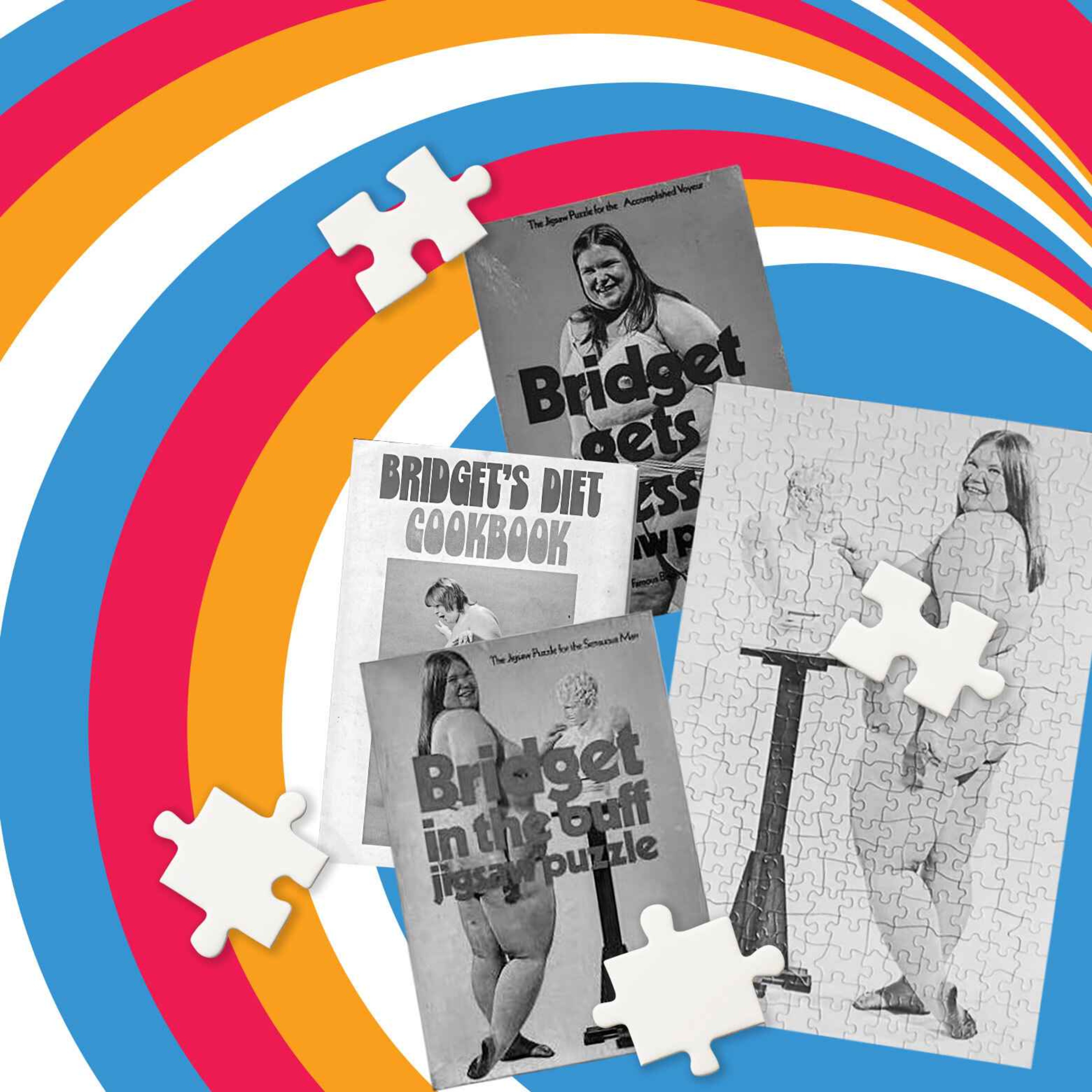
This episode of Decoder Ring investigates the mystery behind “Bridget in the Buff,” a 1970s novelty image of a cheerful naked fat woman that became a surprisingly widespread line of puzzles, calendars, books, and other merchandise. What begins as a listener’s childhood memory turns into a story about Dawn Brooks, the woman behind Bridget, and how a gag gift meant to mock fatness was partly transformed into an early, unintended icon of body confidence and fat acceptance.
The Mystery: Who Was Bridget?
Listener Ginger Gerolimo first encountered Bridget as a child in a stash of pornographic gag items, then later rediscovered her in antique shops and on the internet. That sparked the central question of the episode:
- Who was Bridget?
- Why was she everywhere in the 1970s and 1980s?
- And why does she still resonate now?
The answer: Bridget was Dawn Brooks, a young woman who posed for a jigsaw puzzle in 1971 and eventually became the face of an entire novelty product empire.
How Bridget Started
The ad and the photo shoot
In 1971, Dawn was a college student in Boston with a phone bill she couldn’t afford. She answered an ad looking for a “fat nude model” for a novelty puzzle company run by Herb Cavett and the American Publishing Company.
What was intended as a one-time gag became much more:
- Dawn posed nude for a jigsaw puzzle
- The company renamed her Bridget
- The first puzzle sold well
- More products quickly followed
The expanding product line
Bridget appeared on:
- jigsaw puzzles
- calendars
- posters
- playing cards
- coloring books
- cookbooks
- sex books
- exercise books
- advice books
- even a Bridget-themed drink
The company originally treated it as a joke, but the public response turned Bridget into a profitable phenomenon.
Dawn Brooks’ Story
Dawn’s life helps explain why Bridget mattered so much to her.
Early life
- Grew up in Manchester, Connecticut
- Was always fat, but also outgoing and socially confident
- Experienced abuse and family conflict at home
- Described herself as living in survival mode
College and the decision to pose
At Graham Junior College in Boston, Dawn studied radio production and embraced a lively, creative social life. When she found the ad for a plus-size nude model, she saw it as:
- a way to pay bills
- a chance to do something unconventional
- an opportunity to challenge stereotypes about fat women
She later said she wanted to show that fat people could be confident, desirable, and visible.
Why Bridget Became Popular
The episode argues that Bridget’s popularity wasn’t just about ridicule.
Multiple readings of Bridget
Some people bought Bridget items as:
- jokes
- gag gifts
- ironic novelty items
But others saw something else:
- attraction
- body positivity
- validation
- a rare image of a fat woman shown as happy and self-possessed
The show includes voices from people who encountered Bridget in the 1970s and found her unexpectedly powerful rather than merely funny.
The Tension: Joke, Object, or Icon?
Bridget’s image existed in a complicated space:
- She was created as a parody of Playboy-style pinups
- Her body was meant to be the punchline
- Yet her expression, posture, and confidence made her feel less like a joke and more like a real pinup
Dawn gradually realized that the company had moved beyond the original agreement and was profiting from her image far more than expected. She pushed back, hired a lawyer, and eventually negotiated a royalty deal.
Bridget’s Legacy
From novelty to meaningful representation
Over time, Bridget’s meaning shifted:
- Once a body-shaming gag
- Later seen by some as an early body-positive image
- Eventually rediscovered online as an icon of fat acceptance
Dawn’s later life
Dawn eventually left the Bridget persona behind and went on to:
- return to school
- work in insurance and IT
- become involved in fat activism and NAFA
- speak publicly against fatphobia and demeaning media portrayals
She later appeared on TV and in documentaries, where her Bridget history was mentioned only briefly.
Key Takeaways
- Bridget in the Buff was originally a novelty product designed to mock fatness, but its reception was more complex than its creators expected.
- Dawn Brooks turned a one-time modeling job into a defining cultural image, even if she never fully controlled how it was used.
- Bridget’s long afterlife shows how an image can be reinterpreted over time—from insult to empowerment.
- The episode is ultimately about body image, agency, humor, exploitation, and the unintended power of representation.
Final Thought
The episode leaves listeners with a striking idea: even something made as a joke can become meaningful if the person at its center projects enough confidence, defiance, and humanity. Dawn Brooks did not just pose for Bridget—she helped redefine what Bridget could mean.