Data Skeptic
by Kyle Polich
The Data Skeptic Podcast features interviews and discussion of topics related to data science, statistics, machine learning, artificial intelligence and the like, all from the perspective of applying critical thinking and the scientific method to evaluate the veracity of claims and efficacy of approaches.
Episodes

The Lived Informatics Model
<p><span data-sheets-root="1">The data we collect about ourselves can tell us a lot—but only if the technology collecting it actually fits into our lives. Daniel Epstein explores personal informatics, from fitness trackers and food journals to baby tracking and AI, and explains why abandoning a tracking tool doesn't necessarily mean it failed.</span></p>

Recommender Systems Today and Tomorrow
<p>In the final episode of our Recommender Systems season, we explore the growing questions of trust, manipulation, privacy, fairness, sustainability, and user control. From fake reviews and shilling attacks to explainable recommendations and user-selected algorithms, we look at what happens when recommender systems must answer not only for what they recommend, but for the consequences of those choices.</p>

Recommender Systems Optimization Goals
<p>In part two of the Data Skeptic Recommender Systems season finale, Kyle asks a deceptively difficult question: what should recommender systems actually optimize for? Drawing on conversations from across the season, the episode explores engagement, filter bubbles, popularity bias, fairness, human curation, embeddings, and the growing role—and risks—of large language models in shaping what gets recommended to us.</p>

Recommender Systems Origin Story
<p>Where did recommender systems come from, and how do we know when they're actually working? In part one of Data Skeptic's three-part Recommender Systems finale, Kyle traces the field from collaborative filtering and the Netflix Prize to matrix factorization and modern approaches, while exploring why accuracy alone can't capture what makes a recommendation useful, surprising, or meaningful.</p>

Social Choice for Fair Recommendations
<p>Recommender systems influence nearly every aspect of our digital lives—but what does it mean for those systems to be fair? Robin Burke joins Data Skeptic to discuss the history of recommender systems, the limitations of optimizing purely for accuracy, and how ideas from social choice theory can help balance the needs of users, creators, and society. The conversation explores the future of recommendation algorithms and why fairness is a far more complex challenge than it first appears.</p>

News Recommendations
<p class="PDq2pG_selectionAnchorContainer" data-start="1442" data-end="1922">News recommendation algorithms influence far more than what stories we click—they can shape our understanding of the world. In this episode, Kyle Polich speaks with Andreea Iana about responsible AI, filter bubbles, multilingual news recommendation, and her open-source NewsRecLib framework for evaluating recommender systems. They explore why bigger models aren't always better and how future recommendation systems can balance personalization with diversity and societal impact.</p>

Give Users the Wheel
<p>What if you could simply tell a recommendation system what you want instead of relying on likes, dislikes, and watch history? Kyle Polich talks with Fuyuan Lyu about the DPR framework, which combines large language models and traditional recommender systems to give users direct control over recommendations through natural language. Together they explore how conversational interfaces could transform platforms like YouTube, TikTok, and news feeds while preserving the strengths of modern recommendation algorithms.</p>

AutoLike
<p>How can researchers audit recommendation systems when the algorithms are hidden from view? Hieu Le joins Kyle Polich to discuss Auto-Like, a reinforcement learning framework that systematically explores how platforms like TikTok personalize content feeds. The conversation covers recommendation transparency, black-box auditing, and the future of platform accountability.</p>

Student Spotlight: Aaron Payne, Data Analyst
<p>Aaron Payne, an MBA student at Georgia Tech studying business analytics and a Senior Insights Analyst at Chick-fil-A, joins Kyle Polich to talk about turning analytics into decisions that matter. They unpack a real-world forecasting project with Comfama in Colombia, including messy data realities, interpretability tradeoffs, and why "data science for good" starts with the people impacted.</p>

The Future is Agentic in Recommender Systems
<p>Kyle Polich sits down with Yashar Deldjoo, research scientist and Associate Professor at the Polytechnic University of Bari, to explore how recommender systems have evolved and why trustworthiness matters. They unpack key dimensions of responsible AI, including robustness to adversarial attacks, privacy, explainability, and fairness, and discuss how LLMs introduce new risks like hallucinations.</p> <p>The episode closes with a look at "agentic" recommender systems, where tools and memory shift recommendations from ranked lists to end-to-end task completion.</p>

Book Ratings and Recommendations
<p>Goodreads star ratings can be misleading as measures of "book quality," and research from Hannes Rosenbusch suggests that for many professionally published books, differences between readers often matter more than differences between books. The episode also explores how to model reader preferences, why reviews often reveal more about the reviewer than the text, and how LLMs can aid computational literary research while still falling short of human editors in creative writing. <!-- notionvc: f198d4f9-8d25-445d-990a-10505e5a819e --></p>

Disentanglement and Interpretability in Recommender Systems
Collective Altruism in Recommender Systems
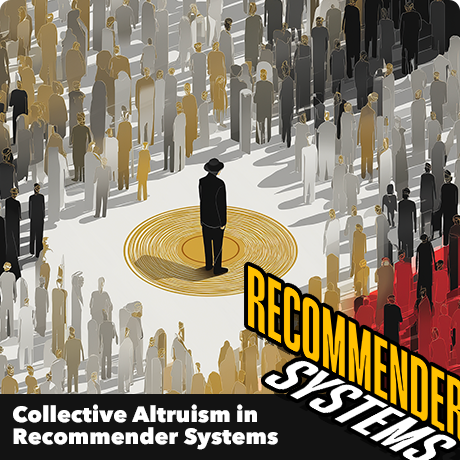
<p>Ekaterina (Kat) Filadova from MIT EECS joins us to discuss strategic learning in recommender systems—what happens when users collectively coordinate to game recommendation algorithms. Kat's research reveals surprising findings: algorithmic "protest movements" can paradoxically help platforms by providing clearer preference signals, and the challenge of distinguishing coordinated behavior from bot activity is more complex than it appears. This episode explores the intersection of machine learning and game theory, examining what happens when your training data actively responds to your algorithm.</p>

Niche vs Mainstream
<p>Anas Buhayh discusses multi-stakeholder fairness in recommender systems and the S'mores framework—a simulation allowing users to choose between mainstream and niche algorithms. His research shows specialized recommenders improve utility for niche users while raising questions about filter bubbles and data privacy.</p>

Healthy Friction in Job Recommender Systems
<p>In this episode, host Kyle Polich speaks with Roan Schellingerhout, a fourth-year PhD student at Maastricht University, about explainable multi-stakeholder recommender systems for job recruitment. Roan discusses his research on creating AI-powered job matching systems that balance the needs of multiple stakeholders—job seekers, recruiters, HR professionals, and companies. The conversation explores different types of explanations for job recommendations, including textual, bar chart, and graph-based formats, with findings showing that lay users strongly prefer simple textual explanations over more technical visualizations. Roan shares insights from his "healthy friction" study, which tested whether users could distinguish between real AI-generated explanations and randomly generated ones, revealing that participants often used explanations as information sources rather than decision-making tools.</p> <p>The discussion delves into the technical architecture behind these systems, including the use of knowledge graphs built from tabular data, inference rules, and large language models to generate human-friendly explanations. Roan explains how his research aims to open the black box of recommender systems, making them more transparent and trustworthy for non-technical users. Looking forward, he discusses ongoing work on automated knowledge graph construction from resumes and job listings, research into fairness considerations around gender and location, and plans for real-world testing with actual job seekers. The episode concludes with Roan's vision for the future: AI systems that support rather than replace human recruiters, making the job search process less grueling while maintaining the essential human judgment that recruitment requires.</p> <p> </p>

Fairness in PCA-Based Recommenders
<p>In this episode, we explore the fascinating world of recommender systems and algorithmic fairness with David Liu, Assistant Research Professor at Cornell University's Center for Data Science for Enterprise and Society. David shares insights from his research on how machine learning models can inadvertently create unfairness, particularly for minority and niche user groups, even without any malicious intent. We dive deep into his groundbreaking work on Principal Component Analysis (PCA) and collaborative filtering, examining why these fundamental techniques sometimes fail to serve all users equally.</p> <p>David introduces the concept of "power niche users" - highly active users with specialized interests who generate valuable data that can benefit the entire platform. We discuss his paper "When Collaborative Filtering Is Not Collaborative," which reveals how PCA can over-specialize on popular content while neglecting both niche items and even failing to properly recommend popular artists to new potential fans. David presents solutions through item-weighted PCA and thoughtful data upweighting strategies that can improve both fairness and performance simultaneously, challenging the common assumption that these goals must be in tension. The conversation spans from theoretical insights to practical applications at companies like Meta, offering a comprehensive look at the future of personalized recommendations.</p> <p> </p>
Video Recommendations in Industry
<p>In this episode, Kyle Polich sits down with <span data-sheets-root="1">Cory Zechmann</span>, a content curator working in streaming television with 16 years of experience running the music blog "Silence Nogood." They explore the intersection of human curation and machine learning in content discovery, discussing the concept of "algatorial" curation—where algorithms and editorial expertise work together. Key topics include the cold start problem, why every metric is just a "proxy metric" for what users actually want, the challenge of filter bubbles, and the importance of balancing familiarity with discovery. Cory shares insights on why TikTok's algorithm works so well (clean data and massive interaction volume), the crucial role of homepage curation, and how human curators help by contextualizing content, cleaning data, and identifying positive feedback loops that algorithms might miss.</p> <p>The conversation covers practical challenges like measuring "surprise and delight," the content deluge created by democratized creation tools, and why trust in tech companies is essential for better personalization. Cory emphasizes that discovery is "a good type of friction" and explains how the CODE framework (Capture, Organize, Distill, Express, plus Analysis) guides professional curation work. Looking to the future, they discuss the need for systems thinking that creates narrative connections between content, the potential for conversational AI to help users articulate preferences, and why diverse perspectives beyond engineering are crucial for building effective discovery systems. Resources mentioned include the newsletter "Top Information Retrieval Papers of the Week" and Notebook LM for synthesizing research.</p> <p> </p>

Designing Recommender Systems for Digital Humanities
<p>In this episode of Data Skeptic, we explore the fascinating intersection of recommender systems and digital humanities with guest Florian Atzenhofer-Baumgartner, a PhD student at Graz University of Technology. Florian is working on <a href= "http://monasterium.net/">Monasterium.net</a>, Europe's largest online collection of historical charters, containing millions of medieval and early modern documents from across the continent. The conversation delves into why traditional recommender systems fall short in the digital humanities space, where users range from expert historians and genealogists to art historians and linguists, each with unique research needs and information-seeking behaviors.</p> <p>Florian explains the technical challenges of building a recommender system for cultural heritage materials, including dealing with sparse user-item interaction matrices, the cold start problem, and the need for multi-modal similarity approaches that can handle text, images, metadata, and historical context. The platform leverages various embedding techniques and gives users control over weighting different modalities—whether they're searching based on text similarity, visual imagery, or diplomatic features like issuers and receivers. A key insight from Florian's research is the importance of balancing serendipity with utility, collection representation to prevent bias, and system explainability while maintaining effectiveness.</p> <p>The discussion also touches on unique evaluation challenges in non-commercial recommendation contexts, including Florian's "research funnel" framework that considers discovery, interaction, integration, and impact stages. Looking ahead, Florian envisions recommendation systems becoming standard tools for exploration across digital archives and cultural heritage repositories throughout Europe, potentially transforming how researchers discover and engage with historical materials. The new version of <a href="http://Monasterium.net">Monasterium.net</a>, set to launch with enhanced semantic search and recommendation features, represents an important step toward making cultural heritage more accessible and discoverable for everyone.</p> <p> </p>
DataRec Library for Reproducible in Recommend Systems
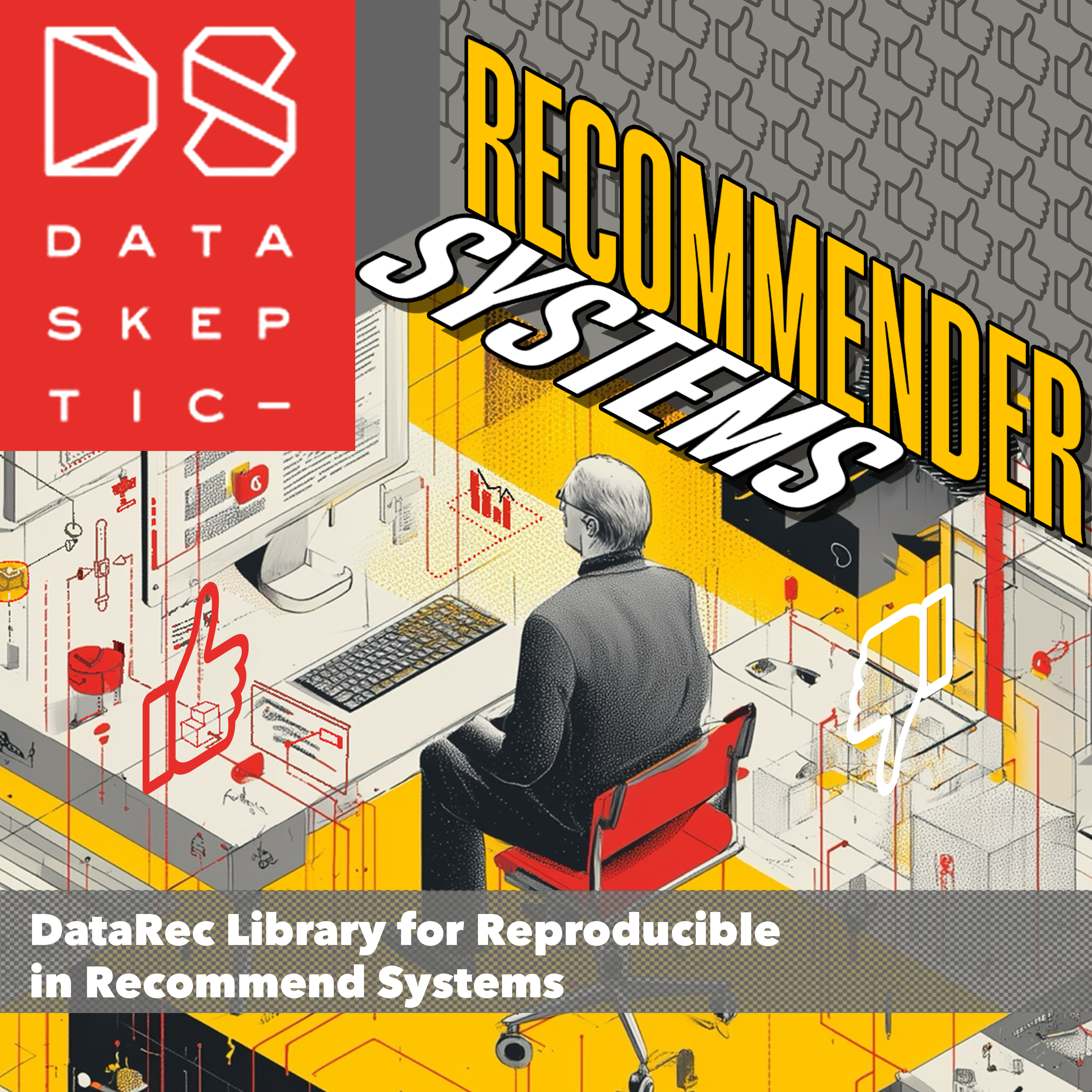
<p>In this episode of Data Skeptic's Recommender Systems series, host Kyle Polich explores DataRec, a new Python library designed to bring reproducibility and standardization to recommender systems research. Guest Alberto Carlo Mario Mancino, a postdoc researcher from Politecnico di Bari, Italy, discusses the challenges of dataset management in recommendation research—from version control issues to preprocessing inconsistencies—and how DataRec provides automated downloads, checksum verification, and standardized filtering strategies for popular datasets like MovieLens, Last.fm, and Amazon reviews. </p> <p>The conversation covers Alberto's research journey through knowledge graphs, graph-based recommenders, privacy considerations, and recommendation novelty. He explains why small modifications in datasets can significantly impact research outcomes, the importance of offline evaluation, and DataRec's vision as a lightweight library that integrates with existing frameworks rather than replacing them. Whether you're benchmarking new algorithms or exploring recommendation techniques, this episode offers practical insights into one of the most critical yet overlooked aspects of reproducible ML research.</p>
Shilling Attacks on Recommender Systems
<p>In this episode of Data Skeptic's Recommender Systems series, Kyle sits down with Aditya Chichani, a senior machine learning engineer at Walmart, to explore the darker side of recommendation algorithms. The conversation centers on shilling attacks—a form of manipulation where malicious actors create multiple fake profiles to game recommender systems, either to promote specific items or sabotage competitors. Aditya, who researched these attacks during his undergraduate studies at SPIT before completing his master's in computer science with a data science specialization at UC Berkeley, explains how these vulnerabilities emerge particularly in collaborative filtering systems. From promoting a friend's ska band on Spotify to inflating product ratings on e-commerce platforms, shilling attacks represent a significant threat in an industry where approximately 4% of reviews are fake, translating to $800 billion in annual sales in the US alone.</p> <p>The discussion delves deep into collaborative filtering, explaining both user-user and item-item approaches that create similarity matrices to predict user preferences. However, these systems face various shilling attacks of increasing sophistication: random attacks use minimal information with average ratings, while segmented attacks strategically target popular items (like Taylor Swift albums) to build credibility before promoting target items. Bandwagon attacks focus on highly popular items to connect with genuine users, and average attacks leverage item rating knowledge to appear authentic. User-user collaborative filtering proves particularly vulnerable, requiring as few as 500 fake profiles to impact recommendations, while item-item filtering demands significantly more resources. Aditya addresses detection through machine learning techniques that analyze behavioral patterns using methods like PCA to identify profiles with unusually high correlation and suspicious rating consistency. However, this remains an evolving challenge as attackers adapt strategies, now using large language models to generate more authentic-seeming fake reviews. His research with the MovieLens dataset tested detection algorithms against synthetic attacks, highlighting how these concerns extend to modern e-commerce systems. While companies rarely share attack and detection data publicly to avoid giving attackers advantages, academic research continues advancing both offensive and defensive strategies in recommender systems security. <!-- notionvc: c1bdce5c-05d5-4b8b-871f-892c4ad6edaa --> <!-- notionvc: 9f6a9929-cf3e-48be-af9f-98b00291654a --></p>