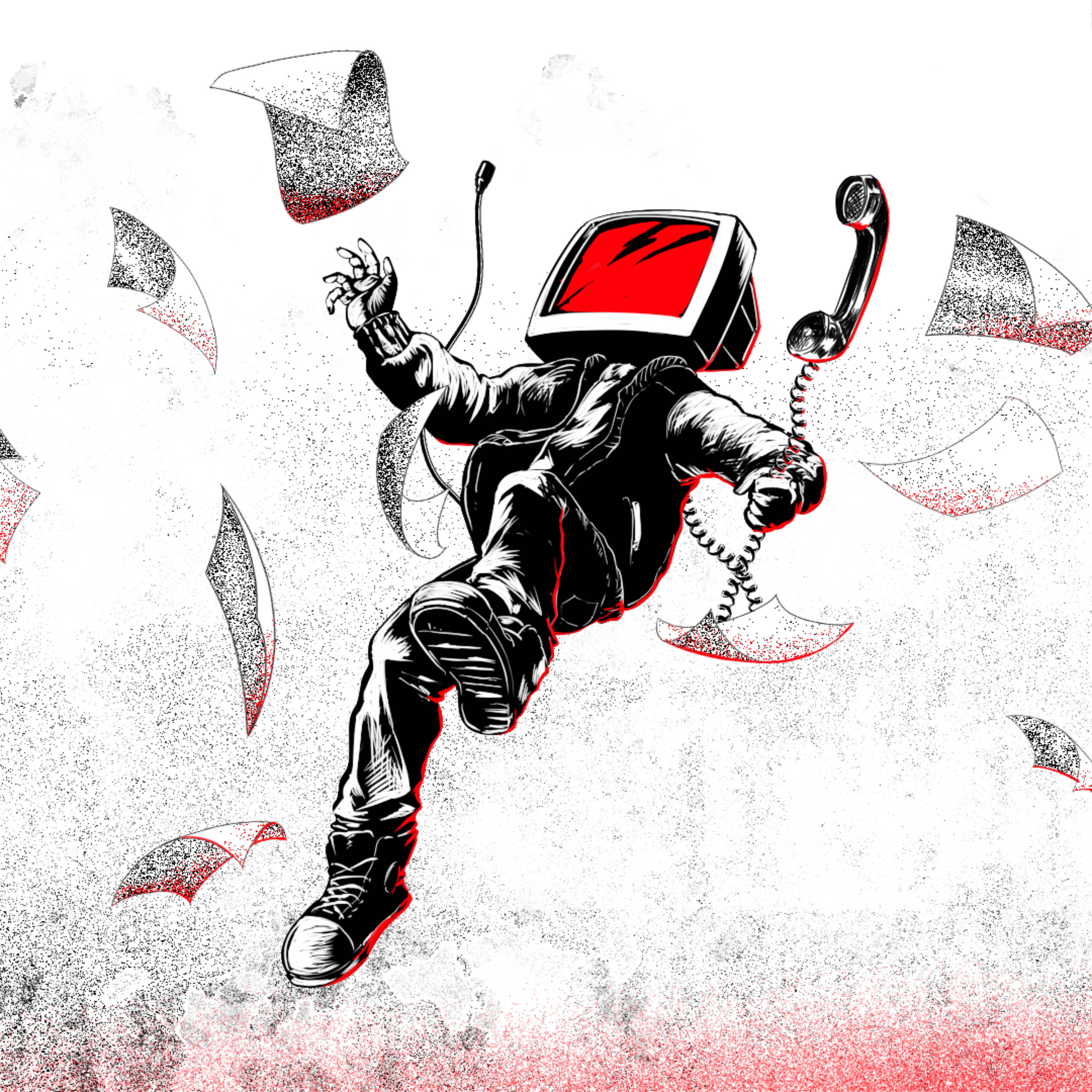
Overview of 169: MoD (Darknet Diaries — Jack Rhysider)
This is Part 2 of the Masters of Deception (MoD) story — a deep dive into late‑1980s/early‑1990s hacker culture in New York, the technical exploits of a handful of teenage hackers (notably “FiberOptic”/Mark), the resulting war with older groups (Legion of Doom), law‑enforcement countermeasures (wire and data taps, Operation Sun Devil), and the legal and cultural fallout that helped spawn the EFF. The episode traces how curiosity and technical skill met federal law, corporate panic, and long‑term consequences for the underground.
Key people & groups
- Jack Rhysider — host/narrator.
- Masters of Deception (MoD) — hacker collective formed around Mark (“FiberOptic”), Eli (“AcidFreak”), Paul (“Scorpion”), John Lee (“Corrupt”), and Julio (“Outlaw”).
- Mark / FiberOptic — exceptionally skilled phone and packet‑network hacker; central figure.
- John Lee / Corrupt and Julio / Outlaw — Bronx/Brooklyn members; targeted in phone‑switch monitoring.
- Legion of Doom (LOD) — earlier hacker group; internal feuds and decline; Eric “Bloodaxe” (Chris Goggins) plays a pivotal antagonistic role.
- Jason Snitker / Paramaster — provided a massive TimeNet backdoor that gave wide access.
- Tom Kaiser & Fred Staples — New York Telephone security engineers who monitored activity (DNR device).
- U.S. Secret Service & FBI — executed data taps, raids, and Operation Sun Devil.
- Electronic Frontier Foundation (EFF) — founded partly in response to perceived overreach.
Timeline — major events
- Late 1980s: MoD forms in NYC; members meet at 2600 meetups (Citicorp Center).
- 1988–1989: Jason (Paramaster) discovers and later passes a TimeNet supervisor‑level backdoor to MOD; Mark uses it to access many networks.
- MLK Day outage (Jan 1990): Major AT&T outage triggers wide panic. LOD initially suspected; later AT&T admitted a software bug caused it.
- Jan 18, 1990: Secret Service arrests Craig Neidorf (Night Lightning) over E911 file publication.
- 1990–1992: Wire/data taps and investigations escalate; Operation Sun Devil leads to dozens of warrants and raids.
- June 1992: Grand jury letters; formal indictments of MoD members under the CFAA; trials and pleas follow.
Important incidents and techniques
- Dialed Number Recorder (DNR): Private telco monitoring device used by New York Telephone security to log call metadata (which numbers, durations), enabling tracebacks without court wiretap orders.
- Dial hub / DMS‑100 switches: New dial hubs provided remote employee logins; the “technician” had a legitimate token and used it to access core telco systems.
- TimeNet backdoor: Jason’s supervisor‑level access to TimeNet (a large, centralized communications network) let MoD locate and jump into many organizations’ systems easily — a multiplier for their capabilities.
- Social engineering / login capture: Typical techniques included session hijacking, snapping up credentials, and opportunistic reuse.
- LOD vs MOD feud: personal and racial tensions, BBS warfare, harassment, doxxing, phone tappings and pranks escalated into informing and law‑enforcement cooperation.
- Data taps / wire room: For the first time authorities legally monitored computer communications (not just voice), recording unencrypted passwords and activity in a dedicated “wire room.”
Legal & cultural fallout — main takeaways
- CFAA and overreach: The Computer Fraud and Abuse Act (CFAA) became the vehicle for sweeping prosecutions. Many arrests, raids, and prosecutions followed, often against curious teenagers rather than clearly malicious actors.
- EFF birth: Public reaction to aggressive enforcement (and high‑profile incidents like the Steve Jackson Games raid and the Craig Neidorf trial) helped catalyze the Electronic Frontier Foundation to protect digital rights and contest overbroad application of computer law.
- The golden age ends: The episode frames the late‑80s/early‑90s hacker scene as a “last beautiful accident” — a free frontier that ended when technical curiosity collided with federal enforcement, corporate alarm, and formalized laws.
- Technical security lesson: Centralized or poorly segmented infrastructure (e.g., TimeNet, remote dial hubs) and human factors (shared tokens, poor change controls) provided massive amplification of a few exploits.
- Human cost: Several MoD members served jail time; others cooperated. Even where damage claims were exaggerated (e.g., AT&T outage later traced to a software bug), arrests and reputational damage had long effects.
Notable quotes & moments
- John Perry Barlow, Declaration of the Independence of Cyberspace opening: “Governments of the industrial world, you weary giants of flesh and steel…” — symbolizing early net libertarianism.
- Barlow’s later reflection on Mark: likened curious hackers to spelunkers — questioning whether exploration should be criminalized.
- Eli (AcidFreak) on “the flow”: a vivid description of addictive momentum while hacking — “once you start going, you can’t stop… the flow gets you going.”
- The surprise twist: AT&T publicly acknowledged the major outage was caused by an internal software bug (a misplaced “word break”) — not a hacker attack.
Outcomes & sentences (summary)
- MoD members: Paul and Eli got roughly six months; Mark got a year; John Lee also got one year; Julio cooperated and avoided prison.
- LOD members: some faced significant exposure and sentences (e.g., Adam and the Prophet received prison time).
- Craig Neidorf (Frack): charged but ultimately had the case dropped when BellSouth’s claims failed and it turned out the E911 data could be obtained for a fee — big EFF victory.
- Broader result: increased policing of online activity, more prosecutions, and the chilling of open hacker culture.
Themes & implications
- Power of centralization: a single backdoor into centralized infrastructure yielded disproportionate access.
- Curiosity vs. criminality: the era highlighted the gray line between exploration/searching and malicious exploitation; law and policy struggled to draw it fairly.
- Tech culture shaping law: ignorance of techno‑nuance by lawmakers and law enforcement led to blunt instruments (CFAA) that criminalized behavior maybe better addressed by policy nuance.
- Civil liberties: the episode underscores the birth of organized digital civil‑liberties advocacy (EFF) as a direct response to enforcement overreach.
Further reading / resources mentioned
- Hacker Crackdown — Bruce Sterling
- Masters of Deception — Michelle Slatalla & Joshua Quittner
- The Cuckoo’s Egg — (classic hacker/intrusion book mentioned as alternate reading)
- Electronic Frontier Foundation (EFF) — founded by John Perry Barlow, Mitch Kapor, and others
- Darknet Diaries — Part 1 (previous episode) recommended before listening to this part
Final summary
Part 2 tells how a small circle of exceptional teenage hackers in NYC combined curiosity, social engineering, and a rare backdoor into a major communications network to access huge swaths of systems, provoking a dramatic law‑enforcement response. The resulting legal battles, raids, and headlines destroyed much of the unregulated hacker subculture, prompted the creation of the EFF, and left a complicated legacy about how society should treat digital exploration versus criminality.