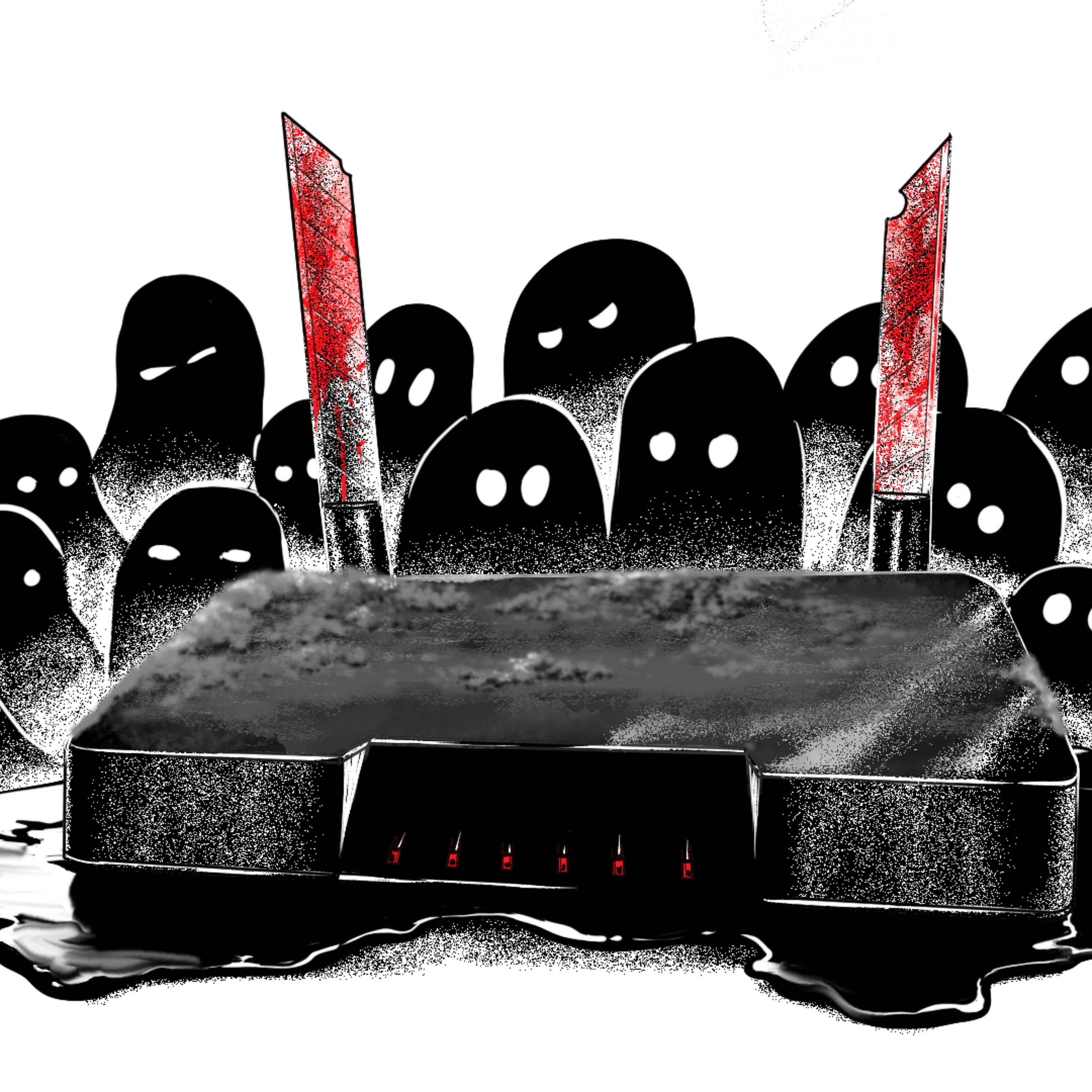
Overview of 172: SuperBox (Darknet Diaries — Jack Rhysider)
Jack Rhysider interviews a security researcher known as “Deadass” about her multi-year investigation into cheap Android-based TV streaming devices (branded Superbox, VC box, MAGA box, etc.) that are widespread in U.S. homes and retail marketplaces. What started as curiosity about a suspicious plug-and-play streaming box at her father’s house escalated into discovery of a large, malicious ecosystem: devices shipped with outdated Android, backdoors, root shells and remote access tooling, used for residential proxying, reconnaissance, botnet DDoS campaigns and possibly large-scale espionage.
Key takeaways / narrative timeline
- Initial observation: Deadass sees multiple Superbox devices at her father’s home that slow the network and claim to provide thousands of pirated channels for a one-time cost.
- Local analysis: She quarantines a box, captures network traffic and discovers:
- Heavy ARP scanning/ARP floods against local devices, enabling knockouts and impersonation (IP/MAC spoofing).
- Outbound beaconing to .cn/.top domains (Tencent infrastructure and suspicious domains).
- Preinstalled remote-access tooling (TeamViewer, ADB access), and ability to obtain root.
- Deeper research: She decompiles APKs, dumps firmware (finds missing disk partitions), uncovers an alternate app store (multi-layer zipped, nonstandard), and documents marketing/reseller networks fueling adoption.
- Escalation:
- Her findings drew government interest and a formal investigation; she gave talks under gag rules (no recording).
- June 2025: FBI public service announcement on infected consumer IoT facilitating criminal activity.
- Late 2025 / Jan 2026: Devices were confirmed as part of large botnet activity (KimWolf/Kim Wolf) used for massive DDoS attacks (reported up to 31 Tbps), proving these boxes were being weaponized at scale.
- Ongoing: The ecosystem includes many variants (cheap $30 Android boxes and higher-priced $300 Superbox), influencer-driven marketing, third-party marketplace distribution (Amazon, Walmart, Best Buy third‑party sellers), and MLM-style reseller incentives. Removal from marketplaces is a cat-and-mouse game.
What the devices do (technical behavior)
- Firmware & OS:
- Run generic Android (not Android TV), often years out of date (e.g., 2021 patches).
- Custom app store (Superbox App Store) to install piracy apps; Google Play is replaced.
- Firmware partitioning is suspicious (missing/hidden partitions).
- Remote control & persistence:
- TeamViewer, ADB enabled (no authentication in some cases); root shells accessible on devices.
- Devices can be remotely managed, updated, and reconfigured.
- Local network reconnaissance & attack:
- Aggressive ARP scanning (so frequent it causes devices to lose reservations/IPs).
- ARP-based knockouts and then impersonation (device takes over IP/MAC of knocked-out device).
- Probing of other devices on the LAN (TCP/UDP scanning), likely for credential harvesting or pivoting to work devices.
- Outbound behavior:
- Beacons to Chinese infrastructure (.cn, Tencent) and suspicious TLDs (.top).
- Large uplinks of data — potentially exfiltration, use as residential proxies, or botnet traffic.
- Hardware oddities:
- Specialized remotes with microphones and long antennas; hidden Bluetooth/covert radios suspected.
- Self-signed certificates, counterfeit regulatory/fake FCC labels on packaging.
Distribution & marketing model
- Multi-tier reseller model and influencer marketing: resellers, neighborhood sellers, social media influencers get commissions; some sellers reportedly bought back underpriced units and forced resellers to pay fines.
- Third-party marketplaces: Widely available via Amazon/Walmart/Best Buy third‑party listings despite takedowns and FBI warnings; moles re-list by different sellers.
- Psychological targeting: Focus on suburban families and community trust (soccer-mom resellers, church groups, gym buddies) rather than seedy alley sales. The product solves a real pain (fragmented streaming rights and cost), making buyers overlook security/legal risks.
- Geographic/manufacturing vectors: Devices appear manufactured and provisioned in China; whole supply/distribution chain makes enforcement difficult.
Major threats & impacts
- Personal financial compromise: Reports of bank accounts and crypto wallets being drained from households using these devices.
- Corporate risk: Devices in employee homes can pivot into corporate networks via unsegmented home networks or when employees bring them to work/hotels/cafes, enabling access to privileged credentials or VPN endpoints.
- National-scale weaponization: The devices have been incorporated into massive botnets (e.g., KimWolf) used for 10s of Tbps DDoS attacks and sold as DDoS-as-a-service.
- Data privacy and surveillance: Built-in microphones and covert radios raise the risk of eavesdropping and long-term collection of sensitive in-home conversations and metadata.
- ISP impact: Dramatic upstream bandwidth usage (thousands of GB in a month) causing customer service and billing issues; ISPs are being forced to investigate and sometimes sinkhole traffic.
- Regulatory and enforcement gaps: Fake certifications, obscure import declaration, and informal resale channels complicate enforcement.
Investigations, reporting & public response
- Research & community: Independent researchers (Deadass, others) and journalists (Brian Krebs) exposed parts of the ecosystem, which helped publicize the risk.
- Government response: FBI issued a PSA warning about IoT devices facilitating criminal activity (June 2025).
- Botnet events: Devices confirmed in large-scale DDoS botnet activity (KimWolf). Attribution is complex — some beaconing suggests Chinese infra, but many third parties (criminal operators) also exploit these insecure devices.
- Marketplace reaction: Some listings removed, but third-party marketplaces are reactive and replacements pop up quickly.
- Media friction: Some mainstream coverage (e.g., The Verge piece) framed the devices as grassroots convenience, which researchers view as normalization/propaganda and undermining security messaging.
Practical recommendations / action items
For consumers:
- If you have one: unplug it, remove it from the house network, and do not connect it to work devices or public networks. Reimage any device that touched the same network.
- Dispose securely: factory reset likely insufficient — consider physical destruction if you suspect backdoors/persistent firmware.
- Isolate unknown devices: put any IoT or streaming device on a guest network with strict segmentation and limited access to other devices.
- Monitor bandwidth and logs: look for unusual upstream usage and unexpected connections; alert your ISP if usage spikes.
- Use defense-in-depth: keep sensitive work devices on separate networks, use VPNs but realize a VPN may not protect against local LAN pivoting.
- Personal privacy: consider Faraday bags for sensitive devices when in public if you’re highly risk-averse (researcher practice, not universal advice).
For organizations / ISPs / marketplaces:
- Marketplaces: enforce faster takedowns, stricter seller verification, and remove listings for known-malicious branded devices.
- ISPs: detect abnormal upstream usage, notify customers, offer sinkholing and remediation assistance.
- Employers: enforce home network segmentation for remote employees; require guidance and scanning for home IoT devices if employees handle sensitive credentials.
- Law enforcement & regulators: improve import inspection, hold sellers/distributors accountable, and coordinate international response.
Notable quotes & insights
- “This thing is radioactive — it should be smashed, burned, and yeeted into space.” — Deadass (paraphrase of sentiment)
- “They hit us at the intersection of multi-level marketing, community trust, and a real consumer pain point (streaming fragmentation).” — Insight on why the campaign scales
- Jack’s opening analogy: comparing a recalled dangerous garlic press to whether a malicious computer/device should ever be recalled — to frame how we view consumer tech risks in the physical-safety model.
Conclusion / final perspective
The Superbox story reveals a dangerous intersection of insecure IoT hardware, sophisticated marketing/reseller tactics, and criminal (and possibly nation-state) exploitation. It’s not just piracy: these devices are convenient trojan horses that can provide reconnaissance, remote access, residential proxy bandwidth, botnet capacity, and potential eavesdropping — and they’ve already been weaponized at scale. The short-term defense is awareness, device isolation, and removal; the long-term solution requires marketplace accountability, stronger import and regulatory controls, ISP cooperation, and more security-conscious consumer behavior.
If you want one-sentence advice from this episode: don’t buy these devices, and if one is in your home/network, treat it as hostile and remove it immediately.