Overview of 1021 - Illusion USA (Chapo Trap House, 3/23/26)
Felix and the host (with Chris on mic) run a wide-ranging, characteristically abrasive episode focused on the exploding Middle East war (Israel/Iran/US), Donald Trump’s recent Truth Social proclamations, the geopolitical and economic consequences of escalation, and several domestic/cultural items (airport chaos, ICE/TSA, Elon Musk, Chuck Norris’ death and the cult of 80s action films). The conversation mixes factual news points with sharp political commentary, skepticism of official narratives, and dark humor.
Hosts & format
- Main hosts: Felix and the show’s regular host (Chris appears on mic).
- Format: freewheeling duo conversation — news-driven analysis, long riffs, cultural tangents and jokes.
Major topics discussed
Middle East war, escalation, and Trump’s public messaging
- The episode centers on three of Donald Trump’s recent Truth Social posts. Key thrusts:
- Trump claimed Israel attacked Iran’s South Pars gas field and denied U.S. prior knowledge; he threatened to “massively blow up” the entire field if Qatar’s LNG facilities were hit again.
- He listed sweeping military objectives (degrading Iranian missile capabilities and defense industrial base, eliminating Navy/Air Force/AA defenses, preventing nuclear capability, and “guarding” the Strait of Hormuz).
- He issued a 48‑hour ultimatum (later extended) ordering Iran to reopen the Strait of Hormuz or face U.S. strikes on power plants.
- Hosts view these statements as reckless, extraordinary for a commander‑in‑chief, and politically performative — aimed at calming markets or posturing rather than producing a viable de‑escalatory plan.
- They highlight contradictions: Trump claims the war is "over" yet issues extreme threats; his tweets are used to influence markets and shore up allies, but risk real escalation.
Israel, Iran, and the conduct of the conflict
- Concerns raised that Israel’s unilateral actions (e.g., strikes inside Iran) and the killing of negotiators have escalated the war beyond negotiation.
- Iran has shown ability to escalate — claims of ballistic strikes and long‑range launches, attacks on Israeli targets (including strikes near Dimona), and reported downing of an F‑35 (hosts note plausible official hedging around the aircraft’s “hard landing” narrative).
- Diego Garcia missile reports were discussed and presented as disputed/denied by Iran; hosts caution about rapid maps and alarmism but stress how such claims are used to enlist Europe.
Strategic/geoeconomic consequences
- Repeated warnings about the potential for energy‑market shocks if infrastructure (South Pars, Hormuz shipping, Gulf states’ facilities) is targeted — hosts describe “apocalyptic” scenarios for global energy, supply chains, and inflation.
- They argue U.S./Israeli actions are creating a dynamic where neither side can fully capitulate and de‑escalation is increasingly difficult — thus risk of sustained global disruption.
Political theater, markets, and messaging
- The hosts portray Trump’s tweets as both market‑manipulative and evidence of inability to “bullshit” his way out of a complex foreign crisis.
- They criticize Kushner/Whitcoff’s reported “negotiations” (which Iran denies), and suggest American/Israeli subterfuge and assassinations have poisoned diplomatic avenues.
- Lindsey Graham’s “we can take Karg Island — Iwo Jima” line is used as an example of cavalier talk about bloody invasions; the hosts stress how horrific a true amphibious assault on Karg would be.
Domestic fallout — airports, ICE/TSA, airline chaos
- Coverage of U.S. domestic disruptions: TSA agents are furloughed/striking amid funding impasse; airports are chaotic; Trump proposed deploying ICE agents to perform airport security duties.
- Hosts criticize the proposal: ICE has a history of abusive policing, and putting ICE in airport security roles may worsen civil‑liberties abuses.
- Elon Musk’s tweet promising to pay TSA salaries is ridiculed as performative; Fetterman’s response is mentioned (“incredibly generous — he hasn’t paid yet”).
Media, identity politics, and anti‑Semitism debates
- Hosts push back on conflation of criticism of Israel with anti‑Semitism, calling out what they see as weaponized claims that stifle debate.
- They also point to “philo‑Semitism” (excessive public displays of loyalty to Israel) and argue that supporting or excusing massive civilian casualties invites public backlash.
Cultural tangent — Chuck Norris, Invasion USA, memes
- In a long comedic segment, the hosts eulogize Chuck Norris and riff on his filmography and the “Chuck Norris meme” phenomenon.
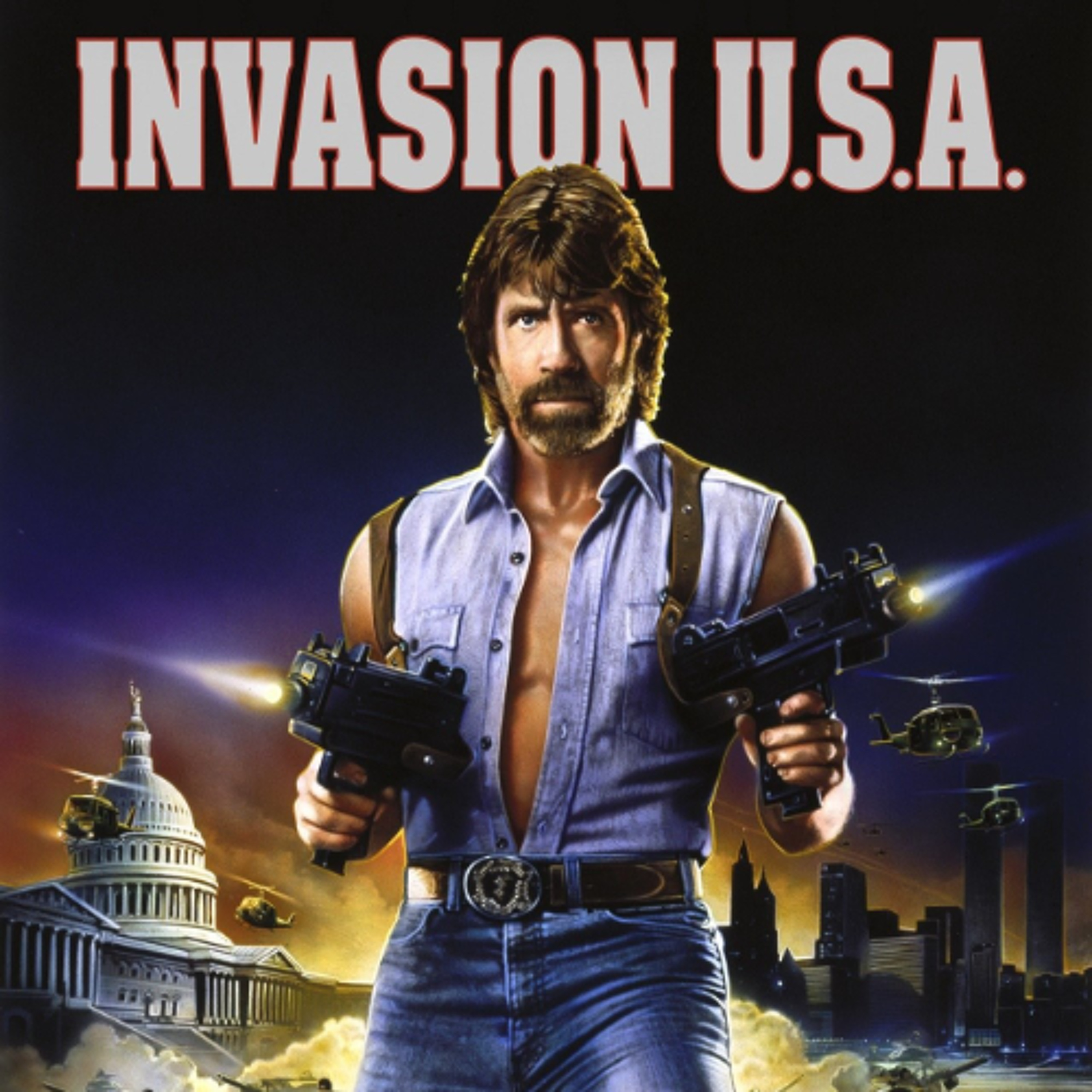
- They watched Invasion USA as a peak example of 1980s right‑wing action cinema. The segment serves as a cultural analogy: U.S. leadership and public sentiment increasingly resemble hallucinatory action‑movie logic (revenge, macho one‑liners) applied to real geopolitics.
Main takeaways
- The Middle East conflict is escalating in dangerous, unpredictable ways; actions by Israel and reactions by Iran have raised the risk of broader regional and global consequences (especially energy/market shocks).
- Trump’s public threats (obliterating gas fields, power plants) and his use of social media to influence markets and posture militarily are viewed as destabilizing and not grounded in coherent strategy.
- Diplomatic channels appear compromised: Iran denies negotiating with reported U.S./Israeli intermediaries, and assassinations/airstrikes have eroded trust.
- Domestic governance and public services are strained: airport disruptions, politically motivated redeployments of ICE, and performative private responses (e.g., tweets from billionaires) expose fragility.
- The culture around pro‑war rhetoric and macho mythmaking (action‑movie logic) is being used to justify or romanticize dangerous policies.
Notable quotes and lines (paraphrased)
- Trump’s Truth Social themes emphasized by hosts:
- Claim: “The United States knew nothing about the [South Pars] attack” — followed by a threat: “If Qatar’s LNG is attacked again, the U.S. will massively blow up the entirety of the South Pars gas field.”
- Military objectives: “Completely degrading Iranian missile capability… destroying Iran’s defense industrial base… eliminating their Navy and Air Force… never allowing Iran to get even close to nuclear capability.”
- Ultimatum: “If Iran doesn’t fully open the Strait of Hormuz within 48 hours… the U.S. will hit and obliterate their various power plants.”
- Host’s framing: “This is an extraordinary statement for the commander‑in‑chief… it escalates the conflict and cuts off diplomacy.”
What to watch / recommended attention points
- Confirmed developments at South Pars and any new attacks on Gulf energy infrastructure.
- Strait of Hormuz status (closures, shipping disruptions) and any multinational naval activity around Hormuz/Karg Island.
- Reliable reports on claimed strikes (e.g., Diego Garcia), and independent verification of missile ranges and impacts (including the F‑35 incident).
- Domestic political signals: new authorizations, troop movements into the Gulf, and Congressional responses to emergency powers or funding requests.
- Energy markets: oil and LNG price movements, supply disruptions, and announced sanctions or sanctions relief (noted: temporary lifting of some sanctions on Iranian oil as discussed).
- Humanitarian counts and casualty reports from Gaza, Lebanon, West Bank — since civilian tolls drive public opinion and diplomatic pressure.
Tone and perspective
- The episode is sharply critical of Trump, Israel’s conduct, and U.S. policy-makers. It blends hard skepticism, left‑leaning analysis, and comedic sarcasm.
- It emphasizes the real danger of escalation, the limits of performative media posturing, and the downstream economic and humanitarian consequences.