Overview of 1015 - Monitoring the Situation feat. Séamus Malekafzali (Chapo Trap House, 3/2/26)
This episode is a rapid-fire, darkly sarcastic discussion of the newly opened U.S./Israeli war with Iran (called in-show “Operation Epic Fury”), featuring hosts Felix and Will with guest Séamus Malekafzali. The conversation mixes frontline reporting, strategic analysis, moral outrage, and cultural commentary. The hosts argue the campaign is incoherent, driven by humiliation and political impulses rather than a realistic plan, and describe Iran’s retaliation as decentralized, durable, and aimed at making U.S. regional security guarantees untenable.
Key takeaways
- The hosts characterize the opening of the conflict as reckless and brutal — they name the operation “Operation Epic Fury” and emphasize that the campaign began with a massacre at a girls’ school (large civilian casualties), which they say signals the attackers’ aims and character.
- U.S. messaging and goals are contradictory and improvised: officials have offered multiple, incompatible rationales and no clear victory conditions. Some figures (e.g., Pete Hegseth) openly reject “politically correct” constraints.
- Trump and top officials are portrayed as internally conflicted or reluctant; the administration is seeking off-ramps but may be trapped by escalation.
- Israel’s aims (state collapse of Iran as acceptable outcome) and U.S. aims (ambiguous; regime change by pressure but not occupation) overlap enough to create a dangerous feedback loop.
- Iran’s retaliation has been broad, decentralized, and sustained — missiles and drones targeted U.S. bases and Gulf states hosting U.S./Israeli assets. That spread increases pressure on Gulf defenses, logistics, and economies.
- Missile-defense interceptor stocks (Patriot, etc.) are being consumed rapidly; a war of attrition (missiles/drones vs. interceptors) is likely and expensive.
- Regional economic effects are already appearing: Gulf markets down, airport/ports disrupted, insurance/shipping disruption in the Strait of Hormuz could raise global energy/shipping costs substantially.
- Domestic politics: bipartisan elite consensus in Washington and much of the media supports the campaign in practice, even if some rhetoric pretends otherwise. Public support appears weak; protests exist but polling and political incentives are murky.
- Hosts argue that only a significant strategic humiliation (American defeats/costs at scale) will shift U.S. policy; they express a radical anti-imperial perspective and say they would prefer a swift defeat of U.S. policy/power.
Topics discussed
Origins, framing, and stated objectives
- The operation is framed by some U.S. officials as “no stupid rules of engagement;” rhetoric emphasizes “fighting to win” without nation-building.
- Multiple and inconsistent official rationales have been offered (imminent missile/nuclear threat, removing IED capability, punishing “wokeness” in the military, etc.), suggesting improvisation rather than a clear strategy.
- Hosts interpret the true objective as state collapse or severe degradation of Iranian civil society — not a nation-building outcome.
U.S. decision-making, leadership, and morale
- Trump described as “ashen” and publicly evasive about the long-term plan; he reportedly wants short, decisive outcomes but is exploring off-ramps.
- Military leadership mixed: some hawks push for escalation; other career officers reportedly warned this would be a disaster.
- The administration’s messaging is inconsistent (talk of avoiding boots on the ground but not ruling them out).
Iran’s response and military strategy
- Iran’s strikes are described as decentralized, not fully controlled by the civilian government, allowing broad, sustained attacks on U.S. bases and Gulf partner states.
- Iran appears to be pursuing continuous missile/drone barrages to exhaust interceptors and expose the vulnerability of U.S. security guarantees to Gulf partners.
- Hezbollah, regional actors, and popular unrest (Iraq, Bahrain, Pakistan, etc.) are contributing to a widening regional conflict dynamic.
Tactical/technical developments reported
- Multiple U.S. F-15E losses reported (host claims three, attributed to friendly fire or air-defense confusion).
- Reports of U.S. servicemember casualties (hosts mention three killed, several critically injured) — details are contested in the episode.
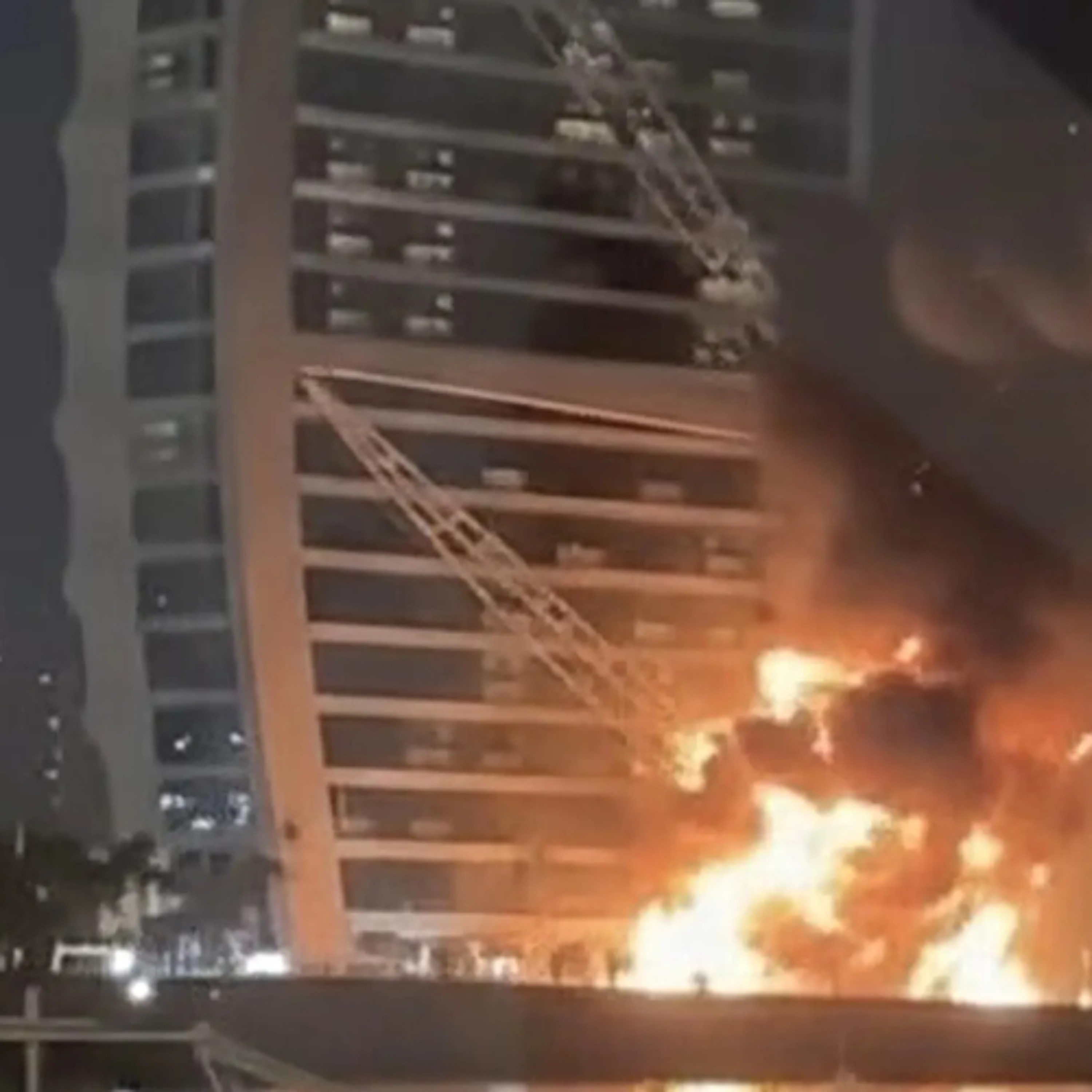
- Attacks/strikes on Gulf infrastructure, airports (Dubai), oil facilities, and an oil tanker reported; insurance and shipping warnings (including Strait of Hormuz disruption) are raised.
Regional economic and political effects
- Gulf stock markets down; Dubai airport/tourism and luxury sectors under pressure; Lloyd’s/insurers responding to maritime risk.
- Potential for global energy price spikes if Hormuz or major export facilities are disabled.
Media, diaspora politics, and cultural notes
- The hosts criticize diaspora monarchists (Pahlavi supporters) and right-wing Iranian expatriates for promoting regime-change fantasies disconnected from reality.
- Short aside debating the cultural/linguistic use of the word “goyim” and how it’s perceived in different contexts.
Notable quotes & lines from the show
- Pete Hegseth (quoted by hosts): “no stupid rules of engagement, no nation building quagmire, no democracy building exercise, no politically correct wars. We fight to win.”
- Host paraphrase on the opening atrocity: “Operation Epic Fury began with blowing up a school full of girls” — used to emphasize the brutality and aims.
- Trump (as quoted in-show): “I don’t get bored” — host notes Trump then spoke about East Room drapes, implying disengagement/boredom.
- On Iran’s strategy: “They will continue targeting U.S. bases and if regional countries want a solution, these bases must be removed.” (attributed to an Iranian parliamentary official in-show)
- Host assessment of the likely conflict shape: “a war of attrition between how many missiles and drones Iran has and how many interceptors the Americans and Israelis have.”
Status & claims reported on the episode (as discussed by hosts)
- Large school attack at start of operation — heavy female-child casualties (hosts use this as moral index).
- High-level Iranian leadership killed (hosts claim “supreme leader” killed and many top commanders) — this is repeatedly discussed as a precipitant for massive retaliation. (Note: this is a claim reported during the episode.)
- U.S. casualties: hosts state three U.S. soldiers killed and several critically injured.
- Multiple Gulf states and U.S. bases hit (Bahrain, UAE/Dubai, Kuwait, Qatar, Saudi facilities, Iraq, Jordan).
- Three F-15E Strike Eagles down — reported as friendly-fire losses and highly embarrassing.
- Dubai airport and luxury tourism hit — economic/PR shock to the Gulf model.
- Insurance/shipping warnings and an unverified message declaring the Strait of Hormuz “closed”; fears of effective closure and big energy-price impacts.
- Rapid consumption of interceptors (Patriot/other systems) creates expensive logistics constraint.
(These items are presented as claims and reporting cited by the hosts during the episode.)
The hosts’ strategic analysis — boiled down
- The war is being prosecuted without coherent, achievable political ends; rhetoric is about humiliation and proving strength rather than building a plan.
- Iran’s decentralized retaliation makes it harder for U.S./Israeli policymakers to control escalation; the conflict favors continuous, affordable Iranian strikes against expensive interceptor stocks.
- Gulf partners are learning that their security agreements may make them “bullet sponges,” increasing regional instability and political discontent at home.
- The likely arc short term: sustained missile/drone waves, attritional pressure on air defenses and interceptors, shipping/energy economic shocks, and growing domestic and regional unrest.
- The hosts argue that only a humiliating strategic defeat for U.S. policy would force a meaningful change in American imperial behavior.
What to watch next (actionable indicators the hosts suggest)
- Interceptor depletion rates and whether Patriot/Aegis stocks run low.
- Strait of Hormuz shipping/insurance notices and any confirmed ship sinkings or long-term closure.
- Number and location of U.S. casualties and any on-the-ground troop deployments.
- Congressional posture (war powers resolutions, votes) and whether Democrats move from procedural objections to substantive resistance.
- Hezbollah/Yemen and other proxy escalations — whether they widen the theater.
- Gulf economic indicators (UAE/Qatar stock markets, Dubai airport operations, insurance premiums).
Closing perspective from the hosts
- The episode ends from a strongly anti-imperial stance: the hosts express that a decisive setback for U.S./Israeli policy (a political humiliation that forces change) would be preferable to continued unchecked military power and impunity. They assert that only a material reversal will alter the trajectory of repeated interventions.
Guest/host links and subscriptions: the episode closes by encouraging listeners to follow Séamus Malekafzali and subscribe to the show (links promised in the episode description).