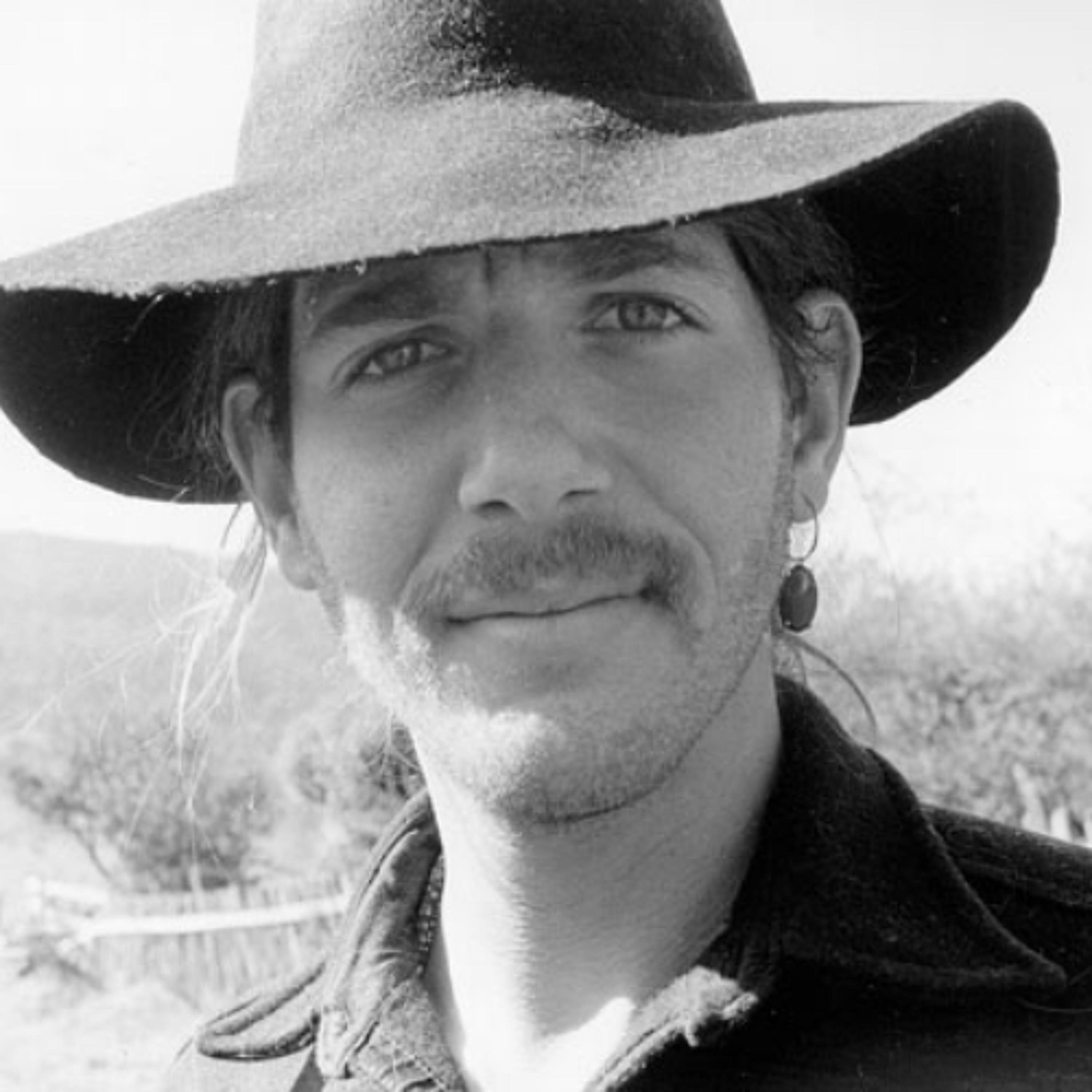
Overview of BONUS: Smothered by Riches feat. Peter Coyote
In this bonus episode of Chapo Trap House, Will interviews actor, writer, activist, and Buddhist teacher Peter Coyote about his book Smothered by Riches: How America Went from Democracy Rules to Money Rules. The conversation is a sweeping critique of neoliberalism, political corruption, media consolidation, and the long campaign by wealthy conservative networks to roll back New Deal-era democracy. Coyote argues that the core conflict in modern American life is not simply left vs. right, but whether public life is governed by human needs or by concentrated money power.
Main Arguments and Themes
The central thesis of the book
- Coyote describes the last 60–70 years as a counterrevolution against democratic and economic reforms.
- He argues that the U.S. moved from a New Deal framework toward a system where markets, wealth, and private power dominate public policy.
- In his view, this shift has steadily narrowed political imagination and weakened the ability of ordinary people to shape government.
Neoliberalism as ideology and power structure
- Coyote frames neoliberalism as more than “free markets”; it is a political project that:
- privatizes public goods,
- deregulates business and finance,
- weakens labor,
- promotes “free trade” rhetoric while hiding its social costs,
- and justifies austerity for everyone except the wealthy.
- He stresses that markets are never truly “free” or natural—they are designed and regulated by human beings to benefit particular interests.
The moral language of market rule
- A major thread in the interview is that neoliberalism is sold as a moral worldview:
- poor people are treated as morally suspect,
- market outcomes are presented as proof of worth,
- and compassion is framed as weakness or interference with “nature.”
- Coyote argues that this is a form of ideological camouflage for cruelty and extraction.
Key Historical Points Discussed
The Powell Memo as a turning point
- Coyote identifies Lewis Powell’s 1971 memo to the U.S. Chamber of Commerce as a key blueprint for the modern conservative movement.
- He describes it as a declaration of war on regulation, universities, unions, and liberal institutions.
- The memo helped inspire a vast network of:
- think tanks,
- donor-funded advocacy groups,
- media ventures,
- and political infrastructure aimed at dismantling New Deal constraints.
Right-wing network building
- He names or references major nodes of this infrastructure, including:
- the Heritage Foundation,
- the American Enterprise Institute,
- the Cato Institute,
- the Manhattan Institute,
- the Claremont Institute,
- and donor networks tied to Koch, Scaife, Coors, and DeVos money.
- According to Coyote, these groups have spent billions creating “experts” and messaging to legitimize anti-regulatory politics.
Media consolidation and the decline of public discourse
- He points to the repeal of the Fairness Doctrine and the consolidation of media ownership as decisive changes.
- The result, in his view:
- opinion replaced shared factual standards,
- right-wing media exploded,
- and the acceptable range of debate in the U.S. shifted sharply rightward.
- He contrasts this with Western European countries, where public discourse includes stronger social-democratic and socialist traditions.
The Democratic Party’s complicity
- Coyote is sharply critical of Democratic leaders who, in his view, embraced neoliberal assumptions:
- deregulation,
- free trade,
- telecom consolidation,
- and dependence on large donors.
- He argues that the party’s structural reliance on money makes it reluctant to confront wealth concentration directly.
Personal History and Political Formation
Early exposure to race, class, and labor politics
- Coyote says his political awareness was shaped early by:
- being raised around Black caregivers and Black political conversation,
- seeing racial hierarchy through lived experience,
- and watching his family’s left-wing relatives targeted during McCarthyism.
- He also notes that as a Jewish child in the 1940s and 1950s, he experienced exclusion firsthand.
The anti-nuclear and student peace movement
- He recounts a formative protest during the Cuban Missile Crisis:
- a group of students fasted outside the White House,
- met with Kennedy’s administration,
- and helped spark a broader student peace movement.
- That experience convinced him that disciplined collective action can have real political impact.
The Diggers and counterculture organizing
- Coyote explains his role in the Diggers, a radical San Francisco group inspired by the 17th-century English Diggers.
- Their practical efforts included:
- free meals,
- free stores,
- draft-card assistance for Vietnam-era resisters,
- and experiments in communal, sustainable living.
- Their philosophy was to create a life people would want to defend, not just talk about revolution.
Labor, Elections, and What Needs to Change
Labor still matters
- Coyote credits unions with giving workers:
- shorter hours,
- fairer wages,
- and basic protections.
- He suggests labor action could still be a powerful force, especially if tied to strategic boycotts or strikes at major employers and infrastructure points.
Money and elections are the core problem
- His most direct political prescription is that the U.S. must:
- fully fund elections publicly,
- ban corporate donations,
- and reduce the role of private wealth in shaping policy.
- He argues that nearly every compromise in U.S. politics is made with money, while money itself is never forced to compromise.
A warning about democratic decay
- Coyote says if Democrats win but fail to confront billionaire power, the same cycle will repeat.
- He warns that without structural reform, charismatic figures will continue to rise and exploit public frustration.
Buddhism, Meditation, and Coyote’s Worldview
Meditation as discipline and insight
- Coyote shares that he is an ordained Buddhist priest and transmitted teacher.
- He describes meditation as:
- sitting still every day,
- observing thoughts and feelings without fleeing them,
- and learning not to identify with impulsive reactions.
- For him, meditation helps people become less reactive, less self-deceptive, and more responsible.
Interdependence over individualism
- A major philosophical point in the interview is that the self is not fixed or isolated.
- Coyote argues that people are interdependent, connected to:
- one another,
- the environment,
- labor systems,
- and the wider world.
- This directly challenges market ideology, which treats people as atomized competitors.
Notable Takeaways
- The U.S. political crisis is fundamentally about money and power, not just partisan personality conflicts.
- Neoliberalism is presented as natural, but it is politically engineered and heavily funded.
- Media consolidation and donor-funded think tanks have reshaped public reality in favor of the wealthy.
- Compassion, labor rights, and public goods are treated as threats by the dominant economic ideology.
- Collective action and inner discipline both matter: Coyote sees politics and meditation as complementary forms of awakening.
Final Note
The episode is part political history, part manifesto, and part life story. Peter Coyote uses his own experiences—from civil rights-era childhood memories to counterculture organizing to Buddhist practice—to argue that democracy is being hollowed out by concentrated wealth. His message is blunt: if Americans want a real democracy, they have to confront money in politics, rebuild solidarity, and stop mistaking market power for moral truth.