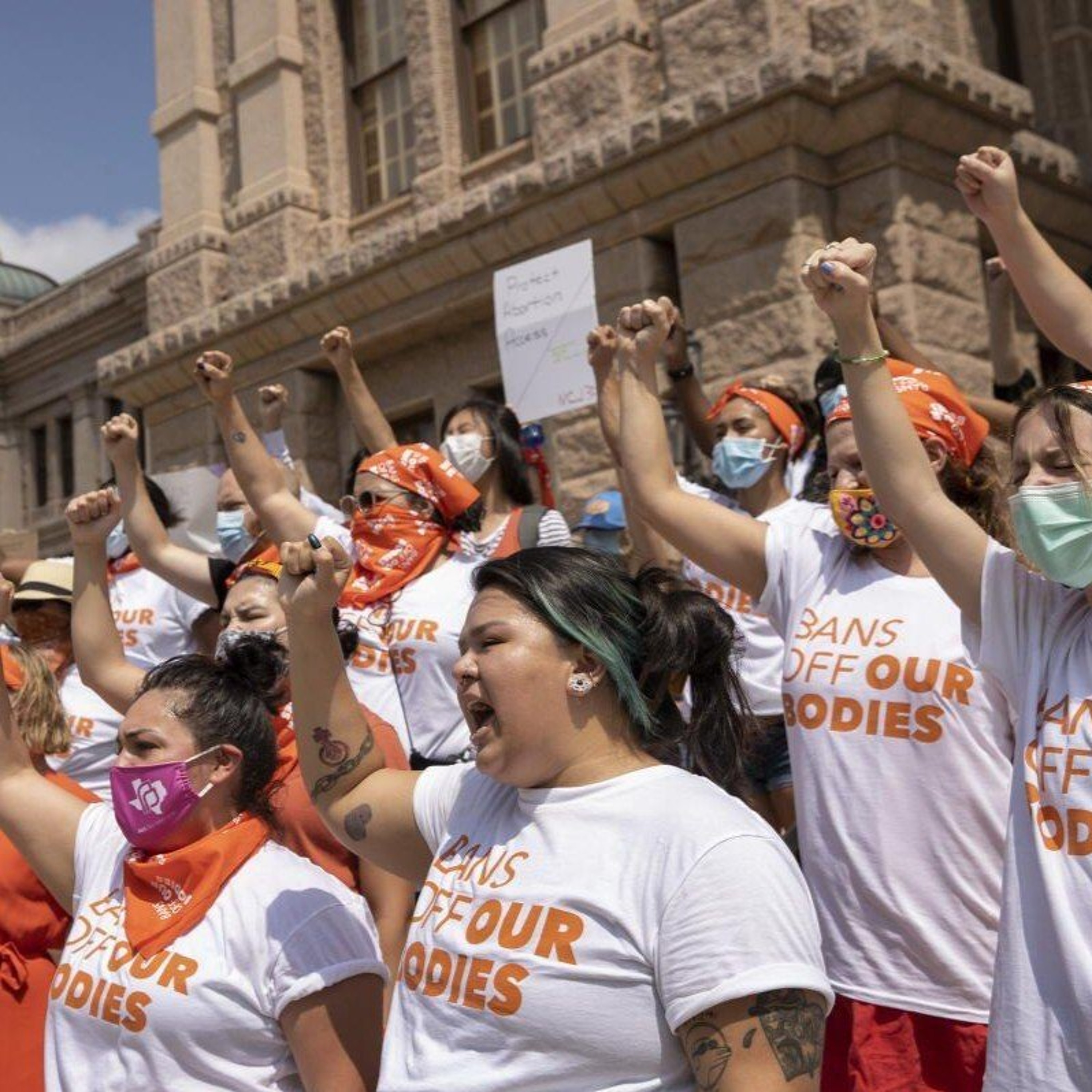
Overview of 1073 - Unsafe, Illegal, and Common feat. Kylie Cheung
This episode of Chapo Trap House features journalist and author Kylie Cheung, whose book Coercion: Surviving and Resisting Abortion Bans examines how abortion restrictions have reshaped reproductive health care in the U.S. The conversation focuses on how abortion bans function in practice: not just as limits on access, but as tools of surveillance, coercion, criminalization, and state-sanctioned violence against pregnant people. The hosts and Cheung also discuss the Democratic Party’s weak messaging, the rise of medication abortion and shield laws, and how anti-abortion politics increasingly overlap with misogyny, authoritarianism, and broader attacks on bodily autonomy.
Main Themes and Takeaways
Abortion rights are still popular — but politically deprioritized
- The conversation pushes back on the idea that voters no longer care about abortion.
- Cheung argues that abortion remains broadly popular with the public, but national Democrats have treated it as a shrinking campaign issue.
- The hosts note that Democrats often invoke abortion as a reason to vote for them, but rarely present a concrete, aggressive plan to expand or defend access.
“Roe” was never enough
- Cheung emphasizes that abortion was already functionally inaccessible for many people even before Dobbs:
- many counties had no clinic,
- travel burdens were widespread,
- and states had passed hundreds of restrictions over decades.
- The episode argues that a right “on paper” is not meaningful if it cannot actually be exercised.
Abortion bans create fear, not just law
- Laws like Texas’s SB8 are described as designed less to punish one specific person than to intimidate providers, abortion funds, and anyone helping someone access care.
- The effect is a chilling system of self-censorship and legal uncertainty.
- Cheung highlights how these laws empower abusive partners and private vigilantes.
Pregnancy is increasingly criminalized
- The discussion expands beyond abortion to the broader criminalization of pregnancy:
- miscarriage suspicion,
- positive drug tests,
- police involvement,
- forced rehab,
- and prosecutions tied to pregnancy outcomes.
- Cheung notes that poor women and women of color are most often targeted.
- The hosts frame this as a kind of state control over reproduction, not just health policy.
Specific Issues Discussed
SB8 and the Texas model
- Texas’s SB8 is explained as a six-week abortion ban enforced through private lawsuits rather than direct criminal penalties.
- Any person can sue someone who helped provide or access an abortion, with a minimum payout of $10,000.
- The law’s practical purpose is to frighten people out of helping others, even where the legal system is murky.
Reproductive coercion and domestic abuse
- Cheung describes how abortion restrictions are being used by abusive men to control partners:
- threatening lawsuits,
- threatening police reports,
- or using pregnancy as leverage in relationships.
- She argues that the anti-abortion movement has cynically adopted the language of coercion and abuse while enabling coercive control.
Medication abortion and telemedicine
- Medication abortion is now central to the fight because it helps people bypass clinic access barriers.
- The hosts and Cheung discuss:
- mifepristone and misoprostol,
- telehealth abortion care,
- mail-order pills,
- and pro-choice “shield laws” in states like New York and California.
- Anti-abortion states are trying to counter this by criminalizing mailing pills and even seeking extradition of out-of-state doctors.
Maternal mortality and medical risk aversion
- The episode argues that abortion bans worsen maternal mortality and morbidity.
- Doctors and hospitals are criticized for “waiting until the patient is close enough to death” before acting.
- Cheung notes that some states have weakened or stopped reporting maternal mortality data, obscuring the true cost of bans.
The rights framework has limits
- While the guests support abortion rights, they argue that a rights-only framing can be too passive:
- a right on paper does not guarantee access,
- and legal rights without infrastructure leave people vulnerable.
- They argue for a broader reproductive justice framework that includes health care, housing, childcare, and material support.
Anti-abortion politics are increasingly explicit
- The episode suggests that anti-abortion rhetoric is becoming less coy and more openly punitive.
- Rather than pretending the issue is only about “the unborn,” some right-wing figures now seem more comfortable saying the real target is women’s autonomy and sexual freedom.
- The conversation also touches on:
- anti-IVF activism,
- anti-contraception misinformation,
- tradwife and “pink pill” pipelines,
- and manosphere-style misogyny.
Critique of Democrats and Liberals
Democrats are seen as strategically hollow
- Cheung and the hosts repeatedly criticize Democrats for:
- treating abortion as a messaging tool rather than a governing priority,
- failing to raise the stakes,
- and not offering a real response to state-level attacks.
- They argue that Democrats often weaponize abortion fears to discipline voters, while failing to deliver durable protections.
Gaza and reproductive justice
- Cheung connects the conversation to the war in Gaza, arguing that pro-choice liberal institutions were largely silent even as Israel’s assault produced severe reproductive harm.
- This silence is presented as evidence that mainstream pro-choice politics are tightly tethered to the Democratic Party and constrained by it.
Recommended Actions and Resources
Organizations mentioned
Cheung recommends supporting organizations that provide direct help and legal support:
-
Pregnancy Justice
Legal advocacy for people targeted by pregnancy criminalization. -
If/When/How
Legal help and a hotline for reproductive and pregnancy-related legal issues. -
National Network of Abortion Funds
A directory to find and support local abortion funds, including in restrictive states.
What the episode urges listeners to do
- Support abortion funds directly rather than only donating to political campaigns.
- Understand abortion as part of a larger fight for:
- reproductive justice,
- economic security,
- bodily autonomy,
- and decriminalization of pregnancy.
- Treat access to abortion as a material, not abstract, issue.
Bottom Line
The episode’s central argument is that abortion bans are not just about limiting a medical procedure — they are part of a wider project of surveillance, coercion, and control over women and pregnant people. Cheung and the hosts argue that the fight now is not simply to restore Roe, but to build a stronger reproductive justice framework that includes health care access, legal protection, mutual aid, and real material support.