Overview of 1065 - Fear of a Blue Planet feat. The Trillbillies (Chapo Trap House)
This episode is a wide-ranging, satirical news-and-commentary conversation with the Trillbillies, bouncing from military recruitment and video games to sanctions on Iran, the backlash against data centers, food system decay, and the bizarre Natalie Harp/Trump correspondence. The discussion is driven by dark humor and recurring themes of state collapse, privatization, and how modern institutions now feel both incompetent and malicious at the same time.
Main Topics Discussed
Army recruitment, GTA 6, and the absurdity of enlistment incentives
- The episode opens with a headline about an Army unit offering re-enlisting soldiers a four-day pass to play Grand Theft Auto 6.
- The hosts mock the idea that a few days with a game could entice someone to commit another two to six years to the military.
- They joke about:
- the kind of soldier this incentive might appeal to,
- whether people are reenlisting because they’re too broke to buy the game later,
- and the possibility of “re-enacting GTA missions” in real life.
- The bit expands into a joke about nationalizing Rockstar so that playing GTA 6 would require joining the military.
Iran, sanctions, and “economic D-Day”
- The show uses the phrase “how is the war with Iran going?” to frame a broader discussion of U.S. pressure on Iran.
- Treasury Secretary Scott Bessent’s “economic D-Day” against Iran is mocked as overwrought propaganda.
- The hosts argue:
- sanctions are still a kind of warfare,
- they mainly harm ordinary people rather than leaders,
- and U.S. threats are less convincing because America itself is increasingly chaotic and inconsistent.
Data centers, AI hype, and bipartisan backlash
- A major segment focuses on the growing public hostility to data centers.
- The hosts note that both left- and right-leaning communities are increasingly skeptical of them because of:
- environmental damage,
- job destruction,
- surveillance concerns,
- rising electricity costs,
- and the fact that the biggest cheerleaders for AI/data infrastructure are widely disliked figures like Sam Altman, Peter Thiel, and Alex Karp.
- They argue that the “psyop” framing is itself a sign of political exhaustion: when institutions lose legitimacy, people reach for conspiracy explanations.
- One key point: data centers are sold as “innovation,” but to many people they just look like another extractive industry that gives little back.
Food degradation, RFK Jr., and declining public health
- The episode veers into a long riff on food, contamination, and how consumer goods seem to be getting worse.
- RFK Jr. and the food system are portrayed as part of a broader pattern of making life more precarious.
- The hosts joke about:
- “gamer meat,”
- spoiled beef imports,
- and the possibility that modern food policy is basically a race to the bottom.
- Beneath the jokes is a more serious idea: essential systems like food are being hollowed out, while the public is left to deal with the consequences.
The Natalie Harp / Trump Segment
Who is Natalie Harp?
- The hosts discuss the growing weirdness around Natalie Harp, a Trump aide who has become the subject of a lot of fascination and gossip.
- They strongly suggest that whatever her relationship to Trump is, it’s less like a normal affair and more like a grotesque, dependent caretaking dynamic.
Reading Harp’s letters to Trump
- The episode highlights Harp’s letters to Trump, which are intensely devoted, emotionally dependent, and strangely self-effacing.
- Key themes in the letters:
- apologizing for perceived failures,
- praising Trump as a guardian and protector,
- expressing gratitude for his attention and approval,
- and treating a trip with him as a life-changing “coming of age.”
- The hosts read the letters as evidence of:
- a deeply unhealthy attachment,
- a possible humiliation dynamic,
- and a bizarre form of devotion that feels almost pathological.
What the hosts think is really going on
- They repeatedly reject the simple “Trump is sleeping with a younger woman” explanation.
- Their view is that the reality is more disturbing:
- Harp is probably acting as a caretaker, aide, and obsessive devotee,
- Trump may enjoy humiliating or controlling her,
- and their relationship is a reflection of Trump’s broader contempt for people who trust him.
Recurring Jokes and Pop Culture Bits
Game of Thrones, Star Trek, and corporate fantasy
- The episode drifts into A Song of Ice and Fire, Star Trek, and The Blacklist as analogies for politics and power.
- These references are used to:
- mock elite fantasies of control,
- compare real-world systems to sci-fi dystopias,
- and joke about how people are willing to live in awful conditions for the promise of access to media or tech.
“Blue people,” libertarians, and absurd identity jokes
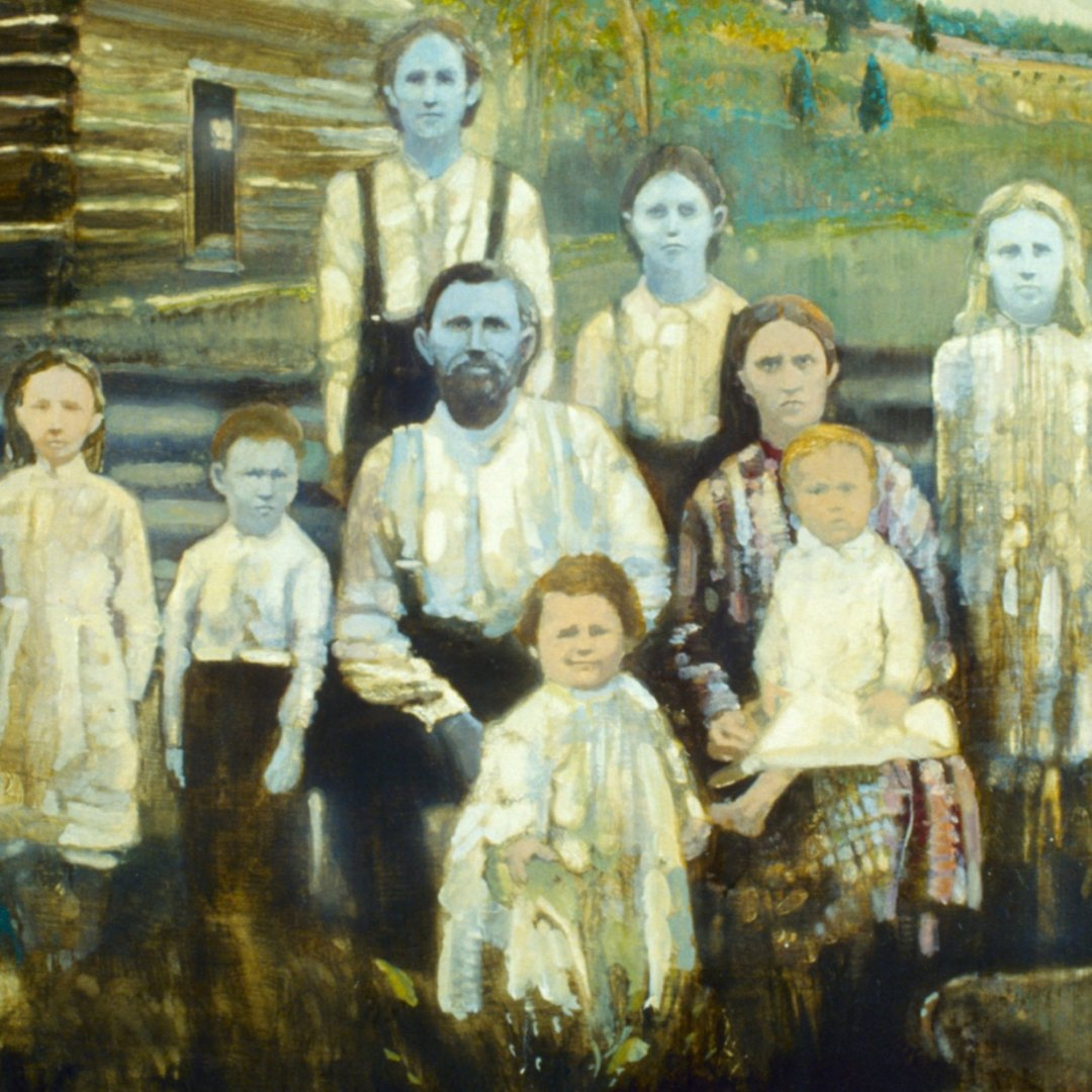
- A side tangent about the Blue Fugates of Kentucky becomes a running joke about blue-skinned people, libertarians, and accidental “vote blue” humor.
- The hosts use it as another example of how weird and arbitrary identity commentary can become once a conversation fully spirals.
Key Takeaways
- The episode’s core argument is that modern American life is being degraded by a mix of militarism, corporate extraction, and institutional collapse.
- Military, food, tech, and media are all treated as signs of the same larger problem: systems that are both more powerful and less trustworthy than ever.
- The Natalie Harp segment stands out as the episode’s most surreal and revealing piece of political theater: a portrait of Trump-world as something closer to a cult than a campaign.
- Even when the hosts are joking, they keep returning to a consistent theme: ordinary people are being asked to accept worse conditions, less stability, and more manipulation in exchange for increasingly empty promises.