Overview of Chapo Trap House — “1045 - Fight Night (6/15/26)”
This episode is a long, joke-heavy debrief of a wild sports-and-politics weekend: the hosts riff on Iran’s confrontation with the U.S. and Trump, the New York Knicks’ long-awaited title run, and the surreal spectacle of a UFC event staged at the White House. The conversation mixes genuine sports analysis with political satire, media criticism, and mockery of Trump-world corruption, all filtered through the show’s usual ironic, comedic style.
Main Topics Covered
Iran, Trump, and the “L” of the Weekend
- The hosts frame Iran as having dealt the U.S. and Donald Trump a major political loss.
- They mock pro-Trump and pro-Israel reactions, especially the cope from conservative commentators and Zionist-aligned MAGA figures.
- The discussion repeatedly returns to the idea that Trump is being forced to carry a humiliating defeat while his own political coalition fractures.
Epstein, Maggie Haberman, and Trump’s Crisis Management
- The hosts discuss reporting that Trump convened the Situation Room for Epstein-related damage control.
- They ridicule J.D. Vance’s alleged idea of having Trump do a TV interview with Ghislaine Maxwell as a “brilliant” PR move.
- There’s a running joke that journalists like Maggie Haberman are hoarding stories for book sales rather than changing outcomes in real time.
- The episode also mocks the continuing drip of Epstein-adjacent scandal and the expectation that more ugly revelations are coming.
The Knicks Championship Celebration in New York
- A major chunk of the episode is devoted to the Knicks’ title win and the citywide celebration.
- The hosts describe New York on Saturday night as ecstatic, crowded, and unusually disorder-free given the scale of the party.
- They joke about the cultural and political symbolism of the win:
- Jalen Brunson is elevated into the pantheon of great New York sports heroes.
- Zohran Mamdani is jokingly said to benefit politically from the moment.
- Zionist/anti-Mamdani accounts are mocked for trying to claim the victory for Israel.
- The episode leans into the idea that Knicks fandom has become a civic identity moment, with the city feeling unified in a way that professional politics rarely achieves.
UFC at the White House: “Fight Night” as Fascist Spectacle
The Event as Political Theater
- The hosts view the White House UFC event as a gross but effective piece of Trump spectacle-making.
- They argue Trump is unusually good at turning politics into TV and that this event was designed as a MAGA counter-programming fantasy.
- The broadcast, staging, flyovers, branding, and ad placements are treated as part of a broader “American fascist” aesthetic.
Corruption, Sponsorships, and Crypto
- The event is mocked for being drenched in corporate and political grift:
- Trump-family crypto promotion
- Saudi/Riyadh sponsorships
- defense-industry ads
- Meta/Mark Zuckerberg gimmicks
- One especially funny target is the “Trump coin” / stablecoin promotion, which the hosts treat as shameless scam behavior.
- They also criticize John Anik and other broadcast figures for participating in promotional reads that make the whole thing feel corrupt and unserious.
Fight-by-Fight Commentary
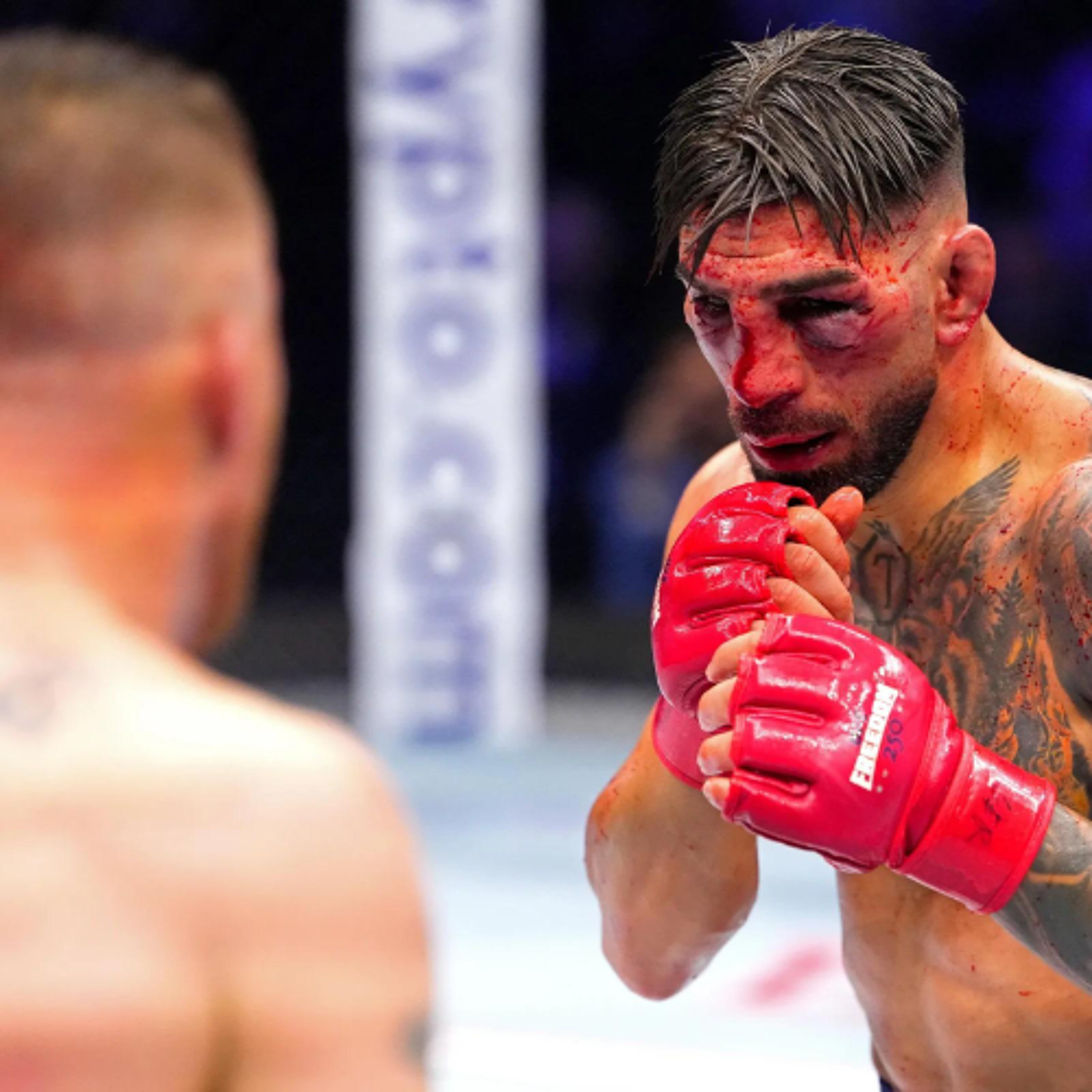
- Justin Gaethje vs. Ilia Topuria
- The main event gets the most praise as a genuinely great fight.
- Gaethje is lauded for toughness and durability, while Topuria is praised as a dangerous prospect who got broken down.
- Michael Chandler vs. Mauricio Ruffy
- Chandler is presented as a cautionary tale: a veteran who’s been dragged through years of Conor McGregor delays and is now taking brutal losses.
- Sean O’Malley vs. Aiemann Zahabi
- O’Malley is highlighted as an exceptionally fast and accurate striker.
- Josh Hokit / “Josh Shit” vs. Derrick Lewis
- The heavyweight fight is described as clumsy and exhausting, with both men looking gassed.
- Derrick Lewis’s nickname and presence generate a lot of jokes.
- Bo Nickal, Cyril Gane, Alex Pereira, Diego Lopes
- The hosts poke fun at the odd mix of fighters, the awkward naming, and the degree to which some athletes seem like promotional oddities rather than elite stars.
- Gane in particular is criticized as a habitual eye-poker and someone whose big victories feel tainted.
Recurring Themes and Jokes
“Real America” vs. Manufactured Spectacle
- The Knicks celebration is treated as authentic public joy.
- The UFC White House event is treated as staged, grotesque, and politically loaded—an artificial version of communal excitement.
- The hosts contrast organic street celebration with state-sponsored spectacle and corporate propaganda.
Trump, MAGA, and the “Fake Fan” Problem
- The hosts repeatedly compare political loyalty to sports fandom:
- supporters who only stick around when it’s easy are “fake fans”
- MAGA’s internal splits are treated like bandwagon behavior
- Trump’s coalition is portrayed as shaky, opportunistic, and full of people ready to betray him once the grift stops paying off.
The Absurdity of Modern Media
- They mock commentary clichés, overblown historical framing, and the habit of calling everything “historic.”
- Broadcast lines like “this is the first professional sporting event on the White House South Lawn” are treated as examples of media overstatement and self-parody.
- The episode also jokes about the way MMA commentary has become formulaic and silly.
Notable Takeaways
- The hosts see Iran’s confrontation with the U.S. as politically humiliating for Trump.
- The Knicks’ title win is treated as one of the most joyful civic moments in recent New York memory.
- The White House UFC event is presented as a perfect example of Trump-era spectacle: corrupt, loud, absurd, and effective on TV.
- Behind the jokes, the episode argues that modern American politics and sports media are increasingly inseparable from branding, grift, and performative violence.
Closing Impression
- The episode is less a straightforward sports recap than a satirical essay on power, media, and nationalism.
- Its emotional center is split between genuine delight over the Knicks and disgusted fascination with Trump’s UFC stunt.
- The overall tone is celebratory, caustic, and highly referential, with the hosts treating the weekend as a collision of real communal joy and engineered political theater.