Overview of 1043 - The Obamalisk feat. Kate Wagner (6/8/26)
This episode of Chapo Trap House is a wide-ranging but tightly focused conversation with architecture critic and McMansion Hell creator Kate Wagner about the soon-to-open Obama Presidential Center on Chicago’s South Side. The discussion treats the building as both a physical object and a political symbol: a monumental, tomb-like structure that reflects Obama-era liberalism, urban gentrification, and the decline of the old “star architect” era. The hosts and Wagner mix architectural criticism with political satire, using the center as a lens for talking about public space, neoliberal branding, and the aesthetics of power.
The Obama Presidential Center: Architecture and Symbolism
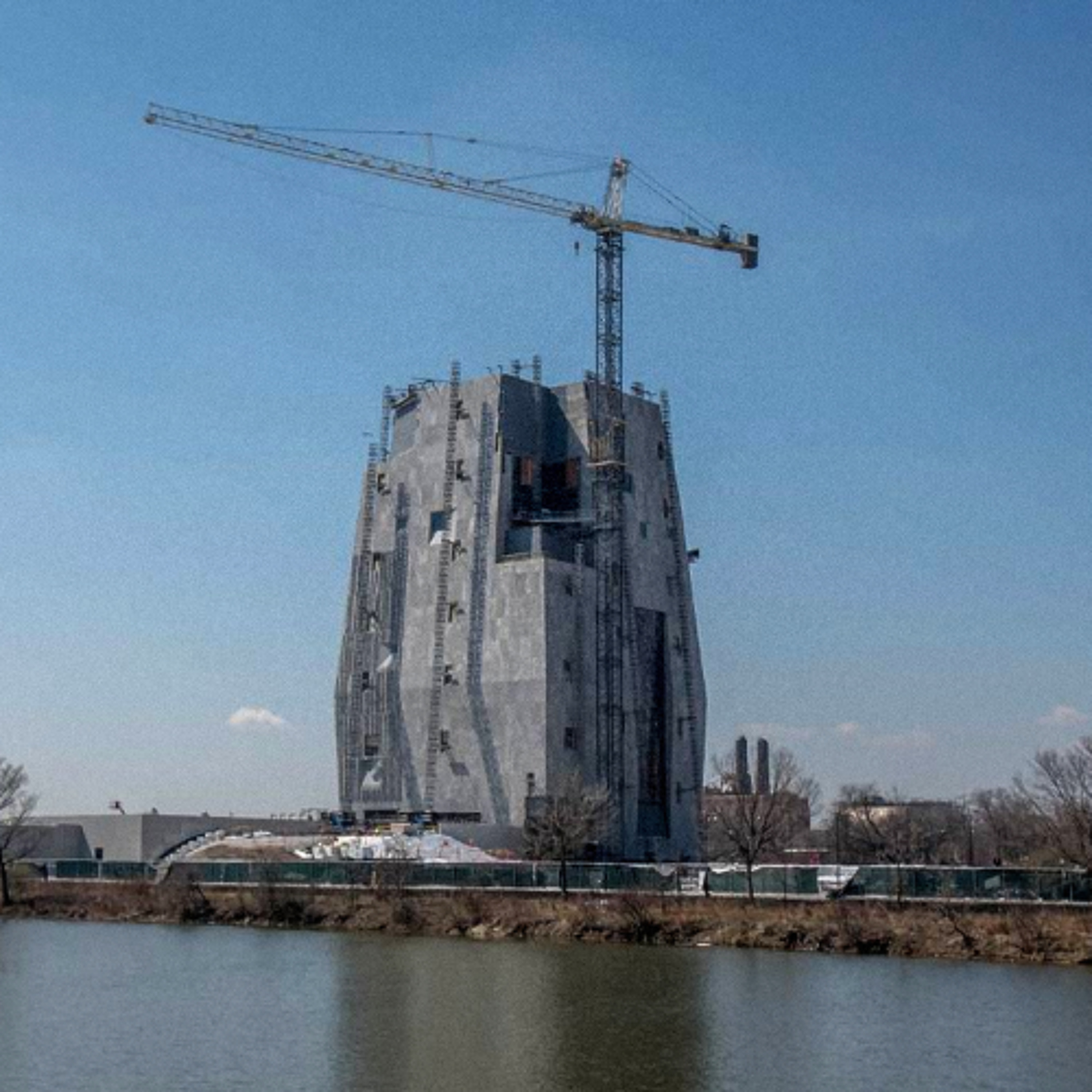
A building that feels like a monument to itself
- Wagner describes the Obama Center as one of the most ominous presidential buildings she’s seen.
- It reads less like a welcoming civic institution and more like a cenotaph or tombstone for an era.
- The design is by Todd Williams and Billie Tsien, architects known for restrained, highly detailed work in stone, but the scale here pushes them into unfamiliar territory.
Exterior design choices
- The building uses heavy granite slabs from New Hampshire, but the modular stone treatment weakens the sense of mass and monumentality.
- The most striking feature is a giant stained-glass-like wall on one side, which Wagner compares to graffiti or “squiggles,” and which the hosts jokingly characterize as absurdly self-important.
- Obama reportedly wanted the building to be “interesting from all sides,” and the result is a structure that is visually busy but not necessarily coherent.
Interior experience
- Visitors pass through airport-like security and harsh lighting before entering.
- The circulation is awkward: rather than a graceful arrival, visitors are pushed through claustrophobic transitions and atriums.
- Obama’s voice is present throughout the museum, reinforcing the sense that the building is a curated monument to his own legacy.
The Obama Center, Jackson Park, and Gentrification
Public park privatization
- The center was built in Jackson Park, a Frederick Law Olmsted-designed public space, after a contentious public process and legal fight.
- Critics objected to the privatization of parkland for a quasi-private foundation project.
- The Obama Foundation made concessions like a public forum, a playground, and a separate Chicago Public Library branch on site, but Wagner argues the overall project still represents enclosure and control.
Real-world neighborhood effects
- The hosts and Wagner connect the center to rising rents and speculation in the surrounding South Side neighborhoods.
- They cite reports of:
- rising rents,
- landlord speculation,
- apartment “renovictions,”
- Airbnb growth near the site.
- The episode highlights a core contradiction: the building claims to invest in the South Side while also accelerating displacement.
Obama, Liberalism, and “Obamacore”
The building as a political portrait
- Wagner argues the center is an architectural embodiment of Obama-era liberalism:
- polished,
- self-consciously tasteful,
- performance-oriented,
- heavy on symbolic uplift but light on material benefit.
- The museum’s narrative turns the civil rights movement, labor, suffrage, and other struggles into a prelude to Obama’s own story, as if history culminates in him.
“Obamacore” as an aesthetic
- The conversation broadens into the broader visual culture of the Obama era:
- tasteful branding,
- aspirational middlebrow cool,
- curated optimism,
- the “New Yorker-reading” liberal persona.
- Wagner suggests the Obama Center is among the last major built artifacts of the 2010s worldview: polished, monument-oriented, and still invested in the idea that architecture can symbolize progress.
Architecture, Class, and the Failure of Permanence
Why buildings look cheaper now
- Wagner explains that contemporary architecture is driven by cost-cutting, liability, and land prices.
- The result is:
- flatter facades,
- cheaper materials,
- plastic-looking exteriors,
- less permanence.
- She ties this to broader economic inequality and the collapse of long-term public investment.
The “rent of form”
- The episode touches on the idea that monumental buildings create secondary value through branding, photography, tourism, and real-estate speculation.
- This is part of why projects like the Obama Center matter beyond their actual use: they generate cultural and financial rent.
The decline of the “star architect” era
- Wagner argues that the era of giant, expensive, signature buildings is fading.
- The future of architecture may be more about:
- adaptive reuse,
- salvage,
- smaller-scale interventions,
- embodied carbon reduction.
- She points to firms experimenting with reused materials and lower-impact design as more interesting than the old monument model.
Notable Insights and Jokes
Memorable critical line
- Wagner’s description of the building as a “cenotaph for neoliberalism” is one of the episode’s clearest summaries of its political meaning.
A recurring theme: Obama as hyper-curator
- The hosts repeatedly joke that Obama cares intensely about appearing cool, tasteful, and modern.
- The museum’s displays of sneakers, campaign memorabilia, and carefully framed legacy objects reinforce that image.
The episode’s broader political point
- The building is treated as a perfect artifact of the Obama era:
- aesthetically ambitious,
- institutionally hollow,
- and ultimately tied to gentrification and elite branding.
Closing Notes
- Wagner names the Berlin Philharmonic by Hans Scharoun as her favorite building.
- Felix jokes that his favorite is the Chrysler Building.
- The episode ends with a broader reflection: architecture reveals what a society values, and the Obama Center—with all its polish, monumentality, and contradictions—captures the uneasy legacy of liberal America in the 2010s.