Overview of Chapo Trap House — “1041 - Memos of Understanding feat. Ryan Grim and Jeremy Scahill”
This episode centers on the latest U.S.-Iran-Israel backchannel negotiations, with Ryan Grim and Jeremy Scahill of Drop Site outlining how the war is being shaped by Israel’s ongoing offensives in Lebanon and Gaza, Trump’s need for a “victory narrative,” and Iran’s insistence on concrete concessions before any deal. The conversation widens into a broader critique of U.S. foreign policy, the power of the Israel lobby in domestic politics, and how Washington is adapting its tactics to keep backing Israel while making that support less visible.
Iran, Trump, and the “Memorandum of Understanding”
Where the negotiations stand
- The guests describe a cycle of near-deal / breakdown / near-deal around Iran negotiations.
- Iran and the U.S. have been exchanging ideas for a “memorandum of understanding” rather than a straightforward peace deal.
- Trump wants a public win, especially on the nuclear issue, but Iran is resisting any language that looks like capitulation.
Iran’s main demands
- An official end to the war, including conflict in Lebanon.
- A framework for future nuclear talks, but not an immediate written surrender on uranium enrichment.
- Unfreezing / repatriating Iranian assets — discussed in the range of roughly $12.5B to $25B.
- A pause or reversal of U.S./Israeli military pressure, especially in the Strait of Hormuz and Lebanon.
The key friction point
- Iran reportedly believes Trump is unstable and is even using psychologists / mental-health-informed messaging to shape responses that might land with him.
- But Iran also insists it won’t give Trump a fake win that ignores the reality on the ground in Lebanon and Gaza.
Lebanon and Gaza: the war is the deal
Why Lebanon matters so much
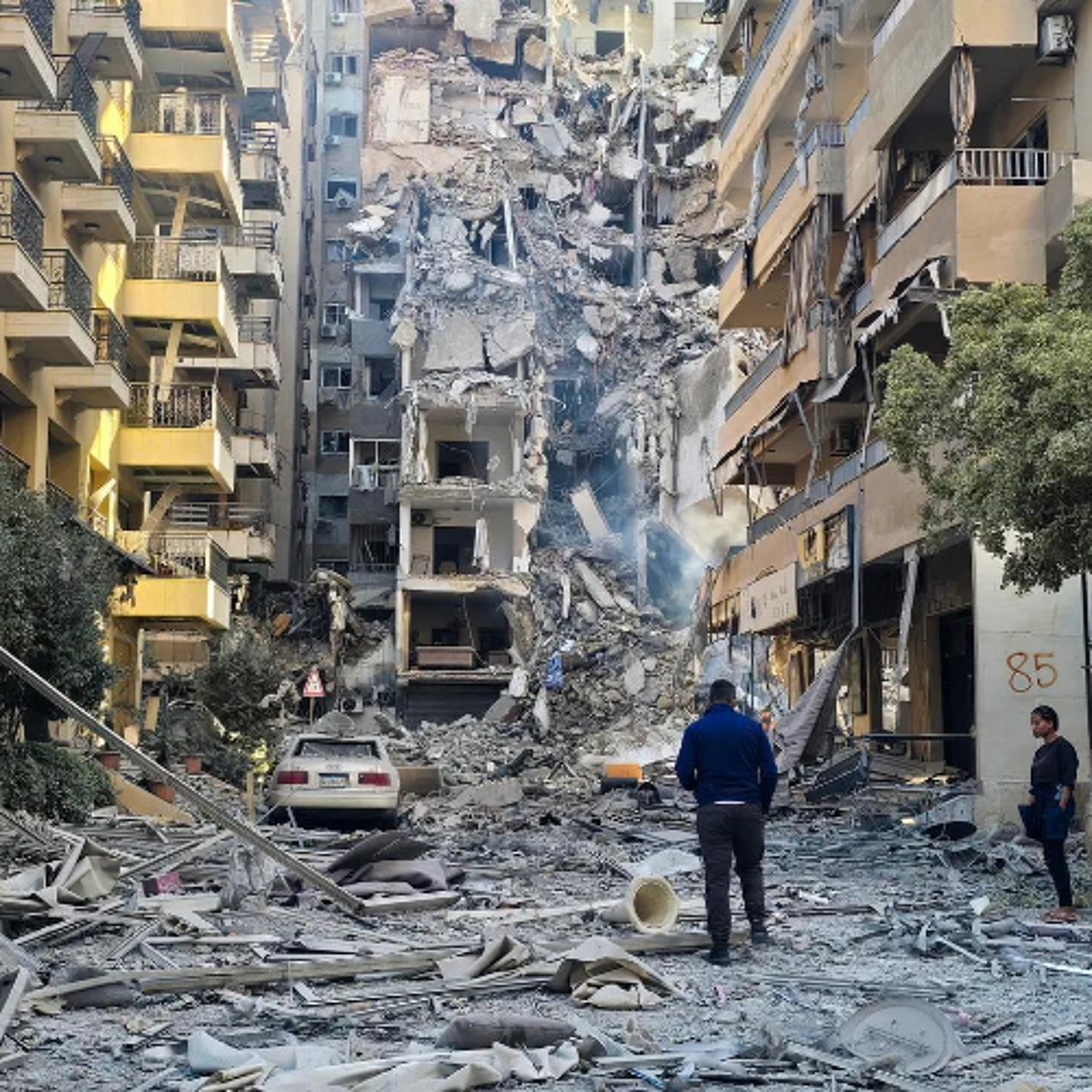
- The guests argue that Israel’s invasion/occupation in Lebanon is now central to whether any U.S.-Iran understanding can happen.
- Israel is described as using ceasefire negotiations as cover to expand territory north of the Litani River and create a durable “buffer zone.”
- This is framed as part of a broader strategy of state shattering and eventual expansion.
Gaza as the template
- The episode repeatedly compares Lebanon to Gaza:
- forced evacuations
- attacks on medics, journalists, hospitals, and schools
- destruction of civilian infrastructure
- The hosts argue Israel has a pattern of ratcheting up violence whenever a deal seems close.
Military assessment
- They suggest Israel and the U.S. are not winning cleanly:
- Hezbollah remains active
- Iran’s strike capabilities are stronger than widely admitted
- U.S./Israeli missile-defense stockpiles are under strain
- The guests stress that a renewed war would be dangerous for the entire Gulf region, especially if the Strait of Hormuz or Red Sea shipping is disrupted.
The Trump problem: victory narrative over reality
Trump’s political need
- Trump wants to claim he solved what Obama could not: Iran’s nuclear issue.
- He appears willing to shift terms, improvise, or lie if it helps him claim success.
- But he cannot easily admit the reality that the U.S. and Israel were stalled / outmatched / constrained.
Israel’s influence on U.S. decision-making
- The episode argues that Israel has been able to contaminate intelligence and policy channels.
- Dissenting officials get sidelined; loyalists and sycophants remain.
- Trump’s circle is portrayed as increasingly shaped by people willing to tell him whatever supports his preferred story.
Domestic politics: AIPAC, Democrats, and the changing playbook
The Israel lobby is adapting
- Ryan Grim explains that AIPAC and aligned groups have become much more sophisticated and more hidden:
- moving money through shell PACs
- using innocuous-sounding fronts like “science,” “medicine,” or generic local reform groups
- They’re trying to avoid being directly identified as the source of campaign funding because that has become politically toxic.
Why this matters now
- In Democratic primaries especially, backing from AIPAC is increasingly seen as a liability.
- Candidates are now often allowed to publicly criticize Israel or even call Gaza a genocide, while privately still reassuring pro-Israel donors they’re reliable.
- The guests argue this creates a dangerous illusion: that the problem is only Netanyahu, when the broader political and institutional support for Israeli policy remains intact.
Key examples discussed
- Candidates who have taken pro-Israel money and later become more openly critical of Israel once in office.
- The use of “genocide language” as a new minimum position in Democratic politics, even if many politicians still hedge behind closed doors.
New strategy: moving the Israel relationship into the Pentagon
One of the more important policy discussions in the episode is a proposed shift:
- Instead of the U.S. openly sending aid through State Department channels to Israel, the relationship could be folded more directly into the Pentagon budget.
- The effect would be to make military support harder to track, audit, or block politically.
- The guests argue this would make it much harder for lawmakers like Ilhan Omar or other critics to target a visible line item.
- In their view, it’s an attempt to make the relationship unaccountable and embed it in a larger, less transparent military system.
Cuba: another target of regime-change politics
Why Cuba comes up
- The guests connect Cuba to the broader U.S. regime-change mindset.
- With Iran proving more resilient than expected, they argue the Trump/Rubio foreign-policy world may shift even harder toward Cuba as a softer target.
Current conditions on the island
- The discussion paints a bleak picture:
- blackouts
- garbage collection failures
- worsening health outcomes
- economic pressure from sanctions
- The guests describe how long-term U.S. sanctions, intensified under Trump and Biden, have worn down public patience and fueled frustration.
Main point
- The goal is not just to pressure Cuba, but to smash state capacity and provoke collapse.
- The guests doubt the U.S. has a coherent “after” plan beyond instability, failed-state conditions, or externally managed restructuring.
International justice, impunity, and the Hague
Core argument
- The episode criticizes the hypocrisy of Western governments celebrating international law only when it applies to enemies.
- It points to:
- arrest warrants for Netanyahu and Gallant
- proposed action against Smotrich
- the U.S. “Hague Invasion Act,” which authorizes force to prevent U.S. or allied personnel from being prosecuted
Bigger takeaway
- The West is effectively ensuring that war crimes standards do not apply to itself or its allies.
- The guests frame this as a deliberate dismantling of international justice.
Resistance, psychology, and the long view
Palestinian and Lebanese resistance
- The conversation ends on a more historical note: even if Israel is winning tactically now, the guests believe it is creating new generations of resistance.
- They repeatedly stress that the people resisting are ordinary people:
- doctors
- teachers
- engineers
- shopkeepers
- students
- The violence being unleashed is producing more resolve, not less.
The long-term warning
- Israel and the U.S. may be able to destroy infrastructure, but they cannot permanently extinguish political will.
- The guests argue that this cycle will produce a new, perhaps unexpected, form of resistance in the future.
- Their view is that the current strategy is unsustainable and will eventually backfire.
Notable takeaways
- A deal with Iran is still possible, but only if the U.S. can give Trump a believable victory story.
- Lebanon is the central battlefield shaping any broader regional arrangement.
- AIPAC is adapting because openly pro-Israel political spending is becoming more toxic.
- The U.S. may be trying to hide support for Israel inside the Pentagon, making it harder to challenge.
- The long-term strategy of permanent war, occupation, and state collapse is presented as morally disastrous and strategically unstable.
Bottom line
This episode argues that the U.S. and Israel are trying to turn military deadlock into a managed political narrative, but the underlying reality is still unresolved: Iran, Hezbollah, and Palestinian resistance remain in the field; Lebanon and Gaza remain active war zones; and Washington is struggling to preserve the appearance of control while deepening its entanglement.