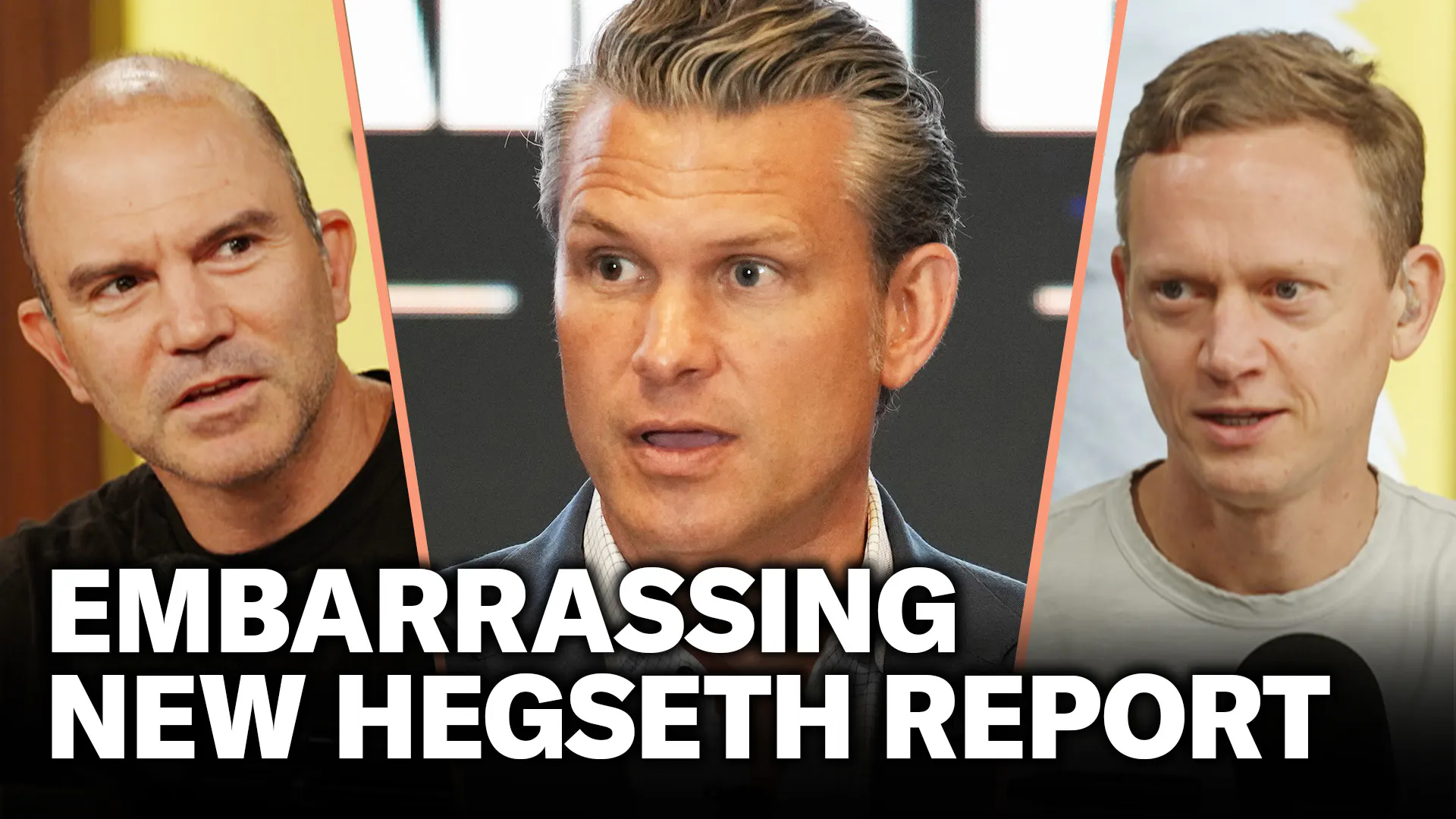
Overview of New Report Reveals Embarrassing Details About Pete Hegseth
This episode of Crooked Media’s Pod Save the World covers three major current-events stories: the New York Times’ reporting on Pete Hegseth’s wife’s unusual role at the Pentagon, the surprising possibility that Prince Harry and Meghan Markle may be shifting back toward London, and the Trump administration’s expanding sanctions on the International Criminal Court (ICC). The hosts frame all three stories as examples of how Trump-era politics blur the line between public office, personal loyalty, and institutional norms.
Pete Hegseth’s Wife and the Pentagon
What the New York Times reported
The biggest focus of the episode is the Times story about Secretary of Defense Pete Hegseth’s wife, Jennifer Hegseth, who has allegedly been involved in sensitive Pentagon matters despite having no clearly defined official role.
Key reported details discussed:
- She was present in a highly sensitive meeting with Hegseth and top British defense officials.
- British officials reportedly felt uneasy discussing intelligence matters in front of her.
- In at least one case, the British side held a separate, smaller meeting afterward to share more detail.
- The Pentagon would not say whether she has a security clearance.
- She has also reportedly been involved in:
- press and media decisions,
- content approval for Pete Hegseth’s remarks,
- and discussions about staffing and access in the Pentagon press room.
Why the hosts think it matters
The hosts argue this is not just a weird personal detail — it reflects a broader breakdown of norms:
- Cabinet roles are supposed to be institutional, not family-run.
- Foreign partners expect meetings to include cleared officials only.
- Allowing spouses into classified or semi-classified settings can create security risks and make allies reluctant to share information.
Broader critique of Hegseth
The discussion also paints Hegseth as inexperienced and overly dependent on his spouse:
- One source described him as liking his wife to travel with him “to keep him out of trouble.”
- The hosts connect this to his history of heavy drinking and past personal behavior.
- They argue the setup reflects both insecurity and a “fantasy camp” mentality among some Trump officials.
Main takeaway
The episode presents Hegseth’s wife’s Pentagon involvement as a symptom of a deeper Trump-world problem: power is being treated as personal property, not a public trust with guardrails.
Prince Harry and Meghan Markle: Possible Move Back to London
What was reported
The episode also discusses reports that Prince Harry and Meghan Markle may be moving back to London, despite previously leaving royal life and relocating to the U.S.
Notable points:
- The move reportedly surprised even King Charles.
- It comes after Harry previously said he couldn’t imagine bringing his wife and children back to the UK.
- The couple has remained publicly distant from the royal family, though recent signs suggest some thawing.
Why they might move
The hosts offer several possible explanations:
- Family reconciliation: King Charles’s cancer diagnosis may have prompted efforts to repair the relationship.
- Royal family stabilization: The past several years have included major upheaval, including Queen Elizabeth II’s death, Charles’s accession, Prince Andrew’s scandals, and the broader Harry-William rift.
- Financial/tax considerations: One host suggests there may be a UK tax angle tied to residency and capital gains rules.
What they’d do next
The segment also asks the practical question:
- What would Harry and Meghan actually do if they returned?
- They’ve already monetized a lot of their story through books, streaming projects, and media deals.
- Harry’s most durable public work remains the Invictus Games.
Main takeaway
The hosts treat the report as intriguing but unresolved: it could reflect family healing, financial strategy, or just a new chapter after years of public conflict.
Trump Administration Sanctions on the ICC
What happened
The final major segment covers the Trump administration’s sanctions against the International Criminal Court, extending beyond earlier sanctions on ICC judges and prosecutors.
The new sanctions target:
- the ICC president,
- a senior lawyer,
- and other international legal figures.
Why the U.S. is doing this
The hosts argue the real reason is the ICC’s actions against Israeli officials:
- The court issued arrest warrants for Prime Minister Benjamin Netanyahu and former Defense Minister Yoav Gallant.
- The Trump administration’s own language explicitly ties the sanctions to those warrants.
Why the hosts are alarmed
They argue the sanctions are:
- a direct attack on international justice,
- harmful to the court’s ability to function,
- and an effort to shield war criminals from accountability.
They emphasize that:
- these are not symbolic sanctions,
- they can seriously damage people’s lives and finances,
- and they are especially offensive when applied to respected judges and prosecutors from countries like Japan, Ghana, and Senegal.
Broader implications
The hosts say this sends a dangerous message:
- The U.S. is willing to undermine international legal institutions for political reasons.
- It damages America’s credibility with allies like Japan.
- It reinforces the idea that the Trump administration is acting as a protector of Netanyahu rather than as an independent actor.
Main takeaway
This is presented as one of the most serious stories of the episode: the U.S. is actively weakening international accountability systems for the sake of political loyalty to Israel’s government.
Core Themes Across the Episode
Personalization of power
Across all three stories, the hosts return to a common theme: powerful people treating public institutions like private or family-run operations.
Double standards
They repeatedly point out the contrast between:
- what is expected of ordinary military and government personnel,
- and the behavior of Trump-era elites, who appear to operate under different rules.
Erosion of accountability
The episode argues that these stories are not just oddities — they reflect a broader collapse of norms, oversight, and institutional seriousness.
Bottom Line
This episode uses three headline stories to make a larger argument: Trump-era politics is normalizing nepotism, weakening institutional boundaries, and eroding accountability at home and abroad. The Hegseth segment is framed as bizarre and dangerous; the Harry and Meghan story as curious and potentially strategic; and the ICC sanctions as a serious blow to international law.