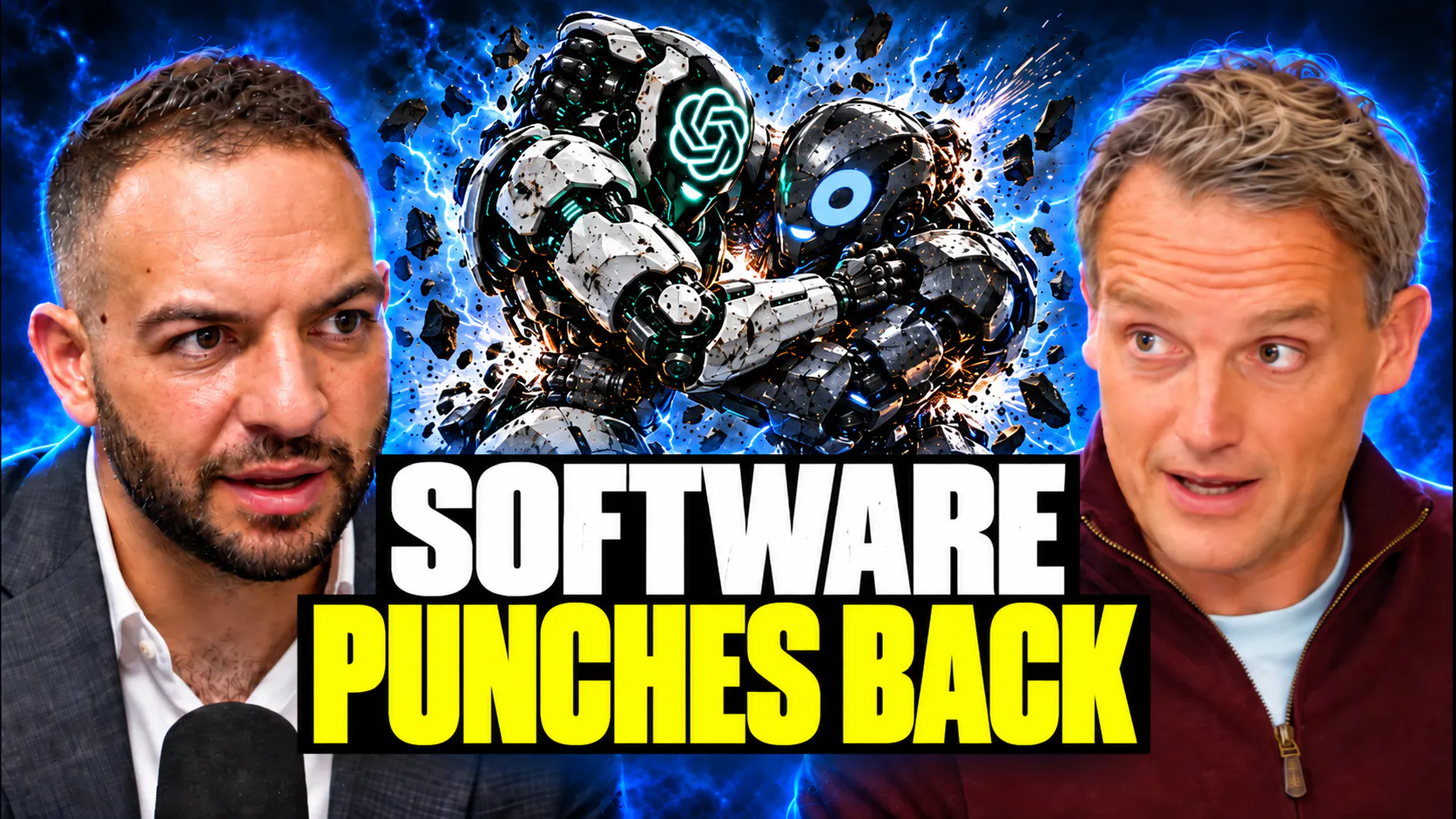
Overview of Big Technology Podcast with SAP CEO Christian Klein
Alex Kantrowitz speaks with SAP CEO Christian Klein about the “SaaS-pocalypse” narrative, the real state of enterprise AI, and why he believes software is not being killed by AI — it is being redefined. Klein argues that AI is already changing how companies operate, but that enterprise use cases still require domain knowledge, data quality, governance, and the right model for the job. The conversation also covers workforce transformation, reskilling, token costs, competition from frontier AI labs, and European regulation.
AI Won’t Kill Software — It Will Reshape It
SAP’s view of the AI transition
Klein frames SAP’s journey as climbing a second mountain after cloud: the company has already completed its cloud transformation and is now climbing the AI mountain.
He says the main obstacles for enterprise AI are:
- Accuracy: many business tasks need near-perfect reliability, not “good enough” output.
- Governance: especially for regulated industries and public sector use cases.
- Business context: LLMs alone do not understand the full process and data environment of enterprise software.
Why enterprise AI is different
SAP’s core argument is that AI needs to be embedded in business systems, not just layered on top of them. In Klein’s view, an LLM by itself cannot reliably run finance, supply chain, payroll, or warehouse operations.
Why SAP Thinks Enterprise AI Needs More Than an LLM
Data, semantics, and process knowledge matter
Klein repeatedly emphasizes that enterprise AI depends on:
- structured and unstructured data
- process knowledge
- semantic layers / ontologies
- legal and regulatory constraints
- integration across SAP and non-SAP systems
He says SAP is building a semantic layer that helps agents understand the meaning of business data across systems like Salesforce, Workday, SAP, and data lakes such as Databricks, Snowflake, and BigQuery.
“100% accuracy” for mission-critical workflows
For some use cases — like financial close, compliance, or audit-sensitive workflows — Klein says even 93% or 95% accuracy is not enough. Those use cases require extremely high precision before AI can be trusted to act autonomously.
For lower-stakes tasks, like customer briefings or internal summaries, slightly imperfect accuracy is acceptable if it saves time.
AI’s Impact on Work, Burnout, and Reskilling
Fewer rote tasks, more high-cognitive work
Klein agrees that AI is automating a lot of repetitive work in finance, HR, compliance, and controls. That means employees spend more time on strategic or analytical work.
He does not think this is currently causing mass exhaustion inside SAP. Instead, he sees it as a shift in the type of work, not necessarily a reduction in workload.
Reskilling is real, but not universal
Klein says reskilling works best when:
- the new role is adjacent to the old one
- employees understand the change in mindset, not just the tooling
- the company provides training and coaching
- experienced employees are paired with new hires who bring new skills
He gives examples of SAP developers moving from on-premise software development to cloud and DevOps-style work.
Workforce transformation, not just cuts
His view is that AI will change the mix of jobs:
- fewer people in some roles
- more demand for data scientists, full-stack developers, and AI-related roles
- continued need for domain expertise and process knowledge
SAP’s AI Strategy: Embedded, Governed, and Model-Agnostic
Joule as SAP’s interface layer
SAP is pushing its own AI interface, Joule, as the primary front end for enterprise users. Klein says customers want the context, governance, and data integration that SAP can provide, not just a raw LLM chat interface.
Model-agnostic approach
SAP is not tying itself to one frontier model. Instead, it:
- uses multiple models
- switches models based on task and cost
- tests open-source and proprietary models
- optimizes for price/performance, not just capability
Klein says some tasks still use frontier models, especially coding, but many business tasks are handled well by cheaper open-source models or specialized tabular AI models.
Cost discipline is becoming important
SAP has begun introducing token limits and usage thresholds for employees. Klein says this was necessary once token spend started growing meaningfully.
However, the company also allows exceptions for important work and for teams involved in model training or accuracy improvement.
Frontier Labs vs Enterprise Platforms
Why SAP thinks it has a moat
Klein argues that SAP’s advantage is not just access to models — it is the combination of:
- enterprise data
- business process knowledge
- semantic layers / ontology
- governance and access controls
- integration with mission-critical systems
His view is that third-party AI assistants can connect to SAP through APIs, but they do not automatically get the same context or control.
OpenAI/Anthropic as partners, not replacements
He is open to using models from OpenAI, Anthropic, and others inside SAP’s platform, but he does not believe those labs can easily displace SAP’s enterprise software by going directly to customers.
He also points out that many models are available now, including open-source options, so no single model is likely to dominate every use case.
Market Reaction and the “SaaS-Pocalypse” Narrative
Why software stocks sold off — and then bounced back
Klein says the market initially overreacted to fears that AI would make enterprise software obsolete. SAP’s stock was hit along with the broader software sector, but has recently recovered as investors and customers realized:
- LLMs alone are not enough
- enterprise workflows still need domain-specific software
- AI value emerges when it is embedded in real business systems
His message: software is not disappearing; it is moving up the stack.
Europe, Regulation, and the AI Act
Good intentions, but too much overlap
Klein is sympathetic to European regulators’ intentions, but critical of the result. He says Europe often regulates the technology itself instead of the business outcome or social impact.
He argues that this makes it much harder to build and scale AI startups in Europe.
The problem with layered regulation
He specifically mentions the EU AI Act and Data Act as adding overlapping complexity on top of GDPR-style privacy rules. In his view, this creates confusion and slows innovation.
Likely rollback or simplification
Klein is optimistic that Europe will be forced to simplify regulation due to pressure from major companies and startups. He wants regulation that protects society without making it nearly impossible to build AI products.
Key Takeaways
- AI will not kill enterprise software; it will change how software is used and sold.
- For mission-critical business tasks, context and governance matter as much as model intelligence.
- SAP’s strategy is to combine models with business data, process knowledge, and semantic layers.
- Workforce change is real, but more likely to be a job-mix transformation than mass unemployment.
- Companies are already becoming more aggressive about model switching and token-cost control.
- Europe’s AI regulation may need simplification if it wants to remain competitive.
Notable Insight
“You don’t need the best model for everything — you need the right model for the task, at the right cost, with the right governance.”
That idea is the throughline of the interview: enterprise AI is not about flashy demos, but about reliable, controlled, economically sensible deployment at scale.