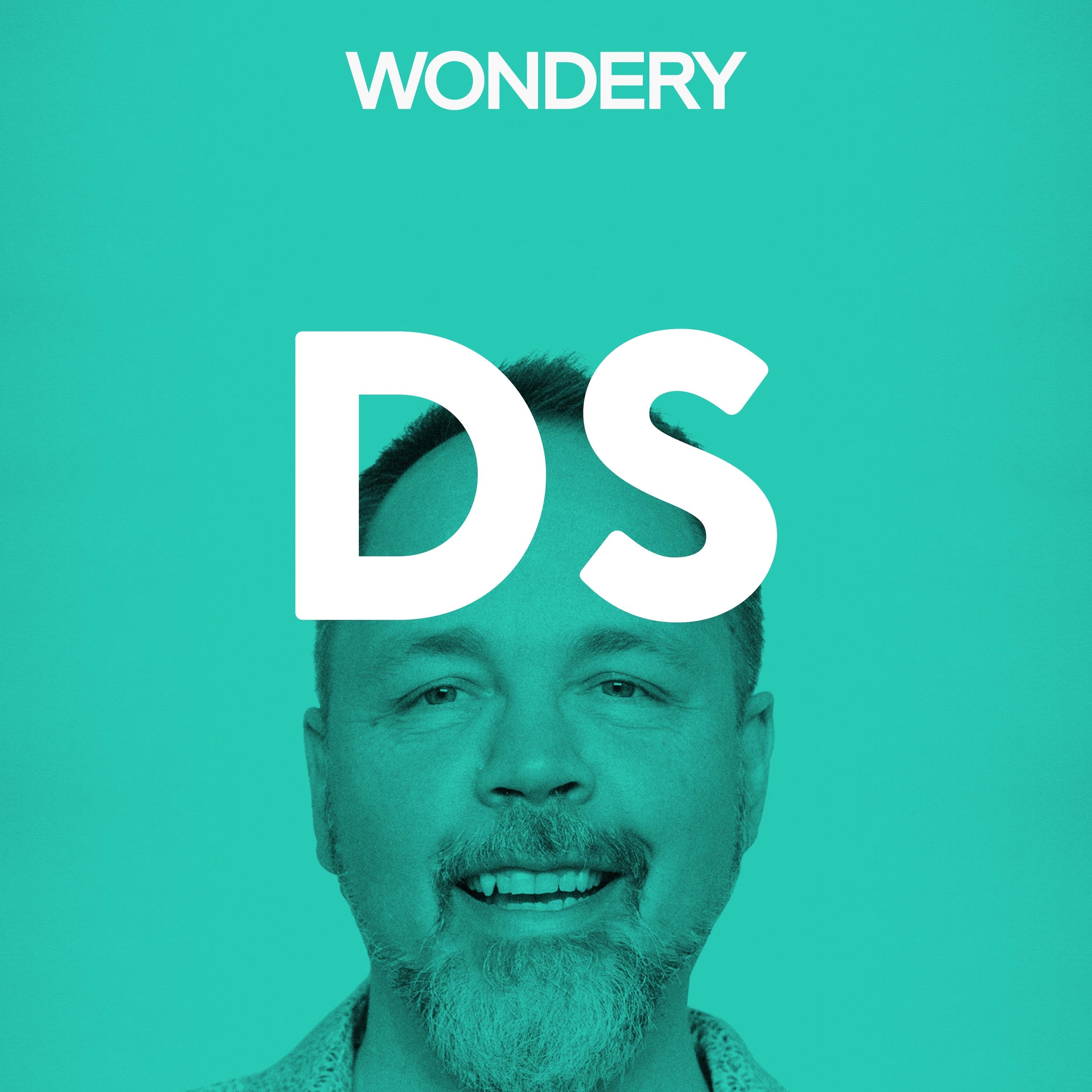
Overview of Armchair Umbrella — David Sussillo (on foster care and neuroscience)
This episode of Armchair (Experts on Expert) features neuroscientist, technologist, and memoirist David Sussillo (author of Emergence: A Memoir of Boyhood, Computation, and the Mystery of Mind). The conversation weaves a deeply personal childhood story—poverty, parental addiction, institutional care, and loss—with Sussillo’s path into computational neuroscience, his work at Stanford, Google Brain and Meta Reality Labs, and his views on AI. The result is part memoir, part scientific reflection: trauma and resilience inform a career studying how brains and artificial neural networks work.
Key themes & topics
- Childhood trauma, neglect, and foster/group home experiences
- How formative friendships and mentors shaped resilience and goals
- The role of education (scholarships, Carnegie Mellon, Columbia, PhD) as a life pivot
- Transition from computer science to computational neuroscience
- History and modern advances in neural networks / deep learning (ImageNet, AlexNet, RBMs)
- Recurrent/dynamical neural networks and biological relevance (feedback, proprioception)
- Practical AI work (Google Brain, Meta Reality Labs — muscle-signal wristbands for Ray-Ban Meta glasses)
- Philosophical stance on AI: useful, “thinking” in a reductive sense but not conscious
- Reflections on foster care systems, institutional care, and what supports children need
Guest background — concise timeline
- Early life: born mid-1970s, raised in New Mexico (Albuquerque, Santa Fe). Parents struggled with addiction; intermittent homelessness/poverty.
- Childhood relationships: close friendships (e.g., Shiloh, Omar) and escape through video games — described as a stabilizing “Patronus” or shield.
- Institutional care: placed in Albuquerque Christian Children’s Home (ACCH) for several years; experienced neglect, impermanence of caregivers, and violence/bullying.
- Adolescence: mother died; later placed with extended family; attended Milton Hershey School (boarding school funded by Milton S. Hershey’s endowment; experiences there were mixed — academically supportive but socially hard).
- College & early career: scholarship to Carnegie Mellon (shifted from physics to computer science), tech startup/cofounder, left school briefly for work; later moved to New York and entered Columbia for graduate training and then a PhD in theoretical/computational neuroscience.
- Research & industry: postdoc at Stanford; research positions at Google Brain (deep learning era) and Meta Reality Labs (applied neurotech, e.g., wristband gesture control). Published work on decoding muscle signals; Nature paper mentioned in conversation.
- Memoir: Emergence — blends life story with scientific perspective.
Major insights on neuroscience, computation, and AI
- Recurrent / dynamical systems matter: biological motor control and many brain functions are feedback-heavy. Recurrent networks (with feedback loops) model that continual self-correction better than strictly feedforward models.
- Historical milestones: ImageNet / AlexNet (2012) is a major turning point for deep learning; earlier work (e.g., restricted Boltzmann machines in mid-2000s) helped set foundations.
- Brains vs. AIs:
- Origin: AI research has deep roots in neuroscience (McCulloch & Pitts → artificial neurons).
- Current tools (large language models, deep networks) are powerful pattern/predictors—training to predict next token yields surprising capabilities.
- Sussillo’s stance: AIs can be said to “think” in a reductive/functional sense (manipulating representations and reasoning patterns), but they are not conscious “inside” entities the way people are.
- Strengths: AI as a tool for scientific discovery (pattern finding, hypothesis generation, drug repurposing, coding, design).
- Limits & risks: AIs tend to reproduce and amplify existing patterns; they may favor iteration/reinforcement of current styles instead of radical novelty. Human oversight and interdisciplinary thinking remain crucial.
- Practical applied neurotech: muscle-signal wristbands for gesture control are conceptually simpler than invasive brain–machine interfaces (signals are nearer the motor output), but engineering challenges include personalization/generalization across users. Sussillo mentions high accuracy in released products and published results.
Emotional and social takeaways
- “Orphaned by the living”: poignant summary of children whose parents are alive but functionally absent due to addiction/mental illness.
- The protective role of rituals, friendships, education, and a single committed mentor (karate instructor; later academic mentors) in forging a path out of adversity.
- Therapy and exercise were pivotal turning points: Sussillo describes panic attacks, a near-suicidal moment, and how therapy + running + family proximity enabled recovery and ongoing stability.
- Nuance on institutional care: large charitable schools/institutions can both save and harm — quality of daily caregiving (house parents) often determines the lived experience.
Notable quotes and memorable lines
- “Orphaned by the living.” — captures the experience of functional orphanhood despite living parents.
- Video games as a “Patronus”: an early emotional shield and focus in unstable circumstances.
- On AI: it can “think” in a reductive sense — strong at pattern generation and reasoning in constrained ways but not conscious.
- On foster/institutional care: the system often creates impermanence; what kids need most is predictable, long-term caregivers.
Actionable items / recommendations
- Read: Emergence: A Memoir of Boyhood, Computation, and the Mystery of Mind (David Sussillo) — recommended for readers who want the full story and the blend of memoir + neuroscience.
- If you work in science or tech: explore human+AI workflows (coding assistance, literature mining, drug-repurposing pipelines). Try current AI tools and evaluate limitations yourself.
- For listeners passionate about child welfare: learn about how poverty vs. neglect is assessed in child-welfare systems; support reforms that emphasize stable caregiving and poverty relief.
- Mental health: Sussillo’s arc underscores that therapy, exercise, and mentor relationships can be lifesaving — consider therapy if facing chronic panic or trauma.
- For technologists: prioritize user generalization and personalization when building wearable interfaces (consumer devices must “work out of the box”).
Corrections / clarifications from the episode transcript
- Guest name: transcript frequently shows “David Cicillo,” but the guest and memoir author is David Sussillo (computational neuroscientist).
- Hosts: episode is part of the Armchair Expert/Experts-on-Expert family (hosts commonly Dax Shepard & Monica Padman); transcript names occasionally transcribed incorrectly.
- Institutions & facts referenced: Milton Hershey School is a very well-funded boarding school (the estate historically contributed very large endowments; figures in the episode range ≈ $15–17B). Sussillo’s work history includes Stanford (postdoc), Google Brain, and Meta Reality Labs.
- Technical points: “dust-off” refers to inhalant abuse (computer-cleaning aerosol) — dangerous, with acute and chronic harms; Sussillo recounts personal experience.
Quick summary (one-paragraph)
This episode pairs a harrowing, honest memoir with lucid explanations of computational neuroscience and AI. David Sussillo tells how poverty, addiction in his family, boarding-group homes, and the loss of his mother shaped his psychology and resilience. Education, friendship, and a few key mentors launched him into computational neuroscience; he later worked at Google Brain and Meta, and now writes about how the brain’s feedback-heavy dynamics relate to modern neural networks. He sees AI as a powerful, non-conscious “thinking” tool for discovery that must be used with human judgment—while urging more humane, stable caregiving solutions for vulnerable children.
Recommended next step: read Emergence to get the full life story and Sussillo’s synthesis of mind, computation, and meaning.