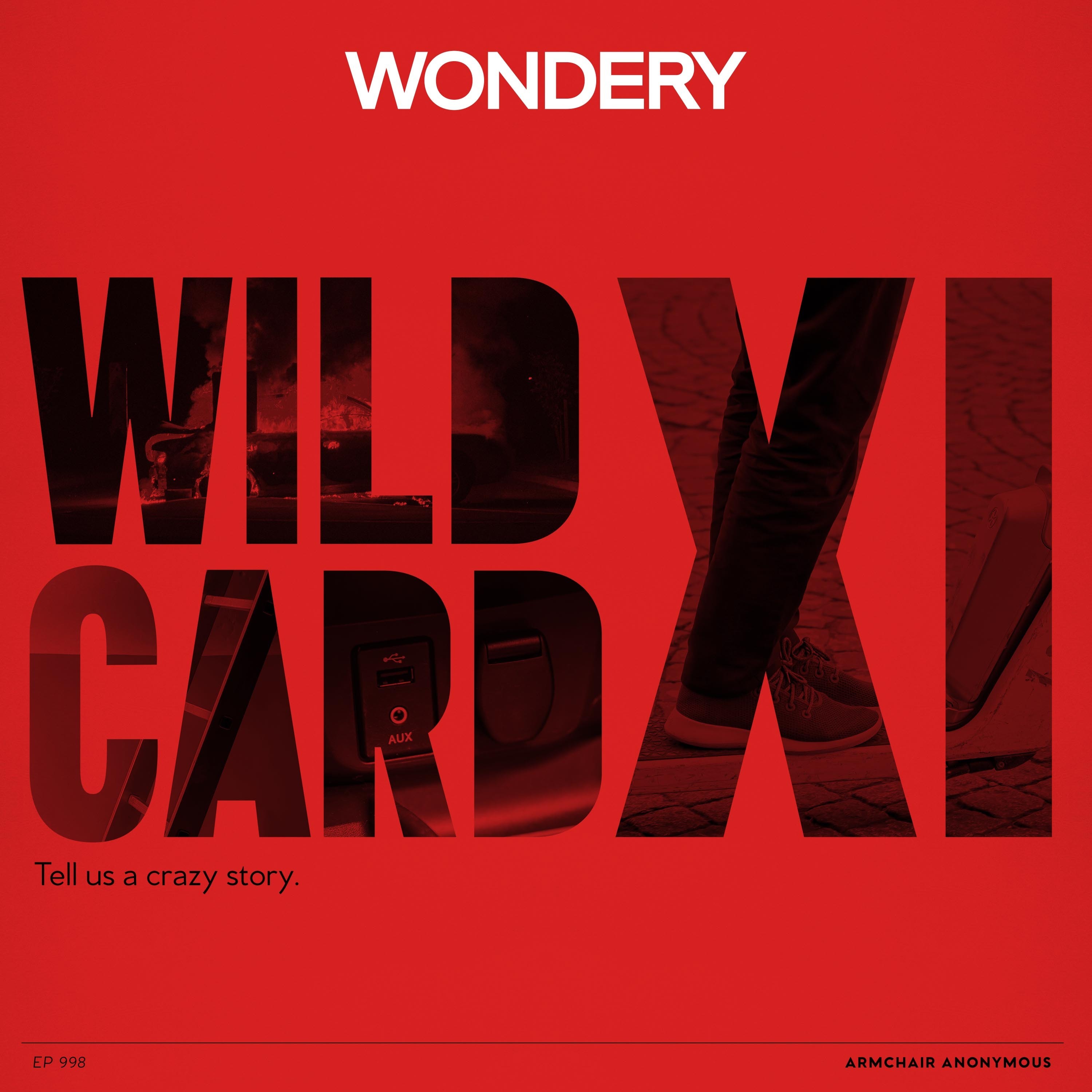
Overview of Armchair Anonymous: Wild Card XI
Hosts Dan Shepard and Monica Padman present a Wild Card episode collecting listener-submitted short stories (wildcard moments). The episode runs several true-life anecdotes from callers in the U.S., U.K., and Germany about sudden emergencies, near‑misses, recovery, unexpected connections, and the small, messy, human responses that follow. Interspersed are the hosts’ reactions, light banter, and sponsor reads.
Episode structure and sponsors
- Hosts: Dan Shepard and Monica Padman (Armchair Umbrella).
- Format: Listener phone-ins — each tells a self-contained “wild card” story.
- Sponsors/readers: Empower, Quince, Apple Card, Helix (brief ad reads appear mid-episode).
Key stories (concise summaries)
Marcos — South Texas: car crash and on-the-spot rescue (circa 2006)
- Nighttime party after a ska show. A car crash nearby; a silver Cadillac bursts into flames.
- “Marine Mike” pulls a man from a burning car; others help drag him away while traffic piles up and no emergency services have yet arrived.
- A second explosion occurs; no one in the group is injured. Mike collapses later from smoke inhalation but everyone (including the kids in the car) survives.
- Aftermath: no police report by Mike; the group processes the shock, goes back to the apartment, and resumes the party. Marcos reflects on heroism and community response.
Jane — England: ladder fall before a wedding party (summer 2023)
- While preparing for a homecoming/wedding celebration, Jane falls from a loft ladder (~7 ft), injures her left leg and head.
- Crawls to find crutches; ambulance arrives quickly but morphine administration prevents her husband from driving her to the party—so she’s placed in the back of the ambulance crew’s vehicle and taken to A&E (ER).
- Diagnosed with a “nutcracker” crush fracture of the foot; placed in plaster, six weeks non-weight-bearing. Discharged the same day and attends the party that evening in a wheelchair—still able to celebrate.
- Commentary on the UK National Health Service: free emergency care praised, but systemic backlogs (e.g., elective surgeries) noted.
Dani — U.S./Germany (grad-school era): car break-ins and an unsettling confession
- In grad school while juggling multiple jobs, Dani had her car broken into repeatedly; valuables stolen (textbooks in a Coach bag, laptop, lifting gear, neon green auxiliary cord).
- Two years later, working as an intern/therapist with juvenile clients involved with drug-related offenses, a client candidly describes his criminal past—admitting he and a friend had repeatedly broken into cars and kept a “lime green auxiliary cord.”
- Dani realizes, mid-session, the client had been taking from her years earlier. She chooses not to disclose that to preserve therapeutic trust; reflects on perspective—her loss vs. the larger trauma and chaos in the client’s life—and on choosing to be “the helper” rather than the one calling for help.
Erin — Richmond/Arlington, VA: scooter crash and serious facial trauma (Aug 2024)
- After a night out with her then-fiancé, Erin scooters home, hits a pothole with loose gravel, is launched and hits face/head/ground—no helmet.
- Sustains extensive facial injuries: staples in the scalp, multiple stitches on forehead/chin, broken radial head (elbow), cracked teeth, significant tongue trauma. Lost hours of memory from ~11 p.m. to 5 a.m.
- Husband (Rocco) has a tense ER exchange with staff and is temporarily removed; Erin recovers and documents the injury progression with photos (including arriving at her bachelorette in a wheelchair). She vows no more scooters.
Themes and takeaways
- Spontaneous heroism: ordinary people can and do step in during emergencies (Marine Mike pulling people out of a burning car).
- Trauma and choice: victims/first responders often replay events; humor and normalcy (going back to the party) can be coping mechanisms.
- Perspective on material loss: theft of items (even seemingly trivial ones) can feel personal, but putting it in context (the thief’s life circumstances) can reframe anger and teach empathy.
- Health systems: emergency care access differs by country; NHS praised for free ER care but criticized for elective care backlogs.
- Shared-economy risks: lime/ride scooters are convenient but carry injury risk; helmet use and awareness of liability/terms of service are important.
- Boundaries in helping professions: maintaining trust with clients may require compartmentalizing personal knowledge to preserve therapeutic progress.
Notable quotes and lines
- “I do more before 5 a.m. than most people do all day.” — Marine Mike (as recounted).
- “Do you want to be the person that gets called for help or the person who calls for help?” — a line hosts/guests returned to as a guiding idea.
- “We were in our scooter phase... eat my dust.” — Erin, describing the moment before her crash.
- On NHS: “The National Health Service is free for accident and emergency. It's perfect. The issue is... infinite demand and finite resource.”
Practical recommendations and brief action items (implied)
- Secure valuables and avoid leaving important items (laptops, gear, cash) visible in vehicles.
- Consider helmet use and caution with shared scooters; read terms of service/waivers if you use ride‑share devices.
- If you work in helping professions, consider supervision and ethics around disclosures that could harm therapeutic relationships.
- For travelers/party-goers: have emergency contacts, know nearest ER, and consider transport choices when drinking.
Why this episode matters
- Wild Card XI showcases ordinary people in extraordinary, messy moments: quick rescue, medical mishap, property crime intertwining with later human connection, and the risk of convenience culture. The episode highlights resilience, ethical complexity in helping roles, and the unpredictable ways lives intersect.
Short listening guide
- Listen for: vivid first-person details (explosions, ladder collapse, ER care, therapy session reveal).
- Best for: listeners who like true-life short-story formats, reflections on trauma and human goodness, and practical, relatable cautionary tales.
Enjoyed the episode? It’s a compact collection of high‑emotion vignettes that land between adrenaline and reflection — the Wild Card formula in a nutshell.