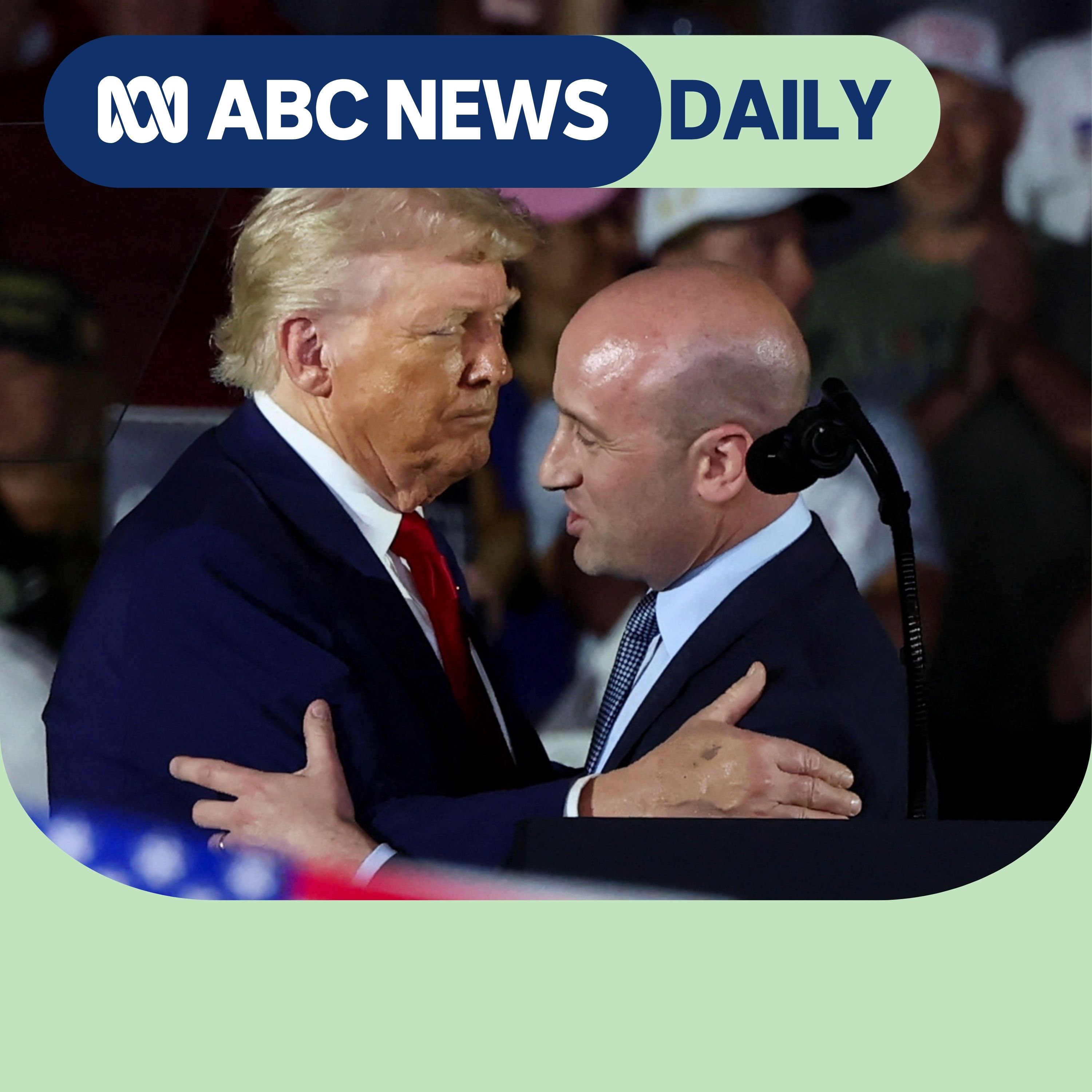
Overview of ABC News Daily: Will Stephen Miller make Trump “Trumpier”?
This episode examines what Donald Trump’s post-midterm behavior signals for the rest of his presidency, with a focus on his appointment of Stephen Miller as chief of staff. Political analyst Michael Green argues the move shows Trump is not moderating after the Republicans’ heavy midterm losses; instead, he is doubling down on the same hardline, combative style that has defined his politics. The discussion also explores how the Democrats can use their gains to constrain Trump, and what all of this means for Australia, especially on tariffs, energy prices, and the broader global impact of US policy.
Trump’s response to the midterms
He is not backing away after defeat
- Despite a major Republican setback in the US midterms, Trump briefly sounded conciliatory before quickly reverting to form.
- Green says the appointment of Stephen Miller is a clear sign that Trump is preparing to fight harder, not soften his approach.
Why Stephen Miller matters
- Miller is described as:
- One of the architects of Trump’s most unpopular policies, especially mass deportation.
- A loyal enforcer who can discipline the White House internally.
- A public fighter who will defend Trump aggressively on television and in political battles.
- The appointment suggests Trump wants someone who will help him protect his family, his supporters, and his agenda from investigations and legal pressure.
The Trump style: more showmanship, more aggression
- The episode also discusses reports that Trump considered UFC boss Dana White for White House press secretary.
- Green says this fits Trump’s instinct to surround himself with loyalists and entertainers rather than traditional political operators.
- The overall conclusion: Trump’s second term is likely to be even more “Trumpian” — louder, more combative, and more chaotic.
What the Democrats can do now
A stronger position, but not unlimited power
- Democrats won significant victories and now have more leverage in Congress.
- But because some gains came in more conservative states, Green warns they should not overinterpret the result as a sweeping mandate.
Likely tactics
- Push legislation focused on cost of living and dare Trump to veto it.
- Use control of the budget process to limit the administration’s options.
- Lean on oversight and investigations into issues like:
- Corruption
- Elon Musk’s role and influence
- The Iran war
- Miller-led deportation policies
Defense and impeachment pressure
- Pete Hegseth, the defense secretary, is seen as vulnerable because of his unpopularity and the fallout from the Iran war.
- However, Miller’s rise may give Hegseth a temporary reprieve.
- The episode suggests Republicans may still pressure Trump to remove Hegseth if defense spending becomes a sticking point.
Why this matters for Australia
Trump’s policies have already hit Australians
- Tariffs and the Iran war have contributed to higher costs and broader economic uncertainty.
- Green says Australians are feeling the same global frustration that Americans expressed at the ballot box.
Key Australian implications
- Tariffs: Pressure may build to reduce tariffs, especially those hurting consumers and farmers.
- Energy and prices: The Iran conflict could keep energy costs elevated for some time.
- Diplomacy: Australia should not wait passively; instead, it should work with allies like Japan to shape the next phase of debate in Washington.
The broader lesson
- Green argues the US public rejected the harsher parts of Trumpism — especially tariffs, conflict, and abrasive politics.
- For Australia, that suggests some vindication, but not necessarily relief: Trump remains constrained, yet still capable of causing disruption.
Main takeaway
The episode’s central message is that Trump is not being tamed by electoral losses. If anything, he is doubling down by promoting loyal, hardline figures like Stephen Miller. That makes the next two years likely to be politically noisy and institutionally tense — even if Trump’s actual governing power is more limited than his rhetoric suggests.
Notable insight
“Strap in, expect a lot of drama from the president. That’s his style. But don’t mistake that for actual power.”