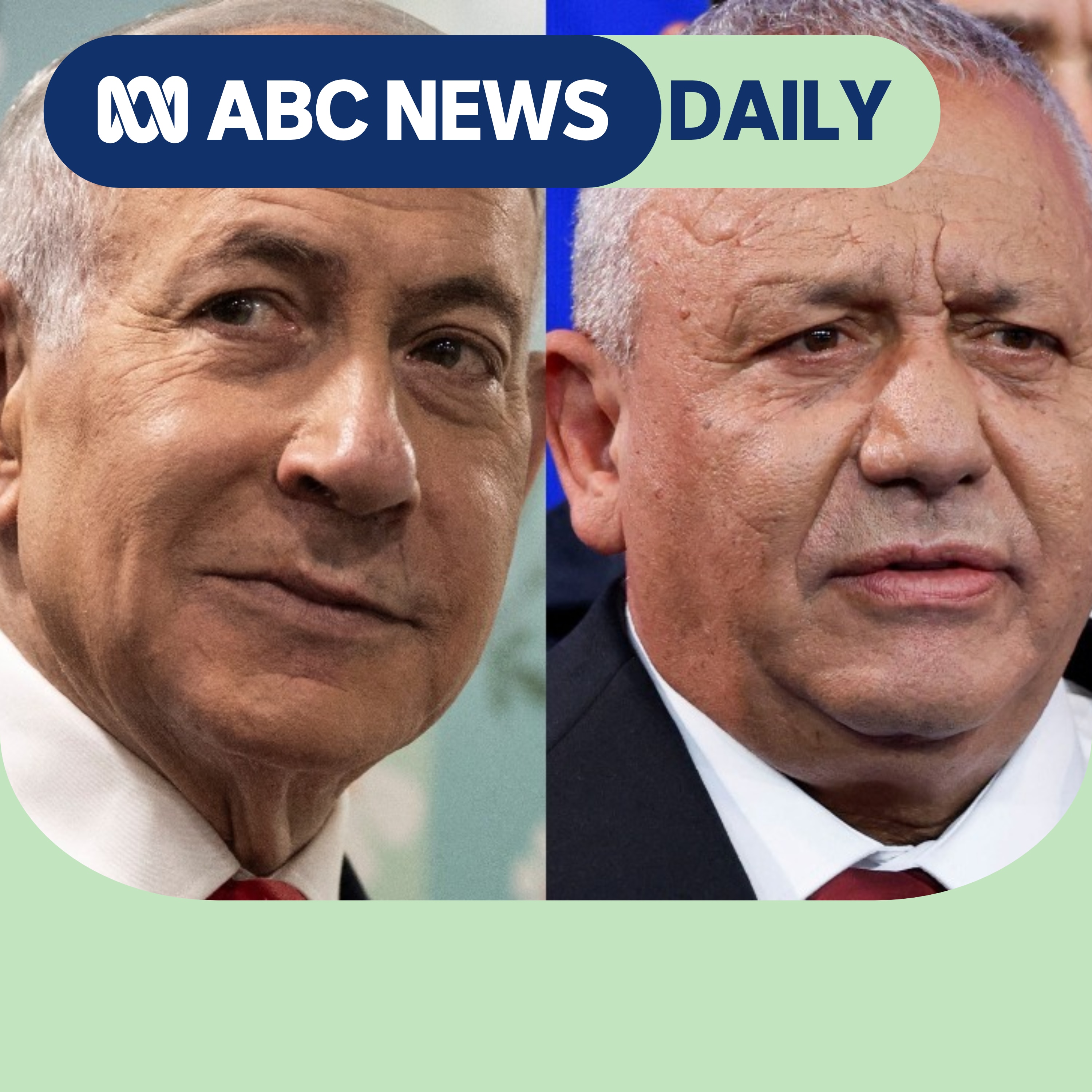
Overview of Will Netanyahu cling to power?
This ABC News Daily episode examines Israel’s closely fought election and what it means for Prime Minister Benjamin Netanyahu’s future. With record turnout, especially among Arab voters, the result looked like a major setback for Netanyahu’s bloc even if his Likud party finished first. Political scientist Dov Waxman explains the shifting coalition math, the significance of the Arab vote surge, and the possibility that Netanyahu could still maneuver his way into staying in power.
Key Takeaways
- The election was too close to call when polls closed, and exit polls gave conflicting pictures of who had the edge.
- Netanyahu’s Likud may have won the most seats, but his wider governing bloc appears to have lost significant ground, falling from around 68 seats to roughly 51.
- The result suggests a clear rejection of Netanyahu’s coalition, even if it does not automatically remove him from power.
- Arab voter turnout was unusually high, and Arab parties may have achieved their strongest showing yet, potentially winning up to 19 seats.
- The final government may depend on whether the opposition is willing to rely on Arab party support, a politically difficult but potentially decisive option.
Why the Arab Vote Mattered
A major story of the election was the record turnout among Arab citizens of Israel.
Why turnout surged
- Many Arab voters were motivated by:
- fears about the current government staying in power,
- rising violent crime in Arab communities,
- and frustration over government inaction, especially from police minister Itamar Ben-Gvir.
Netanyahu’s campaign strategy
- Netanyahu warned that Arab voters were “trying to steal the election”, echoing tactics he has used before.
- Waxman said this kind of rhetoric has racial overtones and is part of Netanyahu’s usual effort to mobilize his base through fear.
Coalition Scenarios
The episode focuses heavily on the question: Can anyone form a government?
Possible paths forward
- Opposition-led government:
The opposition could potentially form a government, but only if it is willing to rely on the support of Arab parties. - Netanyahu stays in power:
Netanyahu may try to prevent the opposition from assembling a workable coalition, forcing another election. - National unity deal:
In theory, Netanyahu could strike a deal with his rivals, but that would be politically fraught and unlikely.
Why Netanyahu can’t be ruled out
- Waxman emphasizes that Netanyahu is a master tactician and a political survivor.
- He has repeatedly shown he can cut deals and reverse positions when it helps him stay in office.
- Even so, this election appears to show that a majority of Israelis want him gone.
The Bigger Issues Behind the Vote
The episode places the election in the context of Israel’s broader political crisis.
Domestic concerns outweighed foreign policy for many voters
Although the country has faced major security shocks, many voters were more focused on internal issues such as:
- the government’s judicial overhaul plans,
- fears about the future of Israeli democracy,
- and concerns that Netanyahu’s rule could push Israel toward a more illiberal or authoritarian direction.
Security and regional tensions still loom
The discussion also touches on:
- the aftermath of October 7,
- the war in Gaza,
- tensions with Lebanon,
- settlement expansion in the West Bank,
- and the possibility of renewed confrontation with Iran.
Waxman notes that any escalation could delay coalition talks and reshape the political calculations again.
Bottom Line
Netanyahu may have won the most seats, but his bloc appears to have suffered a major setback. The episode’s central argument is that Netanyahu is not finished yet: he remains highly skilled at surviving politically, and he may still find a way to cling to power through coalition bargaining, a unity deal, or even another election. Still, the vote strongly suggests that many Israelis are ready for a change.