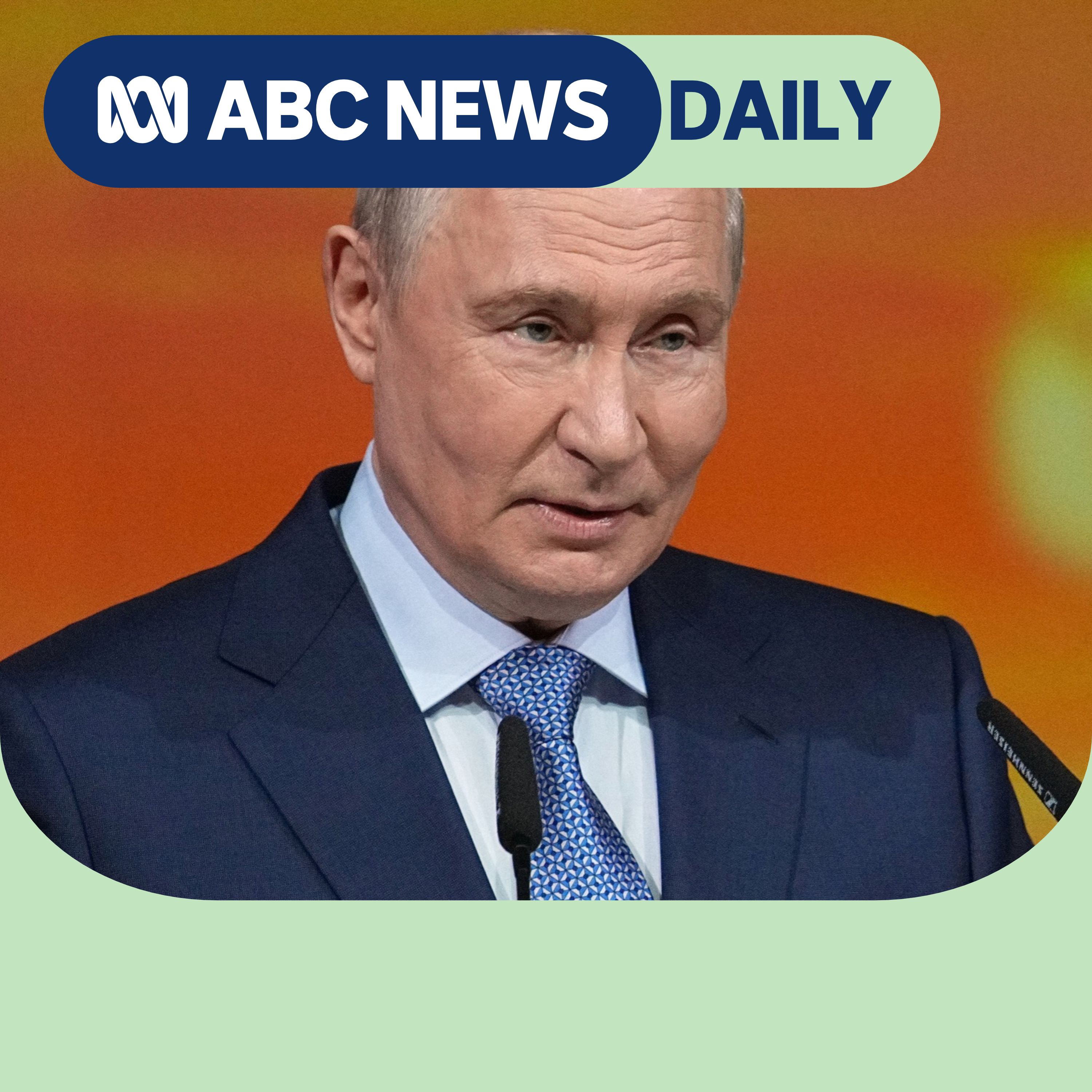
Overview of Why Trump's siding with "humanitarian" Putin
This ABC News Daily episode examines Donald Trump’s recent shift toward Russia in the Ukraine war, and why many observers see it as a dramatic and dangerous break with US policy. Host Sam Hawley speaks with CNN chief national security analyst Jim Sciutto about Trump’s repeated attacks on Volodymyr Zelenskyy, his softer treatment of Vladimir Putin, and the broader implications for Ukraine, US alliances, and the war’s future.
Key Takeaways
-
Trump is applying pressure to Ukraine, not Russia.
Sciutto argues this is not a one-off; Trump has consistently pressured Kyiv more than Moscow, and in recent days has done so more openly. -
US support for Ukraine has been weakened.
The episode notes that Trump has effectively zeroed out direct US military aid, while intelligence-sharing and some tech support have been reduced or disrupted at points. -
A Trump envoy’s praise of Putin drew outrage.
Steve Witkoff, Trump’s special envoy, referred to Putin as a “humanitarian” after Russia released an American detainee — a remark that shocked critics given Russia’s ongoing attacks on civilians in Ukraine. -
Trump’s approach is unpopular across the US political spectrum.
Several Republican senators and members of Congress openly pushed back, saying Putin is responsible for the war and warning that Trump is being manipulated. -
Ukraine no longer trusts the US as a reliable ally.
Ukrainian officials increasingly believe Trump may be trying to force a surrender or a bad deal, and are leaning more heavily on Europe and on their own domestic defense production.
Why Trump Is Doing This
1. Domestic politics and the midterms
Sciutto says the coming midterm elections may be part of Trump’s thinking, including his desire to lower diesel prices and appeal to voters.
2. A bigger goal: normalizing relations with Russia
Beyond short-term politics, Trump appears to believe he can strike a grand bargain with Putin:
- easing tensions with Russia,
- reopening energy and business ties,
- and possibly benefiting US and family business interests.
Sciutto says this would amount to normalization on Russia’s terms, not America’s.
3. A longstanding personal animus toward Zelenskyy
Trump’s hostility toward Zelenskyy is presented as deep and longstanding:
- dating back to Trump’s first term,
- including the Ukraine aid freeze that led to Trump’s first impeachment,
- and continuing into his current comments about Zelenskyy being unwilling to “make a deal.”
Ukraine’s Response
-
Zelenskyy has become more openly critical of Trump.
After earlier restraint, he now says it would be a “historic mistake” if the US backs Putin. -
Ukraine is adapting to reduced US reliability.
According to Sciutto, Ukraine is:- relying more on Europe,
- expanding its own weapons production,
- and preparing to endure without assuming strong US backing.
-
The trust is broken.
Ukrainian officials no longer assume Washington will act as a dependable partner under Trump.
Can Ukraine Survive Without America?
Sciutto’s answer is cautious but clear: yes, possibly — maybe even probably — but at a much higher cost.
What that would mean
- more deaths,
- more battlefield losses,
- and a much harder war effort.
Still, he says Ukraine has strong political will and does not intend to surrender or accept a deal that Russia would likely break anyway.
Outlook for Peace Talks
Both Zelenskyy and Putin have agreed in principle to US-mediated talks, but there is little optimism that they will achieve much.
- Ukrainian contacts reportedly view the talks with skepticism.
- Sciutto says the mood is closer to dark humor than hope.
- The consensus: a serious breakthrough looks unlikely.
Notable Quotes
-
Trump on Ukraine:
“Ukraine has to want to settle this war.” -
Zelenskyy on US support:
“It’s a tragedy. It’s a historic mistake.” -
Republican critics of Trump’s Russia stance:
“Putin is not America’s friend.”
Bottom Line
The episode portrays Trump’s Ukraine policy as a sharp and alarming reversal: one that pressures Ukraine, excuses Russia, unsettles US allies, and may be driven by a mix of politics, personal grievance, and hopes for a broader deal with Putin. The result, according to Sciutto, is a weakening of US credibility and a more precarious future for Ukraine.