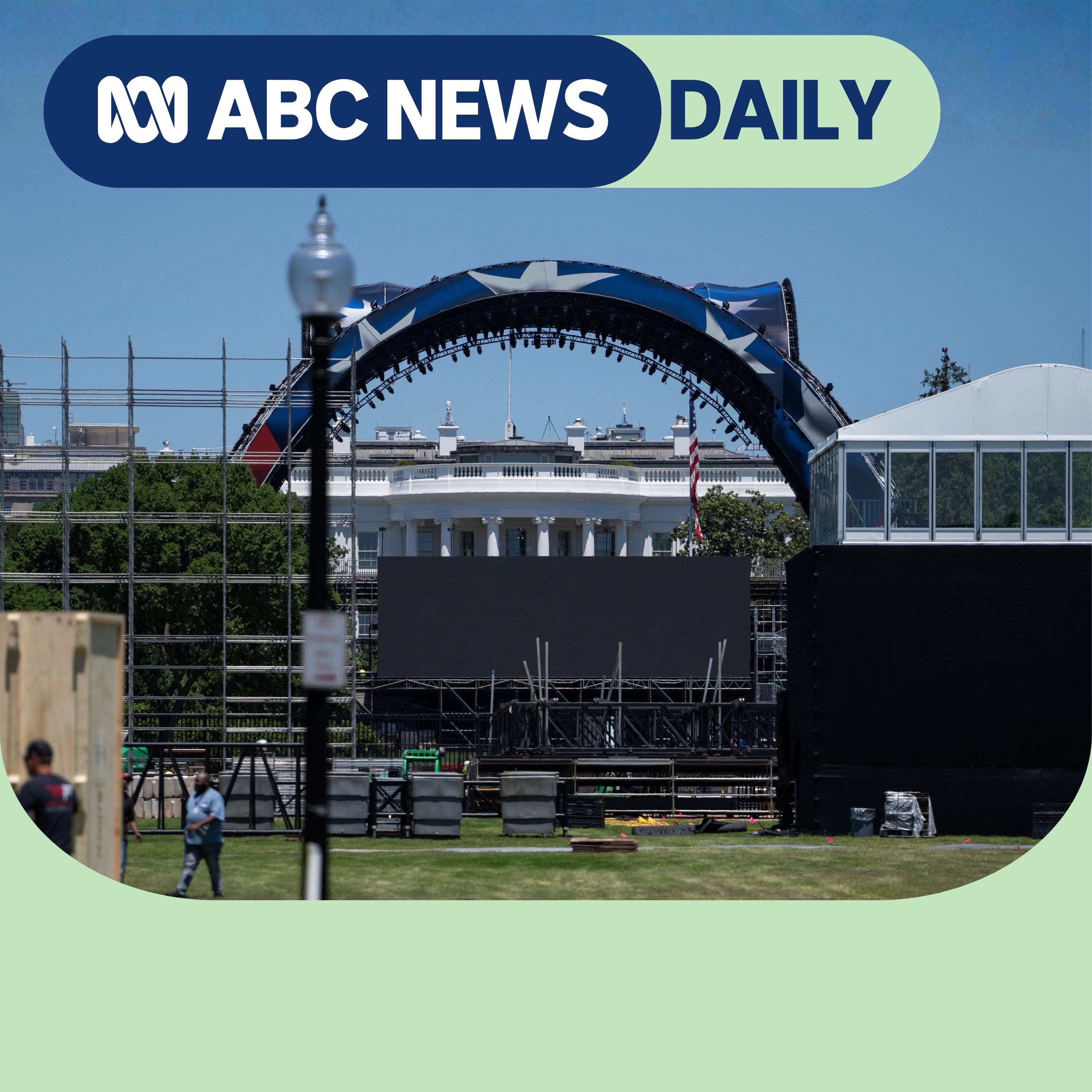
Overview of Why Trump brought UFC “savagery” to the White House
This ABC News Daily episode features The Atlantic’s Sally Jenkins discussing Donald Trump’s close relationship with the UFC, and how the sport’s culture of aggression, spectacle, and “no rules” combat has shaped his political style. The conversation centers on the planned UFC event on the White House South Lawn for Trump’s 80th birthday, and the argument that this is more than a stunt: it reflects a broader effort to normalize violence, redefine masculinity, and appeal to grievance-driven voters.
Key Points
Trump’s UFC connection is long-standing
- Trump and UFC president Dana White have a deep business and personal relationship going back years.
- Trump was an early supporter of UFC events, offering venues at a time when the sport was still controversial or illegal in many places.
- He has recently embraced UFC figures publicly, including hosting fighters in the Oval Office.
The White House fight is being framed as spectacle and symbolism
- A large octagonal fighting cage is being built on the White House South Lawn for a UFC event.
- The event is set for June 14, which is both Trump’s 80th birthday and the 250th anniversary of the founding of the United States.
- Trump has floated the idea that the cage could remain permanently, likening it to the Eiffel Tower as a structure that outlives its original purpose.
Jenkins argues Trump borrows UFC’s style for politics
- She describes Trump’s political communication as a kind of “ultimate cage match”:
- norm-breaking
- combative
- insulting
- designed to provoke and dominate
- Examples include “lock her up” rhetoric and his tendency to attack opponents in personal, aggressive terms.
- The article suggests Trump’s politics are built around raising the acceptable threshold of confrontation and brutality.
The appeal is strongest with grievance-driven voters
- Jenkins says UFC-style politics resonates with people who feel insulted, marginalized, or looked down on by elites.
- She argues this helped Trump in 2024, especially in attracting younger male voters.
- The Joe Rogan podcast appearance is presented as a major example of how UFC-adjacent media helped Trump reach that audience.
The concern is normalization of violence
- Jenkins warns that putting “savagery” on the White House lawn is not just symbolic theater.
- Her concern is that repeated exposure to violence and rule-bending dulls public alarm and erodes democratic norms.
- She sees Trump’s embrace of UFC as part of a broader political culture that rewards bullying and physical dominance.
Topics Discussed
- Trump’s relationship with Dana White and the UFC
- The planned White House cage fight
- Trump’s use of spectacle in politics
- Masculinity, toughness, and grievance as political themes
- UFC as a cultural and electoral force
- The role of Joe Rogan and young male voters
- The danger of normalizing aggression in public life
Notable Insights
- “Trump specializes in stolen valor.” Jenkins argues he presents himself as a toughness figure without having served in the military.
- “He has a crotch-kicking style as a politician.” Her shorthand for Trump’s deliberately abrasive and norm-breaking approach.
- “Normalizing violence dulls the senses.” Her core warning about the long-term democratic risk.
- The UFC’s original “no rules” branding is presented as politically resonant for Trump because it mirrors his disdain for constraints.
Bottom Line
The episode argues that Trump’s UFC obsession is not a quirky preference for combat sports — it is central to how he communicates power. By staging a UFC fight at the White House, Trump is reinforcing a political identity built around aggression, spectacle, and anti-establishment masculinity, while pushing the boundaries of what Americans are expected to accept as normal.