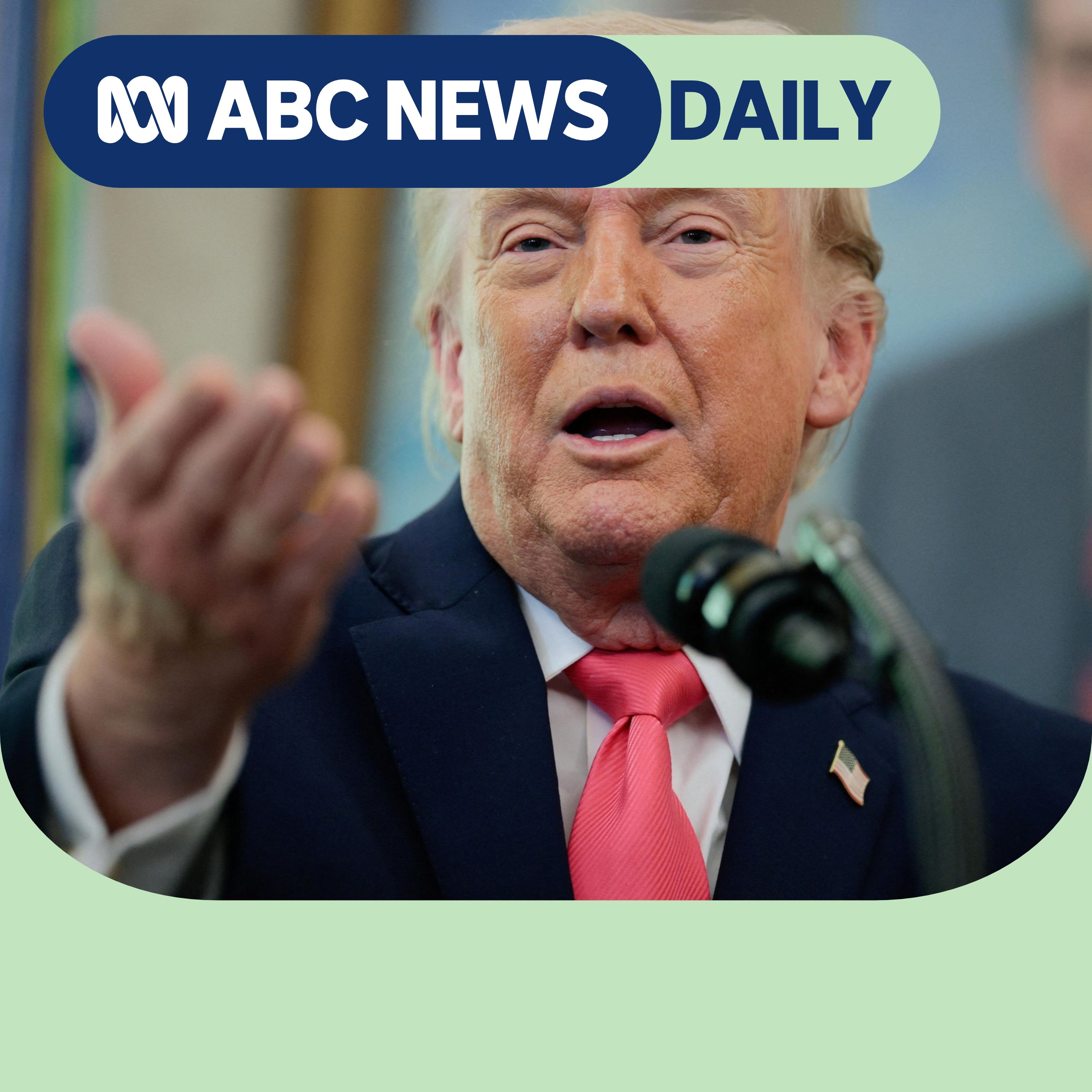
Overview of Why an ‘October surprise’ won’t save Trump
This ABC News Daily episode examines whether Donald Trump can still pull off a late-campaign turnaround with an “October surprise” ahead of the US midterms. Political writer David A. Graham argues that the recent stream of distractions, scandals, and headline-grabbing moments are not helping Trump—they’re reinforcing the same core problem: chaos, weak governance, and growing voter fatigue.
What an “October surprise” is
An October surprise is a major late-campaign event that can reshape an election just before voters cast their ballots.
Historical examples discussed
- 2016 Access Hollywood tape hurt Trump after damaging comments about women surfaced.
- 2016 FBI announcement about Hillary Clinton’s emails shifted the race again in the closing weeks.
The episode frames the current moment as one where Trump badly needs a similar last-minute break—but is unlikely to get one.
Why the recent “surprises” aren’t helping Trump
The conversation runs through several recent events that made headlines but did not improve Trump’s political position.
Short-lived press secretary controversy
- Trump’s new press secretary had a very brief and awkward public debut before losing the job after just five days.
- The episode uses this as another example of the dysfunction and instability surrounding Trump’s operation.
- The main takeaway: it generated attention, but not the kind of attention that improves the administration’s image.
Kimberly Guilfoyle fallout
- The discussion also covers scandal around Kimberly Guilfoyle, who reportedly resigned amid allegations about selling access.
- Again, the point is that the story adds to the sense of impropriety and disorder.
Pete Hegseth and other distractions
- Another controversy involved Defense Secretary Pete Hegseth and a livestreamed execution announcement that was later ruled out by Trump.
- Graham argues these incidents may shift the conversation temporarily, but they do not make voters think Trump is focused on affordability or effective government.
The Ukraine-Russia angle
One of the more serious developments discussed is Trump’s apparent willingness to strike deals involving Vladimir Putin and Russia, including sanctions-related moves and diesel-related arrangements.
Why it matters
- Trump’s relationship with Ukraine has been inconsistent and transactional.
- Volodymyr Zelensky appears worried he is being used as a scapegoat for Trump’s political problems.
- Graham says voters are unlikely to believe that cozying up to Putin will lower fuel prices or improve their lives.
- Foreign policy generally does not drive most American voters, but this kind of behavior still reinforces a negative image of Trump.
The core electoral problem: enthusiasm
The main political challenge is not one headline—it’s broader fatigue.
For Trump and Republicans
- Trump needs his supporters to believe he is “on the ballot” so they turn out.
- But many voters who are already decided are not coming back.
- Early voting means the election is already well underway.
- Graham says Republican enthusiasm looks weak, and disillusionment in Trump’s base is a real issue.
For Democrats
- Historically, Democrats often struggle with turnout.
- In this election, though, Democratic voters appear more energized than Republicans.
Texas as the key battleground
The episode highlights Texas as one of the biggest signs of how competitive this cycle has become.
Senate race
- Republican Ken Paxton is described as scandal-plagued and politically damaged.
- Democrat James Talarico is polling surprisingly well, possibly even ahead.
- That would be a major upset in a state Republicans have dominated for decades.
Governor’s race
- Polls also suggest the Republican governor may be in trouble or even tied with a Democratic challenger who recently emerged as a serious contender.
Money flooding in
- Texas is seeing extraordinary spending, with roughly half a billion dollars already spent on ads in the Senate race.
- Billionaire donor Elon Musk is also pouring significant money into GOP efforts.
- The episode argues that this level of spending shows how heated and expensive US elections have become—but money alone cannot fix deeper political weakness.
Main takeaway: money and distractions can’t solve the fundamentals
David A. Graham’s central argument is that:
- Money helps, but it is not enough
- Scandals and distractions do not build trust
- Trump’s biggest problem is still chaos
- Voters are increasingly reacting against what they see up close
The episode suggests the GOP’s deeper challenge is not a lack of messaging, but a lack of a convincing governing project.
Bottom line
The episode concludes that an October surprise is unlikely to rescue Trump. The recent controversies are not turning the race in his favor; if anything, they are deepening the sense that Trump is dysfunctional and exhausted politically. Graham expects a serious Republican defeat, and says Trump’s likely response would be to lash out, lean harder on executive power, or possibly disengage if the loss is severe.
Notable insight
“Trump is his own spokesperson. Nobody can really speak for him.”
That line captures the episode’s final point: the chaos is not a communications problem—it is Trump’s brand.