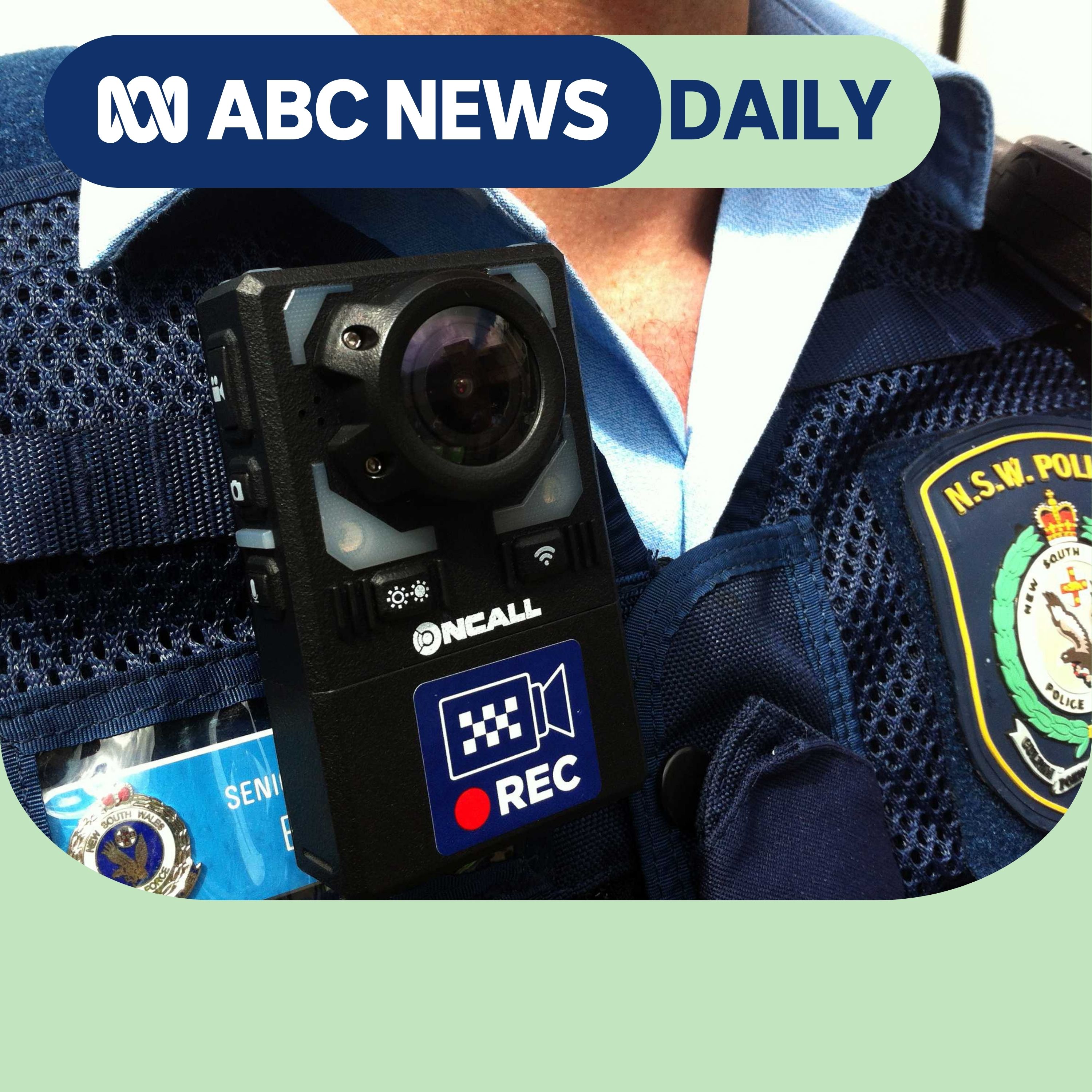
Overview of Who’s policing the NSW police?
This ABC News Daily episode examines serious allegations and findings of misconduct inside the New South Wales Police Force, focusing on a Four Corners investigation by Dylan Welch. It highlights how NSW Police has become Australia’s most complained-about force and the national leader in legal payouts, despite reforms introduced after the 1990s Wood Royal Commission. The episode argues that a combination of weak oversight, internal police investigations, and problematic use of body-worn cameras may be allowing abuse and misconduct to persist.
Key findings
- NSW Police paid out about $40 million in legal costs and compensation last financial year.
- There were 478 civil suits filed against the NSW state relating to NSW Police misconduct in that year.
- Complaints against NSW Police have risen about 70% over the past five years.
- Over the last five years to 2024, there were around 1,000 misconduct findings per year, but only about two cases per year led to charges against an officer.
- Much of the accountability system is internal, meaning police often investigate other police.
Case study: Brad Kelson
What happened
- In 2021, Brad Kelson was involved in a domestic incident in Sydney.
- Police arrived without clear evidence that he had committed an offence.
- He was unlawfully arrested, and the interaction escalated sharply.
Use of force and injuries
- Body-worn video shows a police officer escalating the confrontation.
- Kelson was slammed into a metal bench, thrown into a police vehicle, and later assaulted at Blacktown Police Station.
- A district court judge later described the incident as a “brutal assault.”
- Kelson suffered:
- 10 to 12 broken ribs
- a punctured lung
- four days in intensive care
Accountability outcome
- The charges against Kelson were thrown out.
- An internal investigation cleared the officers, but later court findings suggested collusion, including:
- copied witness statements
- identical wording and even an identical spelling mistake
- The court found the arrest unlawful, and Kelson received compensation.
Case study: Jodie Knott
What happened
- Jodie Knott was naked and in the midst of a psychotic episode in western Sydney when police encountered her.
- Four Corners obtained disturbing body-worn footage of the incident.
Use of force
- Two officers:
- repeatedly sprayed her with OC spray/pepper spray at close range
- sprayed her on her genitals
- dragged her by her hair along the road
- kicked and stomped on her
- The footage was described as a sickening and brutal attack.
Accountability outcome
- The two officers, Nathan Black and Timothy Trouch, pleaded guilty to common assault.
- They were sentenced to prison with non-parole periods of three years and 3.3 years.
- Black told the court that poor training, operational pressure, and a toxic workplace culture contributed to the incident.
Problems identified in the policing system
Internal investigations
- Most complaints never become public because they are handled inside the police system.
- Critics argue that “police investigating police” is inherently flawed and lacks objectivity.
- Senior officers may investigate colleagues from the same station, creating conflicts of interest.
Oversight limits
- The Law Enforcement Conduct Commission (LECC) monitors internal investigations, but:
- it runs only about 70 investigations a year
- it cannot force police to implement its recommendations
- the police are not required to act on all watchdog advice
Body-worn camera concerns
- The LECC has called for body-worn video to be mandatory whenever police exercise their powers.
- NSW has not yet made this compulsory, unlike every other state except WA.
- Concerns raised include:
- officers muting cameras
- officers not turning cameras on
- inconsistent use of footage during critical incidents
Bigger-picture takeaway
The episode suggests that despite the Wood Royal Commission and earlier anti-corruption reforms, some of the same cultural problems may still exist inside NSW Police — including brutality, lack of transparency, and impunity. Experts quoted in the segment warn that officers who never lived through the scrutiny of a major royal commission may feel less constrained by the consequences of misconduct.
NSW Police response
- NSW Police declined to fully engage with the reporting.
- They said some officers were found to have committed misconduct and were subject to “managerial action,” but did not specify the wrongdoing or the penalties.
- That lack of detail adds to concerns about transparency and accountability.
Bottom line
The report argues that NSW Police is facing a systemic accountability crisis:
- high complaint rates
- large compensation payouts
- limited independent oversight
- inconsistent use of body-camera evidence
- and troubling examples of excessive force
The central question raised is whether NSW needs another major inquiry or royal commission to properly reset police culture and oversight.