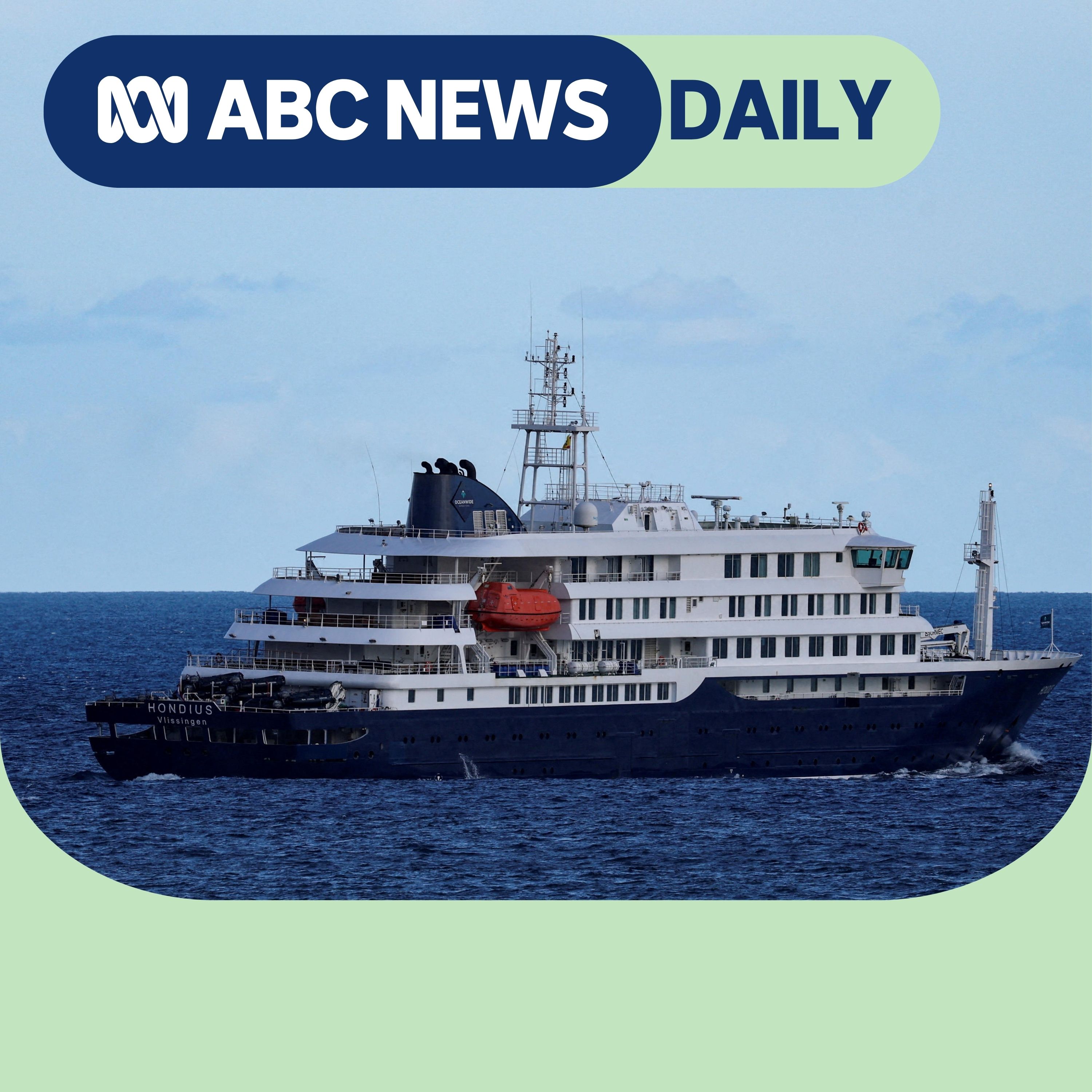
Overview of What we know about the cruise ship hantavirus
This ABC News Daily episode explains the hantavirus outbreak linked to a South Atlantic cruise, where three passengers died and several others tested positive after potential exposure on board and possibly before embarkation in South America. Host Sam Hawley speaks with epidemiologist and UNSW professor Raina MacIntyre about how hantavirus spreads, why this outbreak is concerning, what Australia’s quarantine response means for exposed passengers, and why the virus is serious but unlikely to trigger a COVID-style pandemic.
What happened on the cruise ship?
- The outbreak was tied to the cruise ship MV Hondius, which departed Argentina on April 1 with about 146 passengers and crew.
- The ship later docked in Tenerife, Spain, where passengers were repatriated after delays caused by the health emergency.
- Three deaths were confirmed during the episode’s discussion:
- A Dutch man died first on board.
- His wife later died as well.
- A German woman also died.
- Around 90 people were still on board when repatriation began, including:
- Four Australians
- One Australian permanent resident
- One New Zealander
- The Australians were due to enter a quarantine facility in Western Australia.
What is hantavirus and how does it spread?
Main transmission routes
- Hantaviruses are usually spread from rodents to humans through:
- Urine
- Feces
- Infection typically happens when contaminated material becomes airborne in dust and is inhaled.
Why this outbreak is different
- The transcript focuses on the Andes variant of hantavirus, found in parts of South America, especially Argentina.
- This strain is notable because it is the only hantavirus documented to spread from person to person.
- Human-to-human spread is believed to occur through respiratory aerosols rather than casual contact.
Where did the outbreak likely begin?
- Authorities suspect the first victims may have been exposed in Argentina, where they had been travelling.
- There was speculation about a rubbish dump / birdwatching area linked to the cruise departure area, but local health officials denied that as the source.
- Based on the incubation period and the timing of the husband’s illness, MacIntyre said the most likely source was somewhere in Argentina.
How dangerous is hantavirus?
- The Andes strain can cause hantavirus pulmonary syndrome, which can include:
- Severe breathing problems
- Fluid in the lungs
- Cardiorespiratory complications
- MacIntyre said the fatality rate can be 30% to 50%, which is far higher than COVID-19.
- Because it can be severe and sometimes spread person-to-person, it is taken seriously as a public health threat.
Why more cases may still appear
- MacIntyre warned that additional cases could emerge over the next weeks or even months.
- Reasons include:
- Ongoing incubation periods
- Exposures during medical evacuations
- Spread across countries via commercial flights
- Cases were already reported outside the cruise context, including among people who had traveled internationally.
Australia’s quarantine response
- Australia announced that exposed passengers returning home would undergo three weeks of quarantine, with the possibility of a longer total monitoring period.
- MacIntyre said this is a sensible approach because:
- It covers much of the expected incubation window
- Some cases may take up to eight weeks to appear
- She also noted the challenge of repatriating passengers safely because airline crew would need protection and isolation too.
Why this is not likely to become another COVID-19
MacIntyre said a large pandemic is unlikely, mainly because:
- Hantavirus has a long incubation period, which gives public health teams time to trace contacts and isolate exposed people.
- Asymptomatic transmission may occur, but it is not believed to be as dominant as it was with COVID-19.
- Unlike COVID, hantavirus does not have the same scale of silent spread that makes containment extremely difficult.
Bigger public health takeaway: the next pandemic may be harder to manage politically
- MacIntyre argued that the next pandemic could be harder to manage than COVID, not necessarily because the virus is worse, but because of:
- Pushback against public health measures
- Vaccine skepticism
- Misinformation and disinformation
- She warned that public health tools such as:
- Mask mandates
- Social distancing
- Quarantine may face much stronger resistance now than before COVID.
Other potential pandemic threats mentioned
MacIntyre identified two current concerns as possible future outbreak drivers:
- Influenza
- Mpox clade 1, which she said appears to be adapting more to human-to-human transmission
She stressed that future pandemics are hard to predict and can emerge from unexpected places, just as COVID did.
Key takeaways
- The cruise ship outbreak appears to have originated in South America, most likely Argentina.
- The relevant strain, Andes hantavirus, can spread person-to-person, unlike most other hantaviruses.
- Australia’s strict quarantine response is presented as prudent and scientifically justified.
- A COVID-like pandemic is considered unlikely from this virus, but the episode underscores how vulnerable global travel can be to infectious disease spread.
- The biggest challenge for the next pandemic may be public distrust and misinformation, not just the pathogen itself.