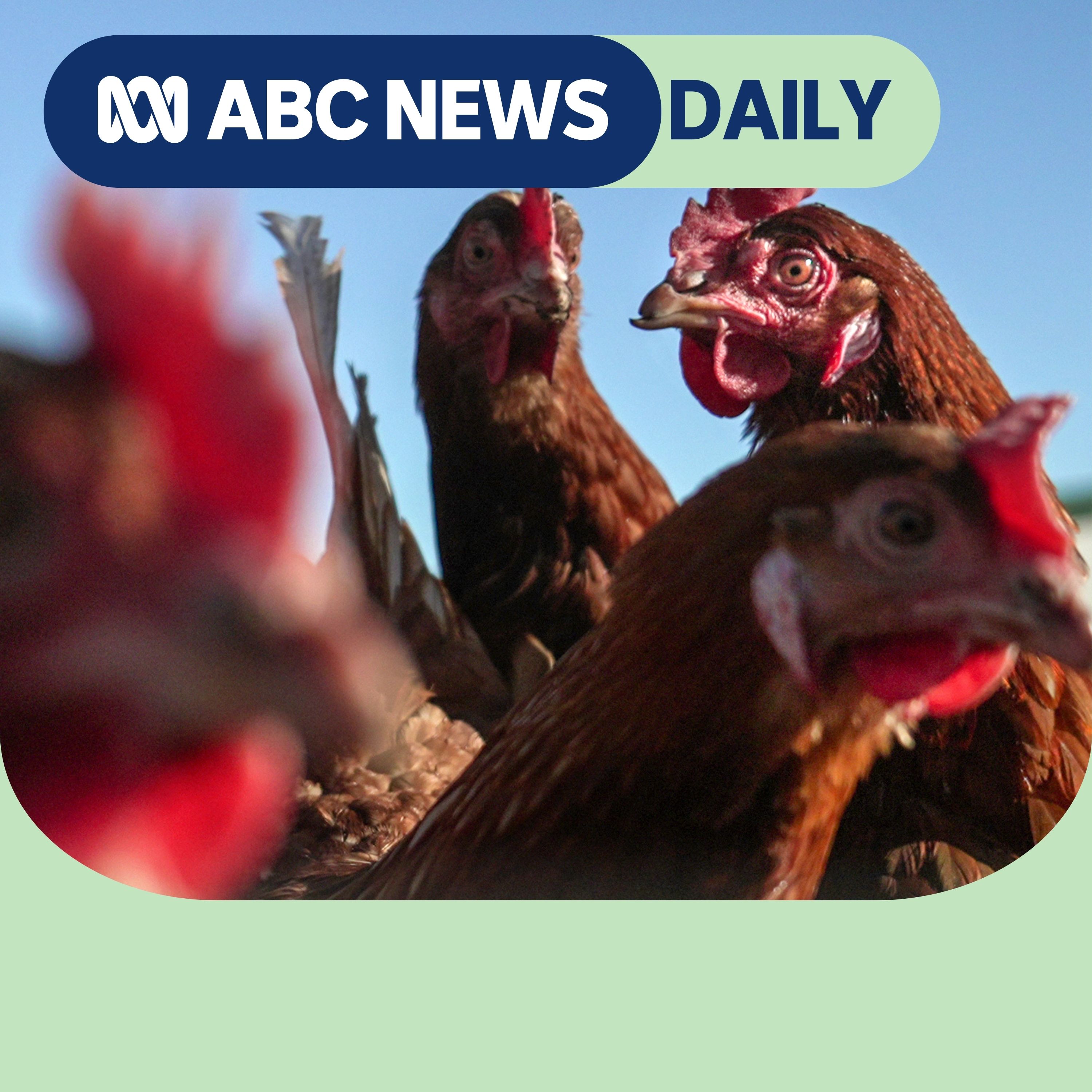
Overview of What happens when bird flu hits egg farms?
This ABC News Daily episode examines the arrival of the H5N1 bird flu strain in Australia and why it poses a serious threat to wildlife, poultry farms, egg production, and potentially dairy farms. Epidemiologist Raina MacIntyre explains how the virus likely entered through migratory seabirds from Antarctica, why this strain is different from earlier Australian bird flu outbreaks, and why authorities and farmers are now bracing for local spread.
Key Points
- H5N1 has now reached Australia after years of avoiding this strain.
- The first confirmed local transmission involved greater crested terns in South Australia, followed by a mass mortality event with dozens of dead or sick birds.
- This strain is more dangerous than earlier H7 outbreaks because it has created a global, ongoing “pandemic in birds.”
- The virus is expected to spread further through resident bird populations, increasing the chance of outbreaks in poultry.
- A major concern is that once it reaches poultry farms, it can cause rapid, total flock losses.
How the Virus Spread and Why This Is Different
Entry into Australia
- The first warning sign was a sick seabird found in southern Western Australia.
- MacIntyre says the virus likely came via migratory seabirds connected to Antarctica and Heard Island.
- Unlike earlier bird flu strains, H5N1 is no longer a sporadic outbreak virus — it has been continually escalating worldwide since 2020.
Why Australia was previously protected
- Australia had been shielded by geography and bird migration patterns, including the so-called Wallace Line.
- Traditional waterfowl flyways didn’t make Australia a likely target.
- That protection has weakened because new seabird routes now provide a pathway from Antarctica.
Animals at Risk
The episode highlights that the threat is much broader than chickens:
- Native birds: emus, cockatoos, galahs, endangered parrots
- Commercial poultry: especially egg farms and free-range operations
- Marine mammals: sea lions, dolphins, and other coastal species
- Terrestrial mammals: Tasmanian devils, kangaroos, wallabies, and possibly platypuses if they scavenge infected carcasses
Human Risk
- No human cases have been reported in Australia.
- The immediate risk to people is described as fairly low, since the virus still behaves mainly as a bird virus.
- However, MacIntyre warns that if the virus adapts to bind more easily to human receptors, it could become a pandemic threat.
- Overseas, human infections have mostly occurred in farm workers with close contact with infected poultry or cattle.
- The episode also notes that the virus can cause neurological disease in animals such as cats, especially after exposure to raw milk.
What This Means for Poultry and Egg Farms
Why farms are especially vulnerable
- The most likely hotspots for first poultry outbreaks, based on the team’s model, are around Sydney, Melbourne, and Tasmania.
- The map is based on:
- seabird movement
- native bird flyways
- wetlands
- climate factors
- likely contact points between wildlife and farms
Recommended precautions
- Keep poultry contained and away from wild birds
- Avoid access to open water sources
- Tighten controls on farm visitors and movement
- Cover or protect free-range areas
- Backyard chicken owners should also keep birds secure in a coop or enclosure
What happens if farms are hit
- H5N1 is described as highly pathogenic in poultry
- Once it enters a flock, it can spread rapidly and kill all birds
- The usual control method is culling
- Vaccines exist, but they are imperfect and may mask outbreaks
Economic and Food Security Impact
- The episode stresses that the financial fallout could be massive.
- Egg shortages and poultry losses could affect:
- consumer prices
- farm viability
- food security
- access to an affordable source of protein for many households
- Compensation for heavily affected farmers is highlighted as important to keep the industry functioning.
Government and Industry Response
- The Australian government has spent $113 million preparing for the virus.
- Farmers are being urged to stay vigilant.
- MacIntyre says the poultry industry is already paying close attention to overseas outbreaks and doing much of what is needed.
- She points to the U.S. experience as a warning: failing to respond quickly can worsen the outbreak and damage the industry more than the virus itself.
Main Takeaway
The episode’s central message is that Australia has likely passed the point of avoiding H5N1 entirely. The focus now is on containment, farm biosecurity, rapid reporting, and compensation, because the virus is expected to keep spreading through birds and could eventually disrupt poultry, egg supply, and possibly other parts of agriculture.