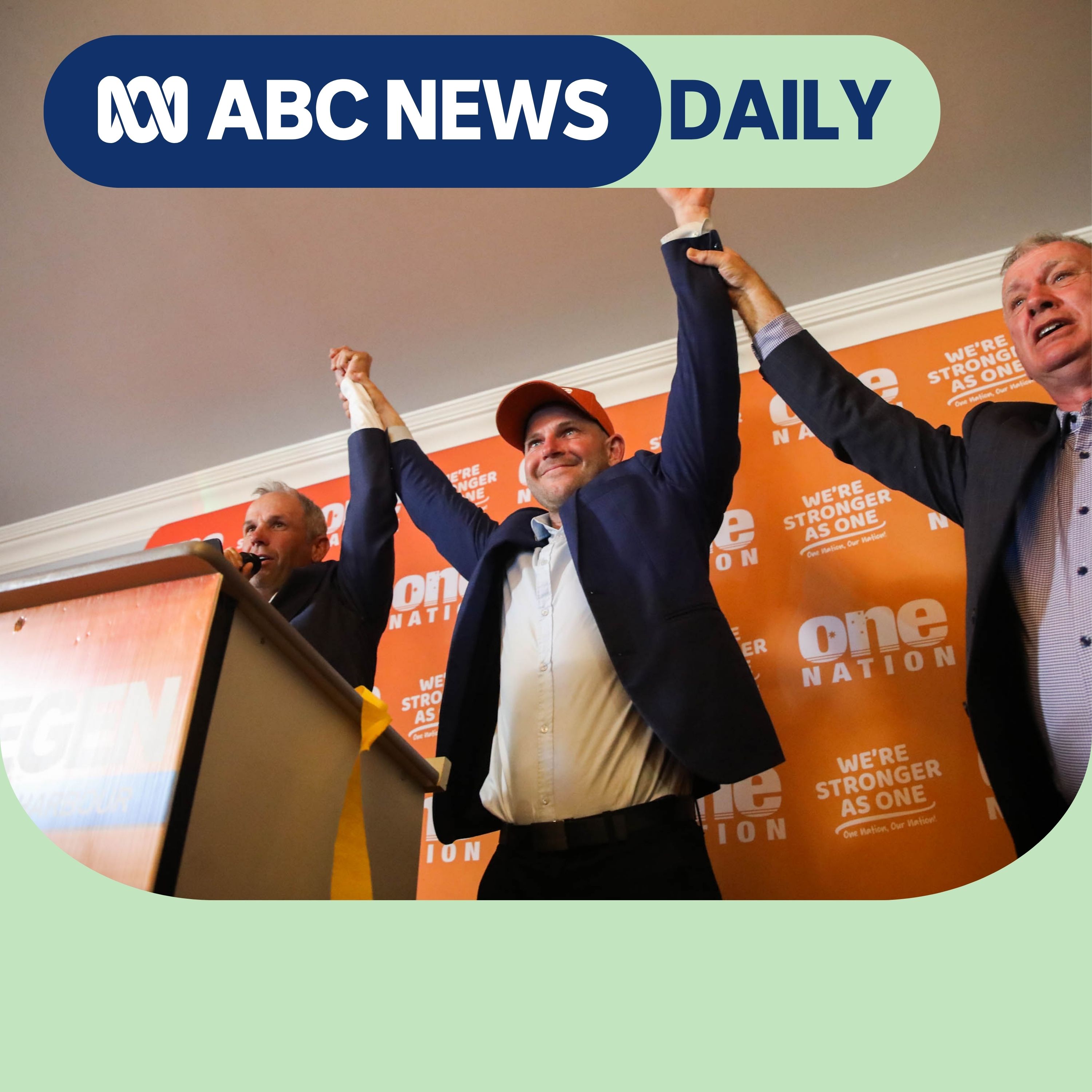
Overview of The win that made One Nation a major party
This episode of ABC News Daily examines One Nation’s historic breakthrough in Western Australia, where the party won its first lower house seat in the state and polled almost 40% in the Secret Harbour by-election. Political correspondent Michelle Grattan explains why the result signals that One Nation has become a serious third force in Australian politics — one that now threatens both Labor and the Coalition — and what it could mean heading toward the 2028 federal election and upcoming state contests in Victoria and New South Wales.
Key developments
-
One Nation won a lower house seat in Western Australia for the first time
- The party’s candidate, Luca Dudgeon, won the Secret Harbour by-election.
- The ABC called the seat just hours after counting began.
- One Nation secured nearly 40% of the primary vote, a striking result in a field of 16 candidates.
-
The result reinforces One Nation’s national momentum
- It follows earlier success in the Farrell/Farrah by-election at federal level, which already suggested One Nation was emerging as a genuine third force.
- The party is no longer just a spoiler for conservatives; it is now seen as a threat to Labor as well.
-
The result reflects a broader protest and grievance vote
- Voters interviewed said they felt:
- ignored by major parties,
- fed up with cost-of-living and broader economic pressures,
- attracted to Pauline Hanson’s “authentic” style over what they see as “plastic politics.”
- Voters interviewed said they felt:
Why the result matters
-
A 40% primary vote is exceptionally strong
- In today’s fragmented political environment, the major parties often sit in the 20s or low 30s.
- Grattan notes that even in a by-election, that level of support is a major warning sign.
-
One Nation is now a serious competitor in working-class and outer-suburban seats
- The party’s appeal is tied to frustration in communities that feel neglected.
- Its rise is no longer confined to conservative voters unhappy with the Coalition.
-
It creates pressure on both major parties
- Labor must find ways to address the economic grievances driving support for One Nation.
- The Liberal Party faces internal conflict over whether to confront One Nation aggressively or accommodate some of its voters.
Labor and Coalition response
Labor’s challenge
- Prime Minister Anthony Albanese warned that hard-right populists are rising globally and argued they must be defeated.
- Grattan’s assessment: Labor’s messaging may be correct, but many One Nation voters are not listening.
- The most effective counter, she says, would be improving economic conditions — though that is much easier said than done.
Coalition divisions
- The WA by-election exposed disagreement within the Liberals over how to deal with One Nation.
- Some conservatives want a harder line, while others appear more willing to treat One Nation as a useful anti-Labor force.
- Andrew Hastie is presented as especially hostile to One Nation, but he also faces pressure from right-wing networks and figures who support Pauline Hanson.
What comes next for One Nation
-
Victoria is the next major test
- Hanson watched the WA result from Victoria, where a state election is due in November.
- One Nation says it will contest all seats, though candidates are still being rolled out.
- The party is expected to do better in the upper house, where it could gain significant influence.
-
New South Wales may be even more important
- Grattan suggests the NSW election will likely matter more to One Nation than Victoria.
-
Pauline Hanson may eventually move to the lower house
- She has signaled interest in making a run for a lower house seat, possibly to position herself for a prime ministerial bid.
- Grattan thinks a lower-house move is plausible, but a serious run for The Lodge remains unlikely.
Notable insights
-
“This is not just a protest vote; it’s a grievance vote.”
- The episode’s central argument is that One Nation is benefiting from deep dissatisfaction with politics and the economic system.
-
“People feel neglected”
- The Secret Harbour result is framed as a message from outer suburban voters that they feel unheard by Canberra.
-
Pauline Hanson’s appeal remains rooted in authenticity
- Supporters in the transcript describe her as someone saying what others won’t, which continues to resonate strongly with disaffected voters.
Bottom line
One Nation’s WA by-election win is portrayed as more than a local upset: it is evidence that the party has become a durable force in Australian politics. Its rise exposes dissatisfaction with the major parties, complicates the strategy of both Labor and the Liberals, and suggests that the coming state and federal elections could see One Nation play a far bigger role than in the past.