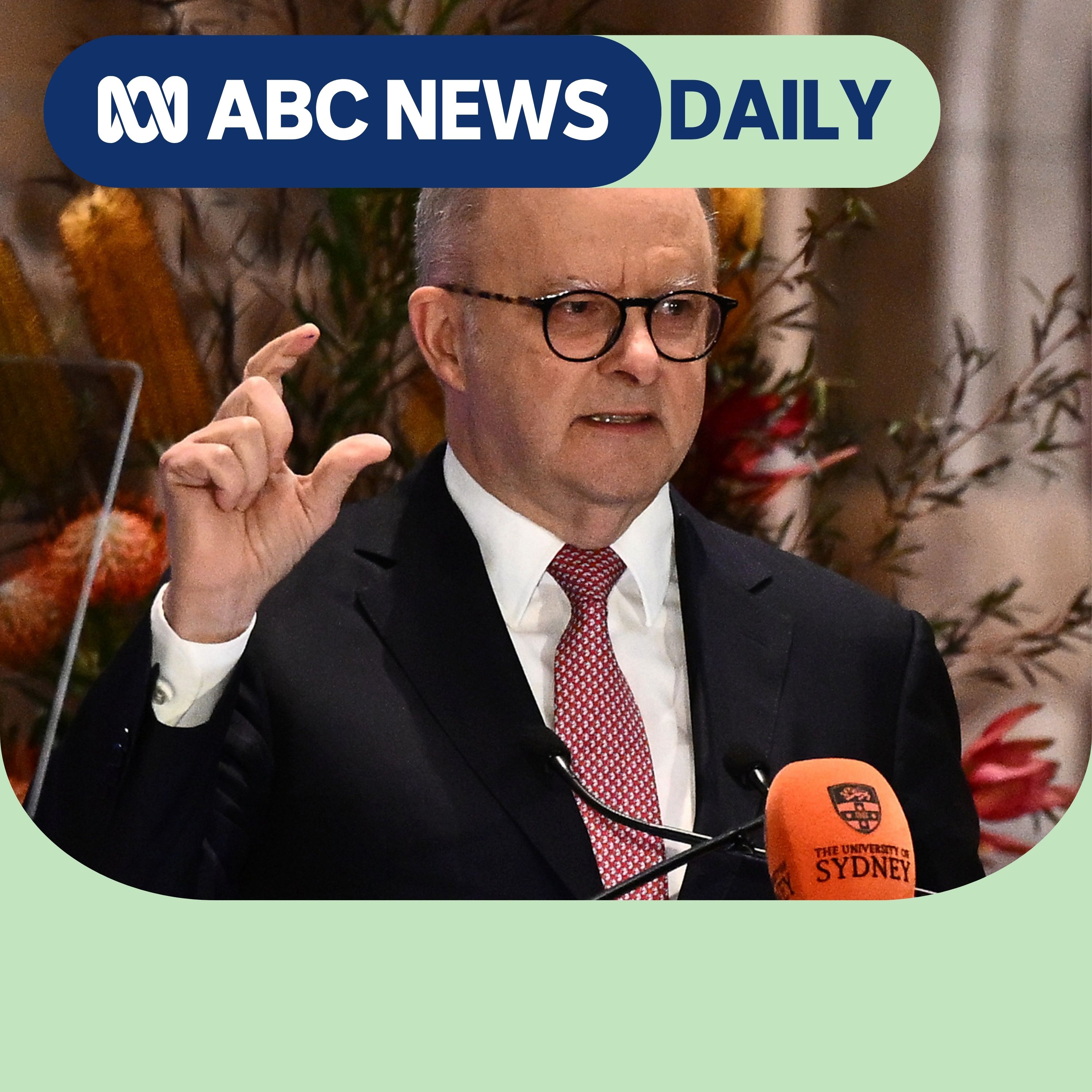
Overview of The gaps in the prime minister’s big AI speech
This ABC News Daily episode examines Prime Minister Anthony Albanese’s major speech on artificial intelligence and what it did—and did not—say. Speaking with University of Sydney AI regulation expert Kimberley Wetherill, the episode argues that the government has signaled a major shift in approach: AI is now being framed as a national issue requiring coordinated regulation, not just an issue for individual ministers. But despite the political significance of the speech, the policy detail was thin outside of one area: large data centres.
What the Prime Minister Signaled
AI as a national priority
- Albanese’s speech marked a move away from a largely hands-off approach.
- The government is treating AI as a whole-of-country issue requiring:
- federal coordination across portfolios
- cooperation with state and territory governments
- a clearer assertion of Australian interests and values
A desire to attract major AI investment
- The Prime Minister made clear that Australia wants big AI companies to invest and build here.
- The speech positioned Australia as a place where frontier AI firms could expand their physical infrastructure, especially data centres.
What Was Actually in the Speech
Strong language, limited detail
Wetherill said the speech was significant as a political “pivot,” but noted it relied heavily on broad statements about:
- Australian values
- social licence
- national capability
- building AI “the Australian way”
However, she argued the speech was light on the practical mechanisms needed to make those ideas real.
The clearest policy detail: data centres
The most specific commitments related to data centres, including rules around:
- energy use
- water use
- land use
- grid connection costs
- ensuring data centres underwrite new power supply
- preventing costs from being passed on to households or businesses
The government plans to take these standards to the states and territories first, then introduce legislation to Parliament next year.
Key Gaps and Unanswered Questions
What does “Australian AI standards” actually mean?
A major unresolved issue is what the proposed Office of AI, located in the Department of Prime Minister and Cabinet, would actually regulate. Wetherill said it was unclear whether this would cover broader issues such as:
- fairness
- transparency
- discrimination
- explainability
- safety standards
- mandatory guardrails
Local capability versus foreign investment
The speech stressed that Australians should build and develop AI locally, but gave little detail on:
- whether the government will invest significant Australian resources
- how local AI models will be supported
- whether the main expectation is still that outside companies will supply the capital
Copyright: The Biggest Policy Battle Ahead
The core tension
Copyright emerged as one of the most difficult unresolved issues:
- AI companies argue outdated copyright law is a barrier to investment.
- Artists, writers, musicians, and media groups want strong protection and control over how their work is used.
Albanese’s position
The Prime Minister said:
- artists’ work will be protected
- no company should use Australian books, music, art, or news to train AI without the creator’s control
- anything less would be “theft”
Why it remains complicated
Wetherill said:
- Australia’s copyright law is not modern enough for current AI questions
- reform is urgently needed
- but any reform must balance AI development with creative rights
- negotiations are ongoing, and there is no obvious “perfect deal”
Jobs, Harm, and Public Interest Access
Jobs and workforce transition
The Prime Minister said AI should be used to create good jobs, not threaten them. But the episode notes that serious policy work is still needed on:
- job displacement
- retraining
- workforce adjustment
- future skills development
Harmful content and safety
There was only a brief reference to a digital duty of care, which would place obligations on digital companies to identify and address risks on their systems.
Public interest access
Wetherill also flagged missing discussion on:
- affordable access for researchers
- access for government and civil society
- ensuring Australian institutions can use AI compute without prohibitive costs
Main Takeaways
- The speech was important politically because it elevated AI to a national strategic issue.
- The government clearly wants to attract major AI firms and infrastructure investment.
- The only detailed policy area was large data centres, especially around energy, water, and land use.
- Big questions remain unresolved on:
- AI safety standards
- transparency and fairness
- copyright reform
- jobs and retraining
- public-interest access to AI infrastructure
- Australia may be at a key moment to shape AI rules before the technology becomes even more powerful and entrenched.
Bottom Line
The episode’s central argument is that Albanese’s AI speech set the direction, but not the rulebook. Australia now appears ready to negotiate seriously with big tech on AI—but the hard decisions about copyright, safety, labor impacts, and access to compute are still ahead.