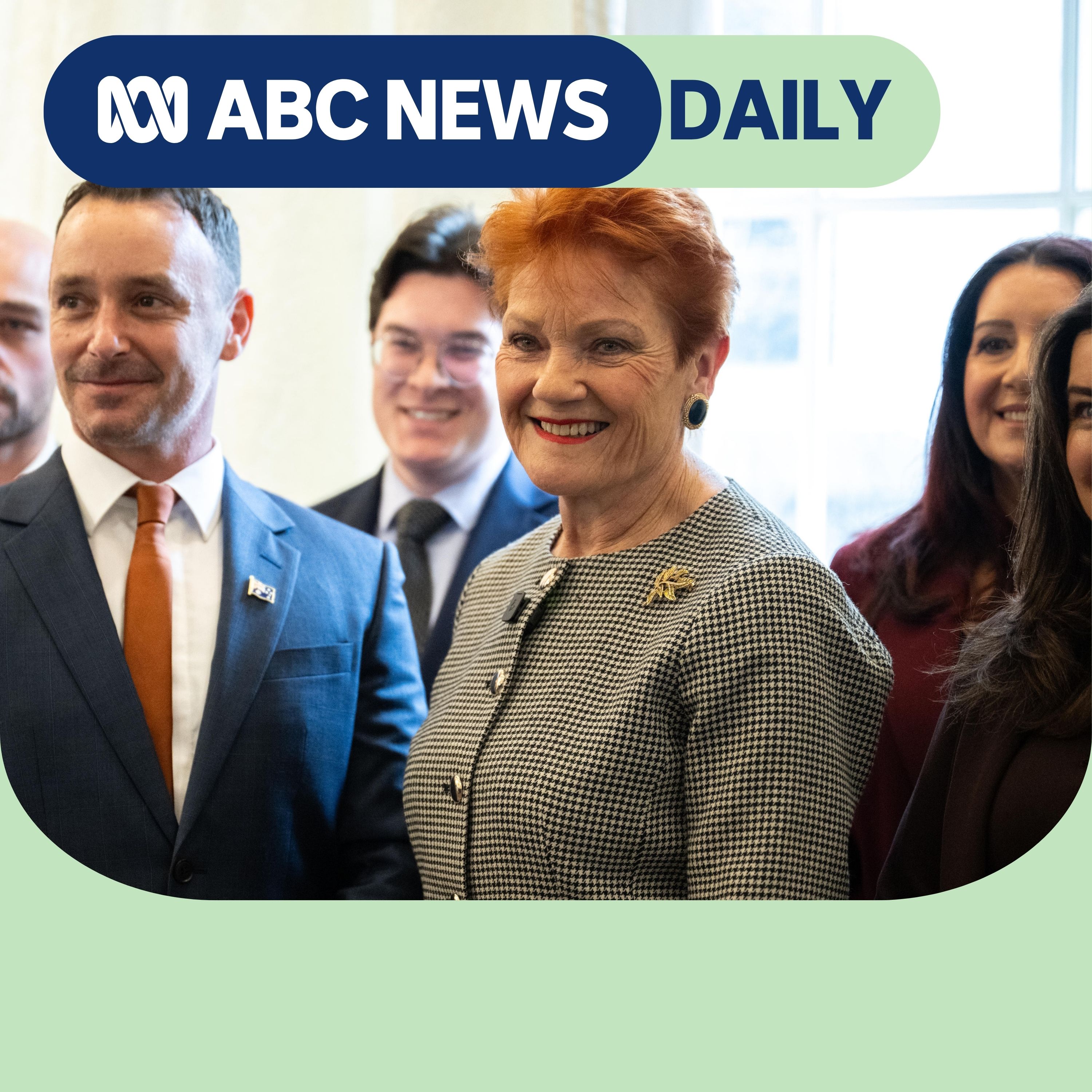
Overview of Should the media boycott Pauline Hanson?
This ABC News Daily episode examines Pauline Hanson’s decision to exclude some journalists — including ABC, The Age, and The Guardian — from a press conference in Melbourne, and asks whether media outlets should respond by boycotting her in return. Host Sam Hawley speaks with former ABC correspondent and journalism academic Monica Attard, who argues Hanson’s tactic is authoritarian, undermines press freedom, and risks normalising distrust in the media ahead of major elections.
What happened in Melbourne
Press conference exclusions
- Pauline Hanson unveiled One Nation’s Victorian state election candidates in Melbourne.
- Journalists from the ABC, The Age, and The Guardian were explicitly barred from attending.
- Hanson defended the decision by accusing those outlets of bias, “lies,” and unfair coverage.
- She instead welcomed outlets such as Rebel News, which Attard characterises as an advocacy outlet rather than a conventional newsroom.
A pattern, not an isolated incident
- The episode notes this is not the first time Hanson has shut out ABC journalists.
- A previous incident involving her chief of staff James Ashby ejecting ABC reporters from a campaign event is referenced.
- Hanson initially appeared uncomfortable with Ashby’s action at the time, but in this case she was clearly the decision-maker.
Monica Attard’s core argument
Why this matters
- Attard says public figures in a democracy do not get to choose who covers them or dictate the terms of scrutiny.
- She sees Hanson’s approach as a deliberate effort to avoid critical questioning and shape coverage through friendly media only.
- By limiting access to outlets likely to scrutinise her, Hanson can amplify her message without challenge.
Comparison with Trump-style media tactics
- The episode frames Hanson’s approach as similar to Donald Trump’s:
- favouring sympathetic media,
- attacking unfriendly outlets,
- using confrontation as a political strategy.
- Attard notes that while this can energise supporters, it also normalises hostility toward journalism and can weaken democratic standards.
Key democratic concerns
Erosion of press freedom
- Australia has no constitutional protection for press freedom.
- Instead, democracy depends on conventions: open access, scrutiny, and the expectation that politicians face questioning from all major outlets.
- Attard warns that if those conventions are repeatedly broken, the public may become accustomed to them.
Deepening mistrust in media
- She argues media trust is already very low.
- Hanson’s rhetoric — framing journalists as dishonest or unfair — can reinforce existing scepticism and make critical reporting easier to dismiss.
- That creates a “dangerous moment” for democracy, because voters may lose access to independent scrutiny.
The risk to voters
- If critical outlets are excluded, voters may only see favourable coverage from media Hanson prefers.
- Attard stresses that this is especially problematic when a party is rising in the polls, because voters need robust reporting to understand:
- what the party stands for,
- whether its policies are credible,
- and what the consequences might be for Australia.
Should journalists boycott Hanson?
Attard’s answer: yes, potentially
- Attard suggests journalists should consider banding together and boycotting Hanson if she continues excluding colleagues.
- She argues that solidarity is not about ideology, but about defending journalism’s core purpose:
- truth,
- verified facts,
- and holding power to account.
- In her view, if Hanson insists reporters can only attend when they agree not to scrutinise her, then journalists should refuse to participate.
Why a boycott might work
- Hanson would still have access to social media and sympathetic outlets.
- But a unified media response could:
- make her exclusion tactics more visible,
- reduce the legitimacy of her staged events,
- and signal that shutting out scrutiny has consequences.
Political reactions mentioned
Critics from across politics
- Several politicians are cited as critical of Hanson’s behaviour:
- Matt Canavan says public representatives should be accessible.
- Sarah Hanson-Young calls her a coward.
- Amanda Rishworth says Hanson should stand up and answer questions.
- Attard sees these criticisms as useful, but not sufficient on their own.
Main takeaway
Pauline Hanson’s exclusion of major media outlets is presented as more than a personal grievance with journalists — it is framed as a challenge to democratic norms. Monica Attard argues that the media should not simply accept being divided into “trusted” and “untrusted” categories by a politician, and that journalists may need to respond collectively to defend press freedom and the public’s right to scrutiny.