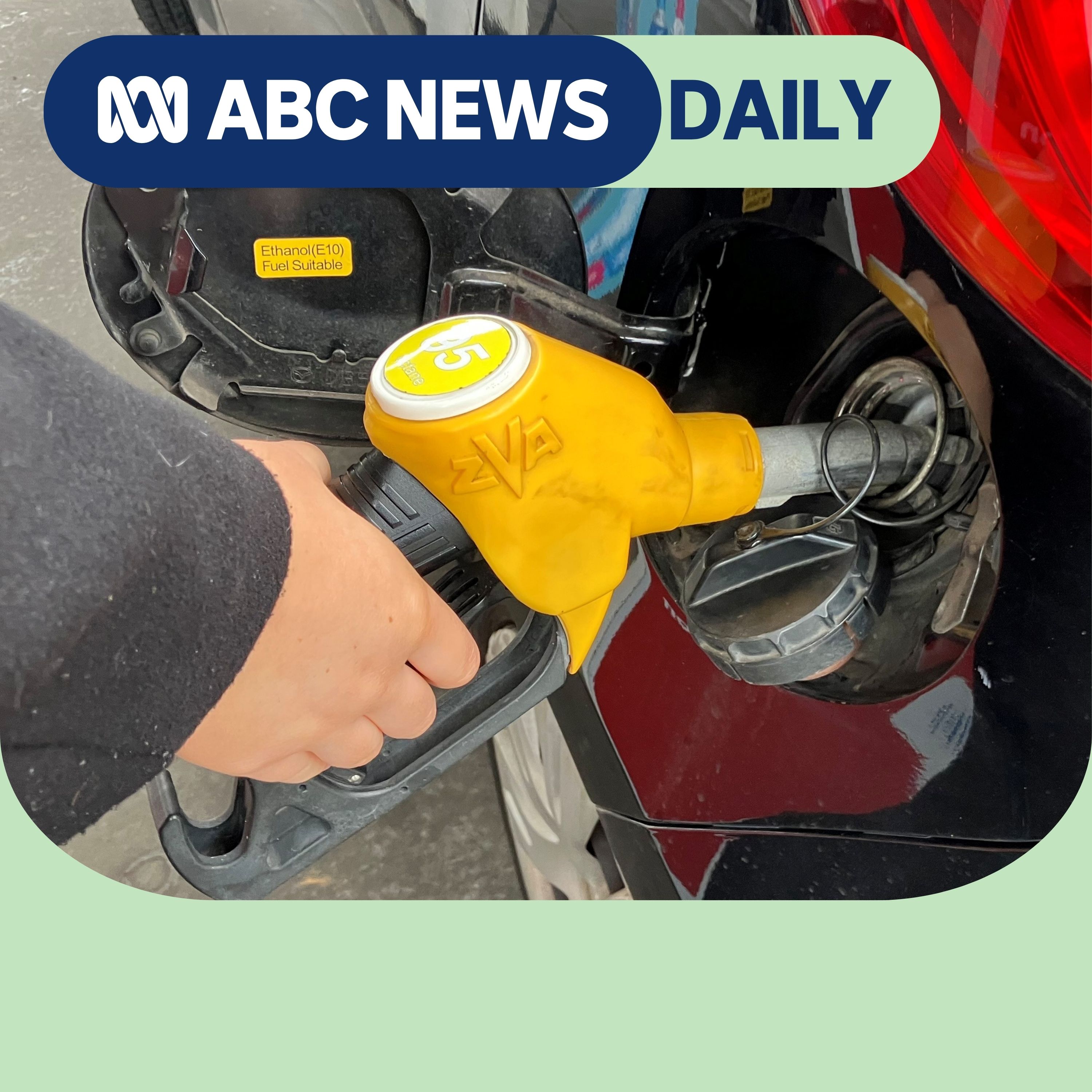
Overview of Is the global fuel crunch about to hit us?
This ABC News Daily episode explains why Australia’s fuel prices have eased for now, but why that relief may be temporary. Energy expert Esol Kavanagh of MST Financial says the closure of the Strait of Hormuz is still creating a major global supply shock, and Australia has only avoided the worst so far because of government intervention, diplomatic deal-making, and the use of fuel stockpiles. The core message: the crisis is not over, and the real pressure may still be ahead.
Key Points
Australia has been shielded so far, but not protected indefinitely
- Fuel prices have come down a bit, which may make the situation seem normal again.
- Kavanagh argues that this is not a sign the crisis is over.
- Australia has benefited from:
- government support to secure additional fuel cargoes
- diplomacy with key suppliers and trading partners
- strategic and commercial fuel stockpiles
The government’s response has bought time
- The Albanese government has worked to secure extra diesel and fuel from places including:
- Singapore
- Brunei
- South Korea
- Indonesia
- China for jet fuel arrangements
- Export Finance Australia has helped business secure additional cargoes.
- Kavanagh says Australia’s energy security has improved in the short term because of these measures.
Australia’s leverage is LNG
- Australia imports a lot of fuel, but it also exports large amounts of liquefied natural gas (LNG).
- Behind the scenes, Australia appears to have traded continued LNG supply for continued fuel shipments.
- This helps explain why the government has been careful not to disrupt gas export relationships.
What happens if the Strait of Hormuz stays closed?
The crisis is already global
- Kavanagh says the global crunch point is already here.
- Around the world:
- diesel and jet fuel shortages are emerging
- flights are being curtailed or canceled
- some businesses are facing shutdowns
- some countries are already using demand-management or rationing measures
Stockpiles are cushioning the blow, but not forever
- About 14% of global oil supply is effectively unavailable.
- So far, the market has adjusted by:
- reducing demand by around 4%
- drawing down about 10% from strategic and commercial reserves
- Once those stocks run down, the market would need much bigger demand destruction to balance supply.
Timeline for increased pressure
- Kavanagh says the situation could become much worse if the Strait remains closed for another few months.
- The northern hemisphere summer travel season is a major risk factor because demand rises sharply in late June and early July.
- More demand from global markets could lead other countries to compete with Australia for fuel shipments.
Possible price scenarios
Oil could spike much higher
- Oil was around $65 a barrel before the war and has already moved above $100.
- The federal budget modeled a possible rise to $200 a barrel in extreme scenarios.
- Kavanagh says that level is possible in a severe “doomsday” scenario, but it likely would not hold for long.
More realistic danger: $130–$150 a barrel
- He sees $130–$150 a barrel as a more plausible risk.
- At those levels, demand would likely fall because people and businesses could no longer afford the fuel.
- That could lead to:
- rationing
- economic slowdown
- potentially a global recession
What motorists and the public should do
Don’t panic, but don’t become complacent
- Fuel is still arriving in Australia.
- Kavanagh says there’s no need for panic buying.
- But he also warns against assuming the danger has passed.
Use fuel carefully
- Small individual actions won’t solve the crisis, but conservation still matters.
- The advice is simple:
- use only what you need
- avoid unnecessary trips where possible
- stay aware that prices can rise again quickly
Bottom Line
Australia has handled the initial shock better than many countries, largely thanks to government action and diplomatic supply deals. But the episode’s main warning is that the Strait of Hormuz remaining closed remains a serious global energy threat, and if it continues much longer, Australia could still face tighter fuel supply, higher prices, and possibly demand restrictions.