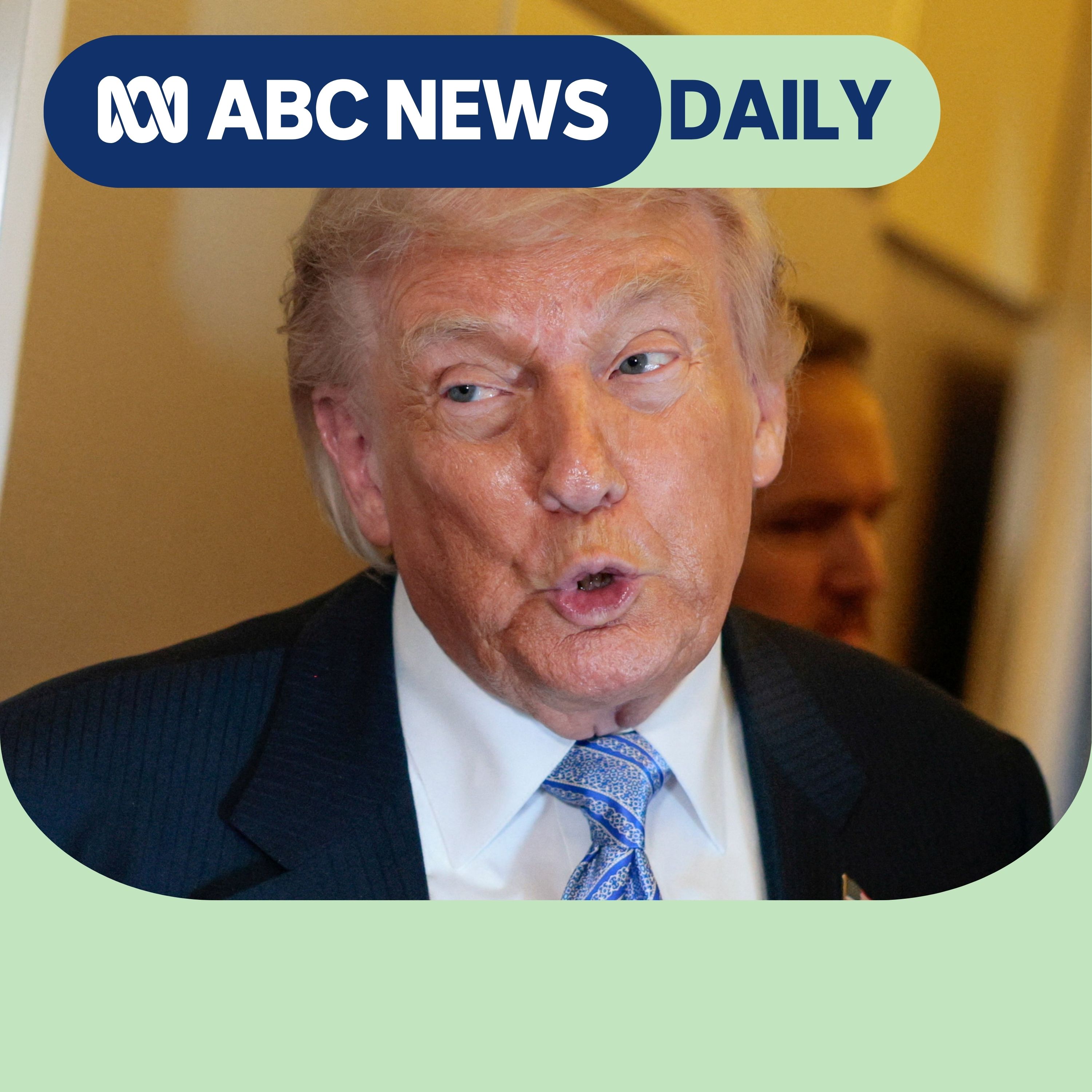
Overview of Has Trump been defeated by Iran?
This episode of ABC News Daily features former U.S. Iran nuclear deal negotiator Robert Malley discussing Donald Trump’s war with Iran, the prospects for a ceasefire or renewed fighting, and whether the U.S. can realistically claim victory. Malley argues that while Trump can point to military damage inflicted on Iran, the war has not achieved its core political goals and is unlikely to do so. He says the conflict increasingly resembles an unwinnable, asymmetric struggle in which both sides are waiting to see whether diplomacy or escalation will prevail.
Key Arguments
Trump’s shifting goals make “victory” hard to define
Malley says Trump’s statements on Iran are inconsistent and change constantly — one moment threatening total destruction, the next suggesting a deal is near. That makes it difficult to know what the U.S. objective even is.
- If the goal is regime change or total surrender, Malley says that is not achievable.
- If the goal is to damage Iran’s nuclear and military capabilities, the U.S. already achieved much of that early in the war.
- Continuing the war, in his view, would bring only marginal gains.
The war may be “won” militarily but lost strategically
Malley argues the U.S. can point to bombed infrastructure, killed leaders, and degraded capabilities, but those are not the same as winning the war’s real objectives.
He says the conflict is similar to Vietnam in the sense that:
- the U.S. focuses on battlefield metrics,
- while the opposing side can still deny defeat,
- and the underlying political objectives remain unmet.
Iran’s Position
Iran is damaged, but not broken
Malley says Iran has suffered heavily and will face major internal and economic consequences after the war. Still, he argues Iran can claim it has survived:
- it still has missiles and drones,
- it still retains nuclear knowledge,
- and it can present itself as having stood up to both the U.S. and Israel.
The Strait of Hormuz is a major strategic factor
The transcript stresses that the Strait of Hormuz remains a central pressure point, with global consequences:
- higher energy prices,
- food and fertilizer shortages,
- economic disruption well beyond the Gulf.
Malley says Iran believes controlling the strait gives it leverage and possibly a post-war economic mechanism, even if it cannot offset the damage done to the country.
Nuclear Deal and Diplomacy
A deal is still possible
Malley says diplomacy remains the best path to preventing Iran from obtaining a nuclear weapon. He argues that a workable agreement could include:
- suspension of enrichment for 10–15 years,
- intrusive inspections,
- limits on enrichment levels,
- shipping out or diluting highly enriched uranium.
He notes that Iran already possesses nuclear knowledge, so no agreement can “erase” that capability entirely. The realistic aim is to make a dash for a bomb detectable and preventable.
Trump’s criticism of the 2015 deal
Malley rejects Trump’s claim that the 2015 nuclear deal was a disaster. He says the agreement was a viable way to constrain Iran without war and that Trump had no justification for abandoning it.
Main Takeaways
- Trump may be able to declare partial military success, but not a meaningful strategic victory.
- The war’s stated goals have been vague, shifting, and in some cases unrealistic.
- Iran remains weakened but resilient, and it can still claim it survived.
- Diplomacy is still possible and may be the only realistic way to stop Iran from moving toward a nuclear weapon.
- The conflict is already exacting a global economic cost far beyond the battlefield.
Bottom Line
Malley’s core message is that Trump did not achieve a clean win over Iran. The U.S. may have inflicted serious damage, but the war has not forced Iranian surrender, ended the nuclear issue permanently, or secured a durable political settlement. In his view, the real choice now is not between victory and defeat, but between escalation and a negotiated end to a war that should not have started.