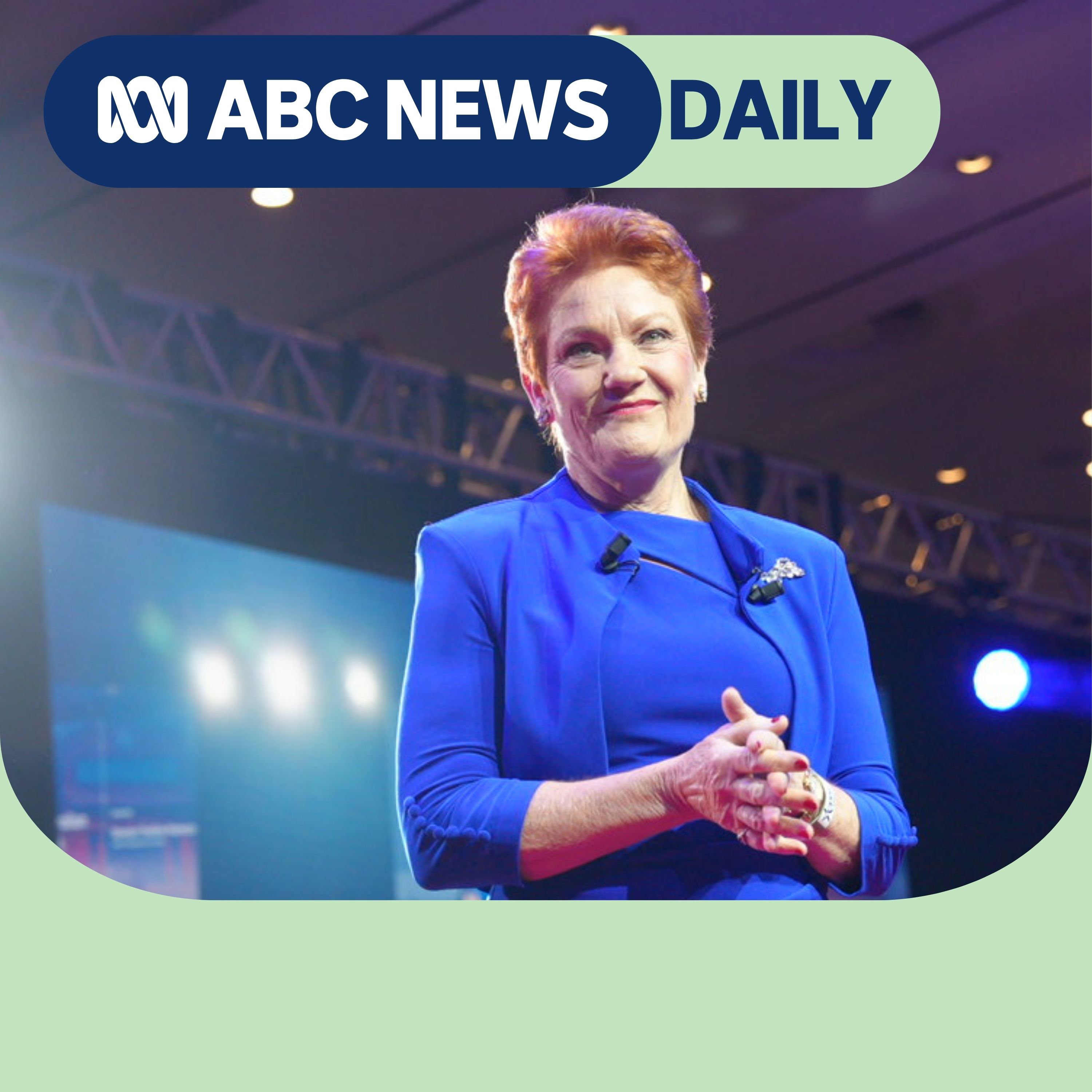
Overview of Do Pauline Hanson’s economics add up?
This episode of ABC News Daily examines whether Pauline Hanson and One Nation’s economic platform is financially credible, beyond the party’s familiar anti-immigration messaging. Business and economics reporter Gareth Hutchens explains that while Hanson’s recent overseas comments drew headlines, the bigger question for voters is how One Nation would pay for its expensive policy agenda — and whether its ideas would help or hurt inflation, debt, and the cost of living.
What One Nation Is Proposing
Core economic and social policies
One Nation’s stated policies include:
- Increasing defence spending from around 2% to 3.5% of GDP
- Introducing income splitting for couples with dependent children
- Indexing income tax brackets to inflation
- Pursuing zero net migration for five years
- Building three new coal-fired power stations
- Banning offshore wind farms
- Abolishing the Department of Climate Change
Why the Policies Are Being Scrutinized
Angus Taylor’s warning
Liberal leader Angus Taylor attacked One Nation’s major commitments, arguing that four of them alone could cost around $1 trillion over a decade if unfunded. He warned this could:
- Push government debt much higher
- Increase inflation
- Force the RBA to raise interest rates
The four policies he singled out were:
- Higher defence spending
- Income splitting
- Indexing tax brackets to inflation
- Zero net migration
Hanson’s response
Hanson pushed back, saying Taylor should be on the same side politically and that Australians are “crying out for change.” The episode suggests the tension is partly political, but also reflects real concern about the practicality of One Nation’s costings.
Policy Details and Estimated Costs
Income splitting
Income splitting would allow a couple to divide household income for tax purposes, potentially lowering their tax bill.
- One Nation says it would support families, childcare, and homeschooling
- Estimated cost: about $32 billion over four years
Indexing tax brackets to inflation
This would stop “bracket creep,” where inflation pushes workers into higher tax brackets even if their real wages haven’t risen.
- One Nation wants immediate universal indexation
- Angus Taylor also supports the principle, but would phase it in gradually
Zero net migration
One Nation wants migration inflows to be offset by departures for five years, arguing it would ease pressure on housing and services.
- The episode notes that reducing net migration would worsen the budget bottom line
- Independent Parliamentary Budget Office figures cited suggest a change of 40,000 migrants a year could shift the budget by $80 billion over a decade
- A zero-net-migration policy would therefore likely carry a large fiscal cost
How Would One Nation Pay for It?
Proposed savings
Hanson argues One Nation could fund its agenda by cutting government spending and agencies, including:
- Abolishing the Department of Climate Change and related bodies
- Abolishing the National Indigenous Australians Agency
- Withdrawing from the UN, WHO, and Paris Agreement
However, the episode notes that One Nation has not provided clear costings to support these savings claims.
Barnaby Joyce’s role
One Nation’s Treasury spokesman, Barnaby Joyce, has not guaranteed that all policies will be independently costed before the 2028 election, leaving major questions about financial credibility unanswered.
Gina Rinehart’s Influence
The episode highlights Pauline Hanson’s closeness to mining magnate Gina Rinehart, who has publicly supported her and gifted her a plane earlier in the year. Hutchens says Rinehart may be an important influence on One Nation’s economic thinking.
Rinehart’s long-standing agenda
Rinehart has long pushed for a special economic zone covering the top half of Australia, with:
- No personal income tax
- No payroll tax
- No licence fees
- No stamp duty
- Special migration rules tied to work in the zone
The episode suggests this idea could benefit Rinehart’s mining and agricultural interests, though it is not yet clear whether Hanson would adopt it.
Main Takeaways
- Hanson’s immigration rhetoric is familiar, but her economic agenda is now getting more attention.
- One Nation’s policies appear expensive, especially defence spending, income splitting, and zero net migration.
- The party has not yet shown a credible funding plan.
- There is a real possibility that One Nation’s economic platform is designed more for protest politics than for governing.
- As the next election approaches, voters are likely to demand clearer costings and more detail.
Bottom Line
The episode’s central argument is that Pauline Hanson’s economic policies currently do not add up convincingly. While they may appeal to voters frustrated with Labor and the Coalition, One Nation still has to show how it would fund its plans without increasing debt, inflation, and pressure on interest rates.