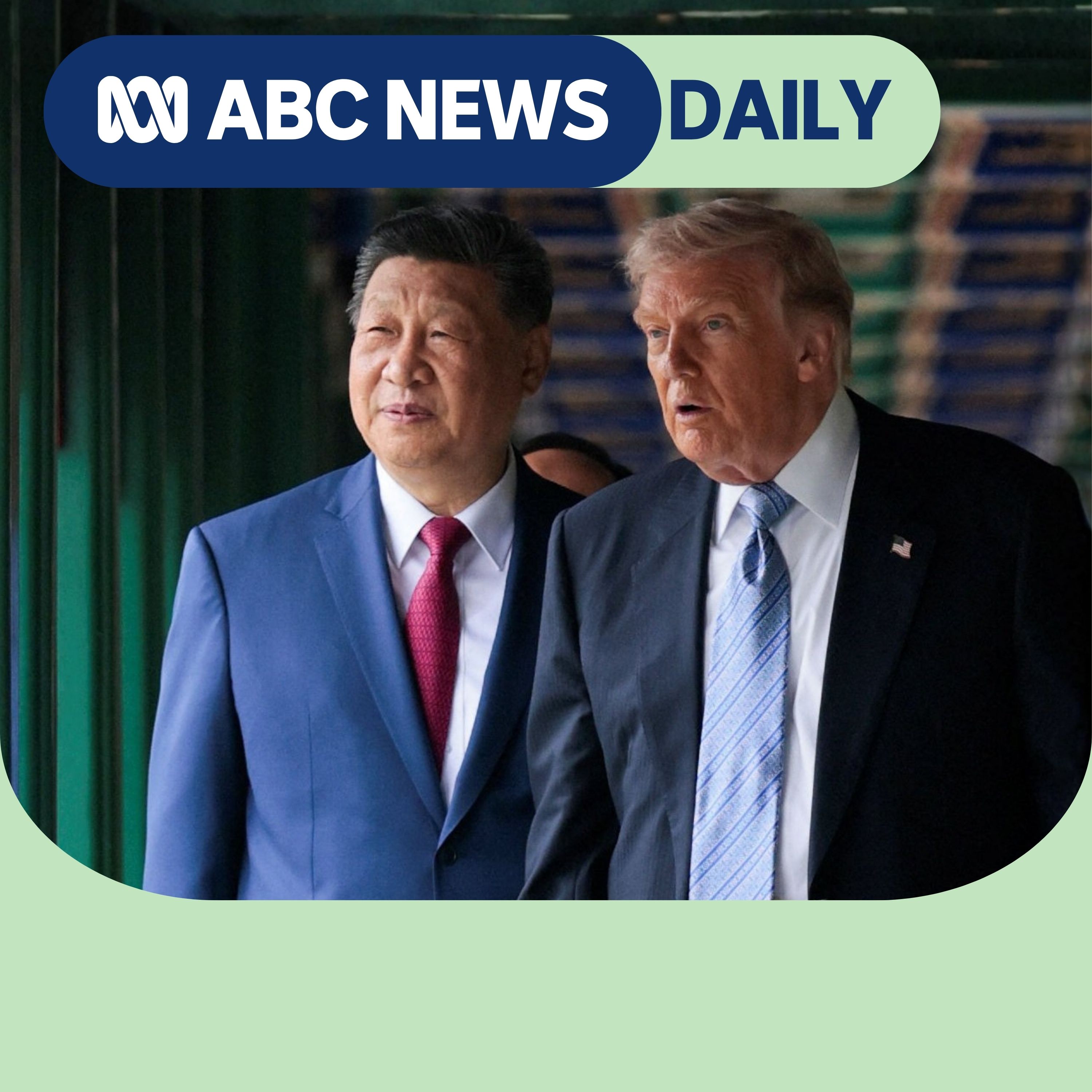
Overview of China’s warning to Trump on Taiwan
This ABC News Daily episode examines President Xi Jinping’s warning to Donald Trump about Taiwan, the long-standing U.S.-China strategy of ambiguity, and whether the risk of war is rising. Visiting lecturer in War Studies at King’s College London, Samir Puri, explains the “Thucydides trap”—the idea that conflict becomes more likely when a rising power challenges an established one—and applies it to the U.S.-China rivalry. The core takeaway is that despite tense rhetoric, the status quo over Taiwan appears to have been preserved for now, even as warning signs continue to flash amber.
What is the “Thucydides trap”?
The basic idea
- The term comes from the ancient Greek historian Thucydides, who wrote about the war between Athens and Sparta.
- The theory suggests that when a rising power threatens an established power, war can become increasingly likely.
How it applies to the U.S. and China
- China is framed as the rising power, and the United States as the established one.
- The danger is not necessarily caused by a direct provocation, but by the fear generated by China’s rise.
Why Xi brought it up
- Xi Jinping’s warning to Trump was essentially a reminder that major-power rivalry can become dangerous if mishandled.
- Puri says Xi was signaling that Taiwan is the most sensitive flashpoint in the relationship.
Taiwan: why it remains so dangerous
The long-standing ambiguity
- Taiwan operates as a de facto independent state:
- it has its own government, foreign policy, and economy
- but it is not widely recognized as a sovereign state
- The U.S. and other countries maintain strategic ambiguity:
- they do not clearly state whether they would defend Taiwan in war
- this ambiguity is intended to deter China without forcing escalation
China’s red line
- China can tolerate the current ambiguous status.
- What it cannot tolerate, according to Puri, is a formal declaration of independence by Taiwan.
- That would likely be seen as a trigger for military action.
Taiwan’s position
- Taiwan’s leaders, including President William Lai, insist Taiwan will not give up its sovereignty.
- At the same time, most Taiwanese understand the costs of a formal independence declaration would be extremely high.
Trump, Xi, and the U.S. position
Xi’s direct warning
- Xi reportedly warned Trump about Taiwan during the visit, stressing that an “extremely dangerous situation” could emerge if the U.S. mishandled the issue.
Trump’s response
- Trump was noncommittal when asked whether the U.S. would defend Taiwan.
- He also said he was not looking for Taiwan to declare independence and did not want a war.
Why that matters
- Puri suggests Trump’s response was more comfortable for Beijing than Biden’s more explicit support for Taiwan.
- The episode contrasts Trump’s ambiguity on Taiwan with his more absolute and confrontational language on Iran.
U.S. arms sales and deterrence
America’s military role
- The U.S. is Taiwan’s most important security backer.
- Without U.S. support, Taiwan’s ability to defend itself would be severely weakened.
Recent arms sales
- The Trump administration had approved $11 billion in arms sales to Taiwan.
- A further package was reportedly under consideration.
The deterrence problem
- The U.S. wants Taiwan to believe America would help if needed.
- But it also wants to avoid ever actually going to war.
- That means the system relies on a kind of credible uncertainty: China must believe the U.S. might intervene, even though no one wants that outcome.
How likely is war?
No fixed timeline
- Puri says nobody really knows when or if China would move on Taiwan.
- A U.S. assessment suggested the Chinese military wanted to be ready by 2027, but that does not mean invasion is inevitable that year.
Warning signs
- China’s military exercises around Taiwan are seen as increasingly serious.
- These drills may be rehearsals or demonstrations of growing naval and air power.
- Still, the situation could remain tense and unresolved for a long time.
What could trigger escalation
- A more hardline Chinese leader in the future
- A major shift in Taiwan’s political status
- A U.S. president willing to go to war rather than strike a deal
- Public support in the U.S. for defending Taiwan remains uncertain
What a Taiwan conflict could look like
Not necessarily a classic invasion
- Puri says conflict would not have to look like a World War II-style beach landing.
- China could use:
- blockades
- embargoes
- economic pressure
- other coercive tactics to force Taiwan into submission
Wider regional risk
- Any conflict could pull in the United States, Japan, and possibly Australia.
- The episode emphasizes that a Taiwan war would have global consequences, not just regional ones.
Main takeaway
- Despite Xi’s warning and Trump’s ambiguity, the status quo over Taiwan appears intact for now.
- That said, the situation remains highly fragile.
- The episode’s central message is that Taiwan is one of the most dangerous flashpoints in world geopolitics, and its stability depends on continued restraint, ambiguity, and deterrence.