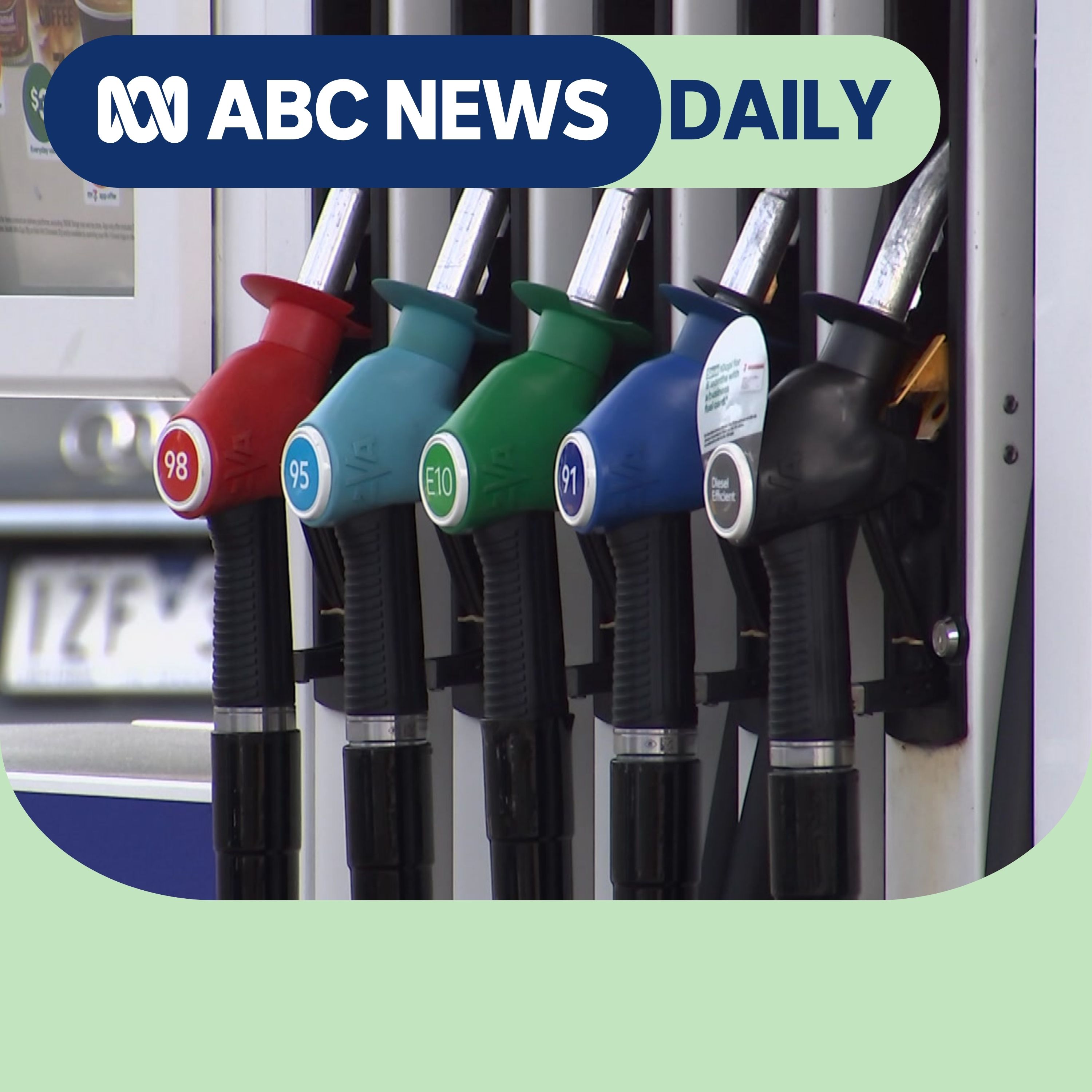
Overview of Are we on the road to $2.50 petrol?
This ABC News Daily episode examines why Australian fuel prices are rising again after the fuel excise cut ended, and whether global oil market disruptions could push petrol toward $2 per litre or even $2.50 in the coming weeks. Energy expert Sol Kavanagh (MST Financial) explains that the main pressure comes from ongoing instability around the Strait of Hormuz, reduced global fuel reserves, and the knock-on effects of attacks on shipping routes and infrastructure in the Middle East.
Key Takeaways
- Petrol prices are likely to rise further as the temporary fuel excise cut has expired.
- Kavanagh says $2 per litre is becoming the base case, with $2.50 not out of the question if supply disruptions worsen.
- The global fuel system is under strain because:
- around 20% of the world’s oil and fuel traditionally moves through the Strait of Hormuz,
- alternative routes are being used, but they are longer and more expensive,
- and some regions are already drawing down reserves.
- The situation is especially tight for diesel and jet fuel, which have been hit harder than petrol.
- Australia is relatively cushioned for now, but its protection depends on temporary workarounds and dwindling global stockpiles, not long-term security.
What’s Driving Higher Fuel Prices?
Strait of Hormuz disruption
The transcript describes the Strait of Hormuz as a critical chokepoint for global oil flows. With traffic through the strait severely reduced, supply is being constrained and prices are being pushed up.
Saudi Arabia’s workaround is under threat
Saudi Arabia has redirected some exports through a pipeline to the Red Sea, but vessels there are increasingly exposed to attacks from Houthi forces and other regional threats. If those routes or port infrastructure are targeted, market tightness would worsen.
Global inventories are being depleted
Countries are drawing on reserves or reducing use:
- some poorer nations are rationing or cutting consumption,
- China has reportedly reduced imports and drawn from stocks,
- and overall spare capacity is thinning.
Kavanagh’s warning: the world is effectively “drawing down on the oil credit card,” and that cannot continue indefinitely.
Australia’s Position and Government Response
Fuel excise cut has ended
Treasurer Jim Chalmers is not planning to reintroduce the fuel excise cut. The episode argues that while the cut was politically popular, it also weakened the price signal that can naturally reduce demand.
National Fuel Security Plan
Australia’s fuel security framework is described as being at Level 2: “Be careful, but don’t be alarmed.”
Possible escalation:
- Level 3: more explicit government messaging to reduce fuel use
- Level 4: rationing, with fuel reserved for emergency and critical services
The episode stresses that rationing is not imminent, but it is being discussed as a contingency if disruptions continue.
Longer-Term Solutions Discussed
New pipelines in the Middle East
Middle Eastern exporters are working to build pipelines that bypass vulnerable waterways. In a few years, this could reduce dependence on the Strait of Hormuz significantly.
More fuel self-sufficiency for Australia
The government is considering whether to study or support a new oil refinery in Western Australia. The idea is to improve resilience after past refinery closures, even though the economics are challenging.
Renewables and electric vehicles
EV adoption is increasing:
- EV sales reportedly doubled in the three months to June 30
- but EVs have only reduced total fuel demand by about 1% so far
The episode notes that electrification will help, but it won’t solve everything, especially in:
- rural and remote transport,
- diesel-dependent industries,
- and aviation/jet fuel, where electrification is not yet practical.
Bottom Line
The short-term outlook is for tight global fuel supply and higher prices at the pump. Australia may avoid the worst-case scenario for now, but the episode argues that the country should prepare for:
- more expensive fuel,
- possible broader economic pressure,
- and a stronger push toward fuel security and self-sufficiency.
The main message: the era of cheap, reliable fuel may be under serious strain, and $2.50 petrol is no longer a far-fetched scenario if the crisis deepens.