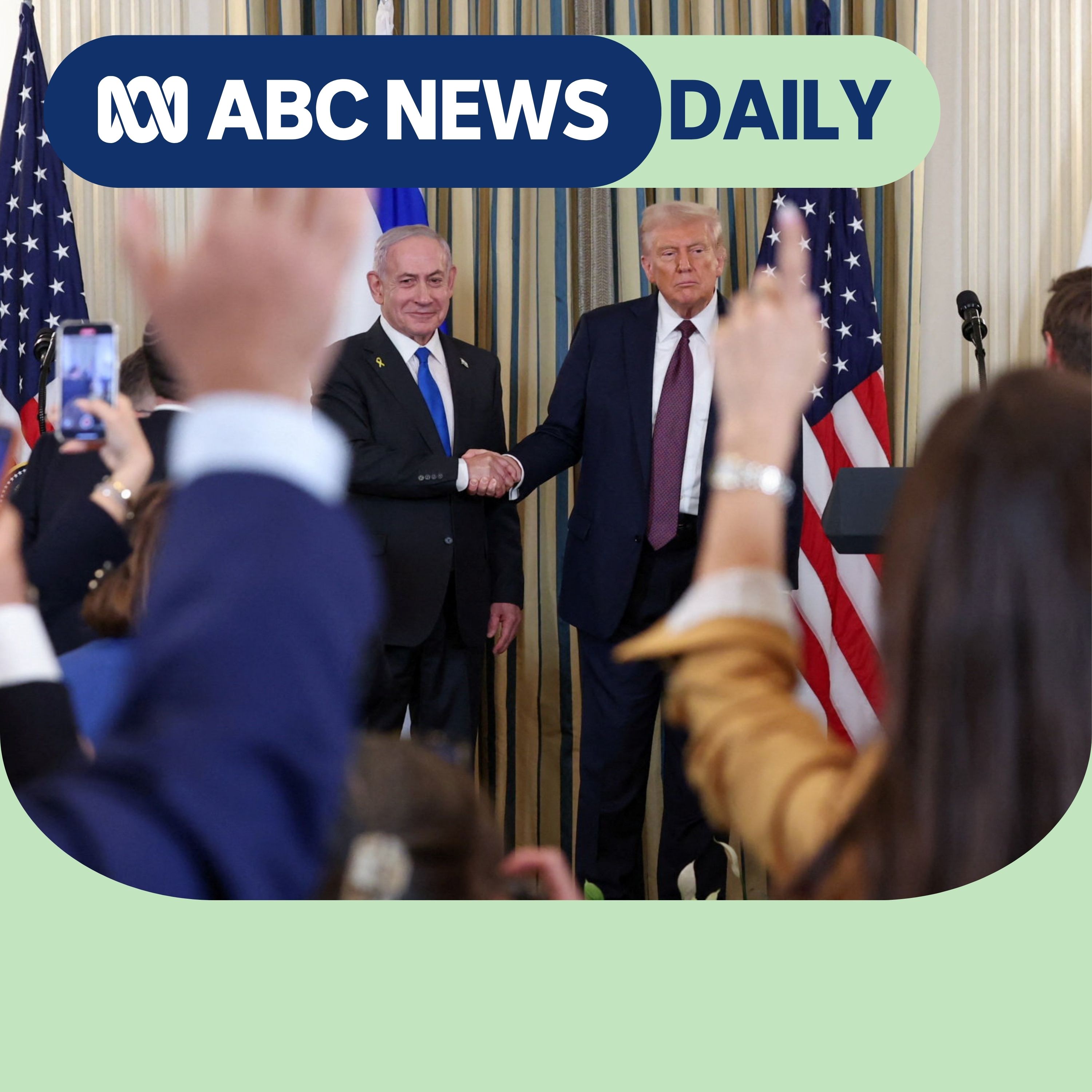
Overview of An irritated Trump meets Netanyahu
This ABC News Daily interview examines Donald Trump’s closed-door Oval Office meeting with Benjamin Netanyahu, framed around the ongoing war with Iran and growing tension between the U.S. and Israel. Barbara Slavin of the Stimson Center argues that Trump is increasingly frustrated with Netanyahu, wants the conflict to end, and is no longer willing to give Israel a blank check.
What the discussion is about
The conversation focuses on three main issues:
- Why Trump kept the press out of the Oval Office meetings with both Volodymyr Zelenskyy and Benjamin Netanyahu
- Whether Netanyahu is pushing Trump to continue the Iran war
- How much pressure Trump is under politically and strategically as the conflict drags on
Slavin says the lack of cameras was likely deliberate, especially in Netanyahu’s case, because public scrutiny would only highlight disagreements between the two leaders.
Key points from Barbara Slavin
Trump is irritated and wants out
Slavin argues that Trump has become increasingly unhappy with the war’s outcome and with Netanyahu’s attempts to keep the U.S. involved.
- Trump appears frustrated that Israel keeps pressing for more military action.
- He is reportedly irritated by Netanyahu publicly discussing sensitive issues like the Iranian nuclear site Trump called “Pickaxe Mountain.”
- Slavin believes Trump now sees that Iran cannot simply be bullied into surrender.
Netanyahu wants the war to continue
According to Slavin, Netanyahu’s approach is driven by a belief that Israel must constantly fight to survive.
- She says he seems to think peace in the region is unrealistic.
- She questions whether Israel can sustain perpetual conflict, given its small population and internal divisions.
- She also suggests Netanyahu may still assume the U.S. will cover for him indefinitely, but that this support is weakening.
Trump misread Iran
Slavin says Trump has repeatedly underestimated Iran’s resilience.
- She compares his misunderstanding of Iran to past U.S. failures in places like Vietnam.
- She argues that both the 1979 hostage crisis and the broader history of Iranian resistance should have taught Trump that Iran will not simply bow to pressure.
- In her view, Trump was too willing to accept Netanyahu’s arguments in the past.
Why the U.S.-Israel relationship looks strained
The interview suggests the relationship is no longer as strong or uncomplicated as Trump often claims.
Trump is unhappy with Israel’s broader behavior
Slavin says Trump is also frustrated by:
- Israel’s refusal to fully withdraw from Lebanon
- The continued violence in Gaza
- Aggressive Israeli actions in the West Bank
- Israel’s occupation of part of southern Syria
She suggests Trump may feel Israel has taken U.S. support for granted.
Public opinion in the U.S. is shifting
Slavin says the political environment in America is changing in ways that could hurt Netanyahu.
- More Americans now sympathize with Palestinians than with Israel, she says.
- This is especially true among younger voters.
- Even within the Republican Party, some figures are more critical of Israel than before.
She notes that criticism is not limited to the political left, pointing to voices like Tucker Carlson and J.D. Vance who argue the U.S. has been too supportive of Israel.
Can Trump actually end or de-escalate the war?
Slavin’s answer is essentially yes — and she thinks he should.
Her preferred approach
She suggests:
- Returning to the existing memorandum of understanding on the Strait of Hormuz
- Allowing Iran to manage transit through the strait for a limited period
- Working with Oman on a practical mechanism for shipping access
- Avoiding further U.S. escalation, which she says has already failed
Why escalation is a bad idea, in her view
Slavin argues that recent strikes did not achieve their goals and may have made things worse.
- The U.S. has not successfully destroyed Iran’s buried nuclear infrastructure.
- Iranian forces have shown they can hit U.S. bases across the region.
- Oil prices have risen sharply.
- U.S. public opinion is strongly against continued war.
She warns that eliminating hardliners or weakening leadership structures can sometimes empower even more aggressive factions, such as the Revolutionary Guard.
Domestic political stakes
The interview closes by stressing that both leaders are under pressure at home.
Trump
- Faces major political vulnerability heading into the midterms
- May struggle to pass budgets and maintain maneuvering room if Congress changes hands
- Could face investigations into corruption and family conduct
- May be tempted to use desperate or destabilizing tactics
Netanyahu
- Faces an election in Israel
- Remains politically skilled and difficult to write off
- But his relationship with Trump and with the U.S. appears more fragile than before
Main takeaway
The central message of the interview is that Trump and Netanyahu are no longer fully aligned on Iran. Slavin portrays Trump as wanting to reduce U.S. involvement and end the war, while Netanyahu appears to want continued pressure on Iran. That split, combined with shifting public opinion and looming elections, could reshape both the war and the U.S.-Israel relationship.
Notable insight
“I think Trump wants out.”
That line captures the interview’s core argument: the U.S. president may finally be recognizing that military escalation is not delivering results, and that Netanyahu’s strategy is becoming a liability rather than an asset.