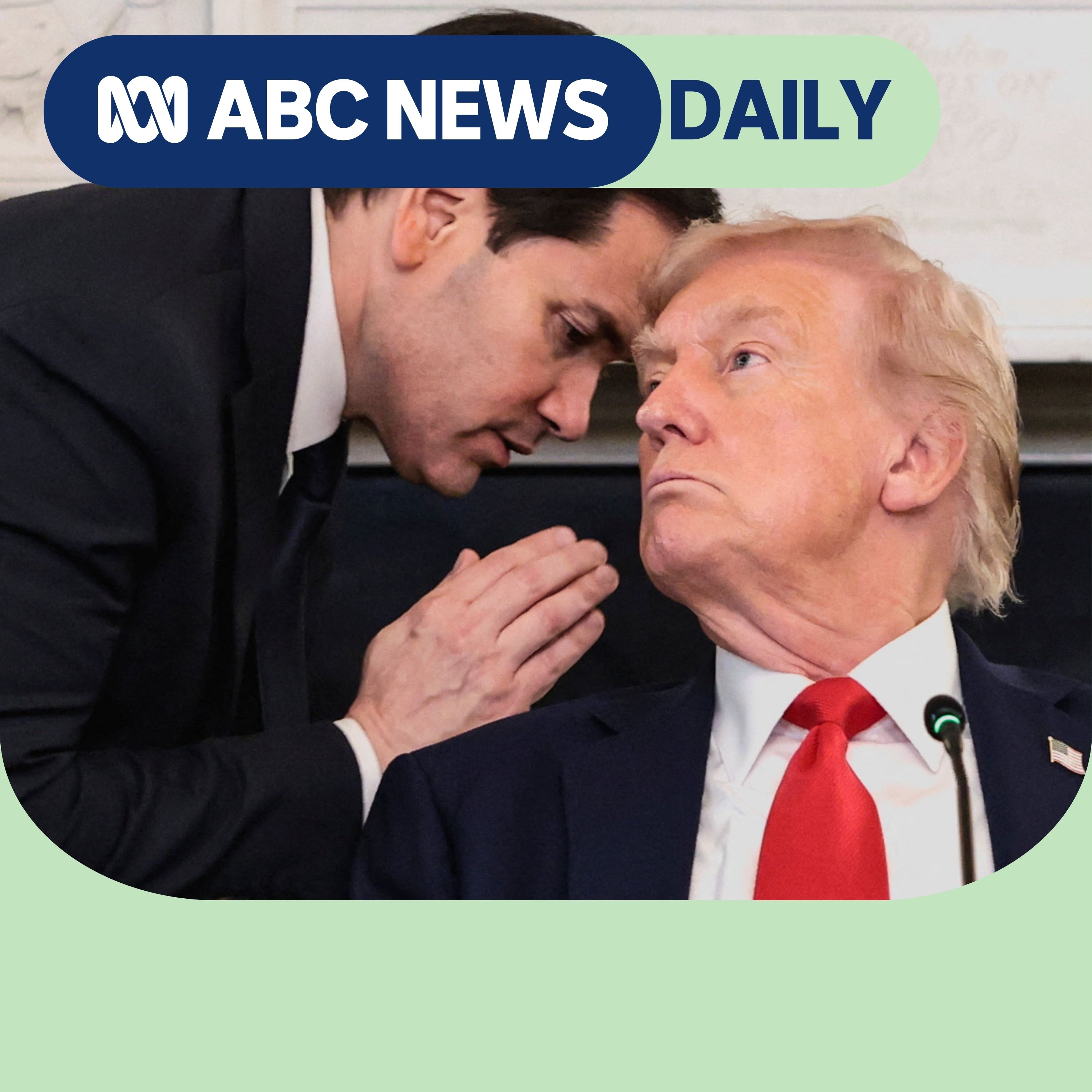
Summary — "Will Trump’s hostage deal end the war in Gaza?" (ABC News Daily)
Overview
This episode examines a reported breakthrough mediated by former US President Donald Trump, in which Hamas agreed to a first-phase deal to release remaining Israeli hostages in exchange for Palestinian prisoners and other concessions. Rajan Menon, international relations expert, assesses what is known, what remains unclear, and whether this agreement could mark the beginning of an end to hostilities in Gaza.
Key points & main takeaways
-
Deal basics (first phase)
- Reported exchange: 48 prisoners held by Hamas (20 believed alive) for 1,950 Palestinian prisoners held by Israel. Hostages to be released within about 72 hours.
- The agreement is presented as a phased plan with roughly 20 points; this is only the first phase.
-
Troop withdrawal and territorial control
- Israel will withdraw troops to an "agreed upon line" but will not fully leave Gaza.
- Israel intends to keep forces in the southern "Philadelphi Corridor" and maintain a buffer zone—so Gaza will not be fully free of Israeli military presence.
-
Hamas concessions and motivations
- Hamas appears to have accepted terms despite not getting a complete Israeli withdrawal.
- Hamas reportedly agreed because of assurances from Trump that the ceasefire would be permanent and Israel would not be allowed to resume the war—an element of risk for Hamas.
-
Unclear/contested elements
- No clear publicly available detail on whether Hamas will fully disarm (decommission weapons) or on the timeline/conditions for decommissioning.
- Future governance of Gaza is unsettled: the plan proposes an interim technocratic “peace board” (reportedly chaired by Trump and including Tony Blair), but Hamas worries it could become a foreign-controlled viceroyalty.
-
Fragility of the agreement
- The deal’s durability depends on external guarantees—Trump’s ability to prevent Israel from resuming operations is pivotal.
- Domestic Israeli politics: Netanyahu must get buy-in from hardline coalition partners (Itamar Ben-Gvir, Bezalel Smotrich), who oppose any deal that prevents continuing the war.
- Historical precedent: a similar January ceasefire collapsed after negotiations over troop withdrawal, which breeds mistrust (especially within Hamas).
-
Humanitarian and reconstruction implications
- If implemented, humanitarian aid is expected to resume without limits—this can be delivered relatively quickly.
- Reconstruction is a multi-decade challenge: ~90% of Gaza’s residential buildings damaged/destroyed, major infrastructure wrecked. Funding and long-term planning (Gulf/other investors) will be necessary and slow.
-
Trump’s role and credit
- Trump likely played a significant mediating role that enabled concessions; he may receive political credit, though critics note he (and other Western leaders) provided arms used in the conflict, complicating any claim to a peace-prize like the Nobel.
Notable quotes / insights
- “Hamas has caved on this particular issue and Israeli forces will remain in Gaza.” — assessment of troop withdrawal outcome.
- “It’s a gamble because … Trump … will not allow Israel to resume the war.” — on Hamas’s rationale for accepting the deal.
- “Not a ceasefire yet, is it? No. Not until the bombing stops.” — clear reminder that formal cessation depends on halting hostilities.
- “It all depends on whether Trump can, in fact, deliver on his promise that Israel will not resume the war.” — summarizes the deal’s hinge point.
Topics discussed
- Hostage release and prisoner exchanges
- Israeli troop withdrawal (partial vs. complete)
- Permanence of ceasefire and enforcement/guarantees
- Hamas disarmament/decommissioning
- Future governance arrangements for Gaza (peace board / interim technocratic government)
- Humanitarian aid resumption and long-term reconstruction
- Role of mediators (Trump, Qatar, Egypt, Turkey), and possible international funding
- Political risks from Israeli coalition dynamics
- Potential credit for mediators (Trump / Nobel consideration)
Action items & recommendations (what to watch / next steps)
-
Monitor immediate implementation:
- Whether hostages are released within the reported ~72 hours and the security of those transfers.
- Whether bombing and military operations actually stop (formal ceasefire declaration and verification).
-
Clarify and verify outstanding details:
- Specifics and timelines on Hamas disarmament / decommissioning.
- Exact boundaries and restrictions of any Israeli buffer zone and the status of the Philadelphi Corridor.
- Terms, members, powers and oversight mechanisms of the proposed interim peace board.
-
International guarantees & accountability:
- Look for mechanisms (international monitors, UN involvement, legal guarantees) that prevent unilateral re-escalation.
- Track whether major regional and international actors (US administration, Qatar, Egypt, Turkey, EU, Gulf states) commit to monitoring, funding, and enforcement.
-
Humanitarian and reconstruction planning:
- Watch for immediate unimpeded humanitarian access and logistics.
- Monitor announcements of reconstruction funding, timelines, and who will oversee rebuilding (avoid donor-driven governance that sidelines local actors).
-
Political watch in Israel:
- Follow statements and actions by Netanyahu and hardline coalition partners—if they oppose the deal, implementation risks increase.
If you want, I can:
- Produce a one-page timeline of next expected milestones (72-hour hostage release, ratification steps, monitoring deadlines).
- Track major official statements and any reversals from Israel, Hamas, or mediators in the coming week.