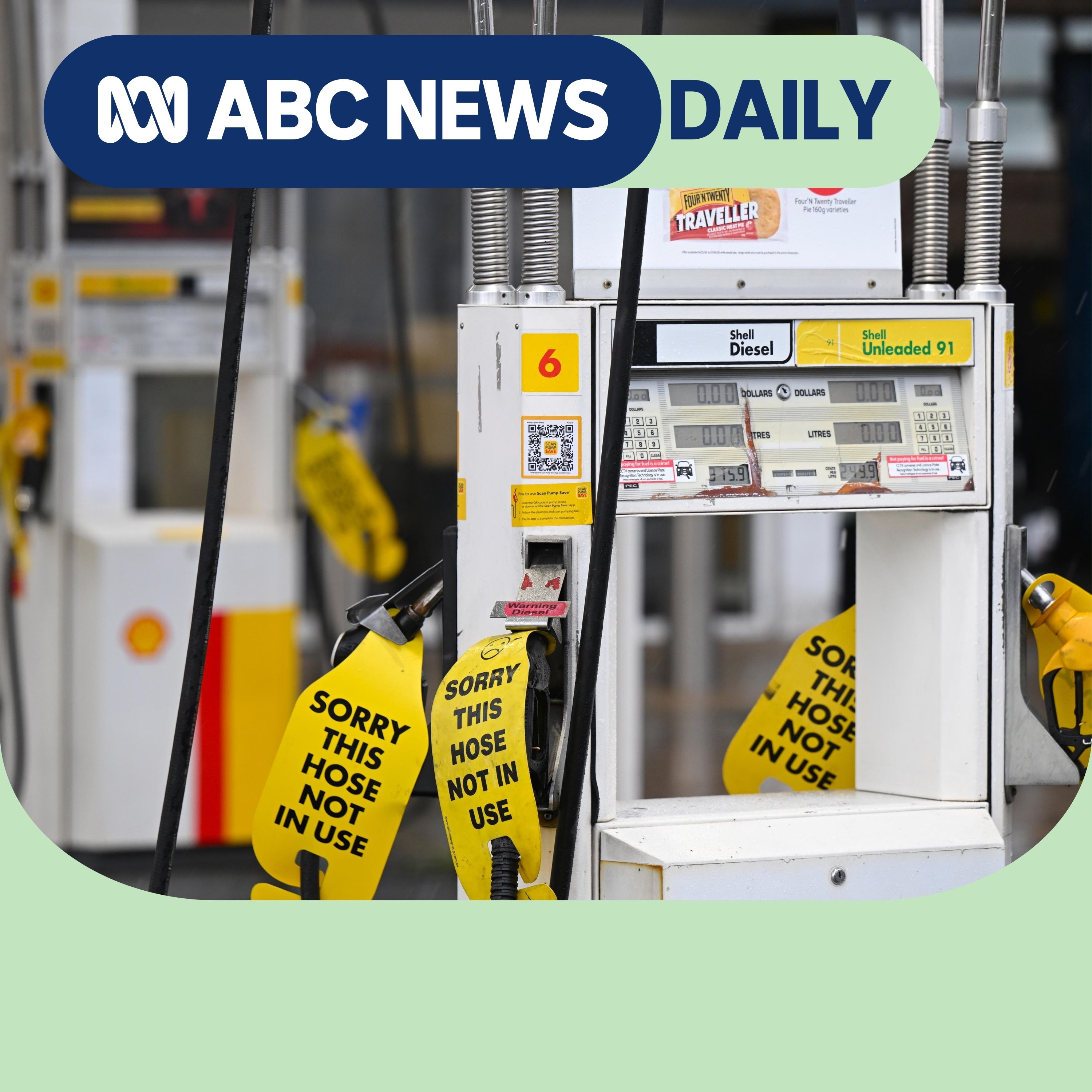
Overview of "Will there be enough fuel for Easter travel?"
This ABC News Daily episode (host Sam Hawley) features energy analyst Sol Kovonek (MST Financial) explaining current and near‑term fuel supply problems in Australia ahead of the Easter period. The discussion covers what's driving shortages, which fuels and regions are most at risk, how long the crunch might last, government responses (including the halving of fuel excise), and practical actions motorists and policymakers can take to reduce risk.
Key takeaways
- Current shortages are largely localised and driven by distribution disruptions and panic buying, hitting smaller/independent retailers first.
- Australia has been consuming pre‑war Middle Eastern oil shipments; a structural supply crunch is expected in about two weeks as those stocks run out.
- Roughly 20% of global oil supply has been removed from the market due to the conflict — a shock comparable in scale to 2020 COVID demand reductions.
- Jet fuel and diesel are likely to be hit first (jet fuel especially), which threatens aviation, agriculture, mining, freight and other critical services.
- Fuel prices could rise another 20–30% and even a quick ceasefire would take weeks before normal production and flows resume.
- The government has cut the fuel excise (about ~20 cents/litre historically) to reduce pump prices, but that can increase demand at a time when conservation is needed.
- Australia is heavily dependent on imported refined fuel (over 80% sourced via Singapore, South Korea, Malaysia and China), making diplomatic relations and trade‑partner prioritisation critical.
- Voluntary demand reduction (work from home, public transport, buy only what you need) is being promoted to avoid enforced rationing.
What caused the problem
- The Iran‑related conflict has removed close to 20% of global oil supply (shut‑ins and export disruptions).
- Australia has been using fuel refined from oil that left the Strait of Hormuz pre‑conflict; those shipments will be exhausted soon.
- Additional factors: logistics/distribution hiccups affecting smaller suppliers, and panic buying by motorists.
Timeline and outlook
- Short term (next ~2 weeks): existing shipments still covering demand, so widespread national outages are unlikely immediately, but local shortages will persist.
- Near term (after ~2 weeks): increased risk of wider shortages and more service stations running dry; jet fuel supplies likely to tighten first, followed by diesel.
- Even if hostilities stop immediately, it will take weeks for shut‑in production and normal supply chains to recover.
Who and what are most at risk
- Jet fuel (aviation) and diesel (freight, agriculture, mining) are the most vulnerable fuel types.
- Rural areas, farms and mines are already seeing diesel shortfalls — critical for planting, harvesting and logistics.
- Critical services (hospitals, emergency services, defence) are priority areas the government will aim to protect.
- Smaller independent service stations are more exposed due to less sophisticated supply chains.
Government response — measures and tradeoffs
- Diplomacy: Australia is engaging trading partners (South Korea, Singapore, Japan, China) and leveraging its LNG exports to secure fuel supply prioritisation.
- Demand management: public messaging encourages voluntary reductions (work from home, public transport); more coercive measures (rationing, driving bans, alternate plate rules) could be imposed if voluntary steps fail.
- Price relief: halving the fuel excise (as done previously) reduces pump prices (historically ~20 cents per litre), but risks increasing demand and exacerbating shortages; it also has budgetary and inflationary consequences.
- Rationing would prioritise critical services and economic corridors first; exact mechanisms would depend on severity.
Practical advice for motorists and communities
- Buy only what you need—avoid topping up unnecessarily to prevent panic buying.
- Factor higher fuel costs into travel plans; expect prices to potentially rise 20–30%.
- Consider voluntary demand reduction: carpooling, public transport, working from home where possible, postponing non‑essential trips.
- Rural and agricultural operators should plan fuel use carefully and communicate needs to suppliers/government if critical.
Notable figures & data points
- Service stations reported dry diesel by state (reported figures): NSW 164, QLD 55, VIC 162, SA 46, WA 6.
- Fuel excise cut historically reduces petrol price by roughly 20 cents per litre (a similar measure was used in 2022).
- Estimate of removed global oil supply: close to 20% (comparable in size to the drop in oil demand seen during 2020).
Memorable quotes
- "The real shortages and crunch point hasn't actually arrived yet." — Sol Kovonek
- "There may not be fuel available at any price, which is much worse than having to pay more to get your fuel." — Sol Kovonek
- "Every drop of fuel now that you decide to use is potentially a drop of fuel that a farmer won't have to keep his tractor going." — Sol Kovonek
Bottom line
Over the next fortnight Australia should remain broadly functional, but the risk of a more serious supply crunch rises quickly thereafter. The immediate priority is voluntary demand reduction and diplomatic action to secure imports; motorists should avoid panic buying, plan for higher prices, and conserve fuel where possible to help protect critical services and essential industries.