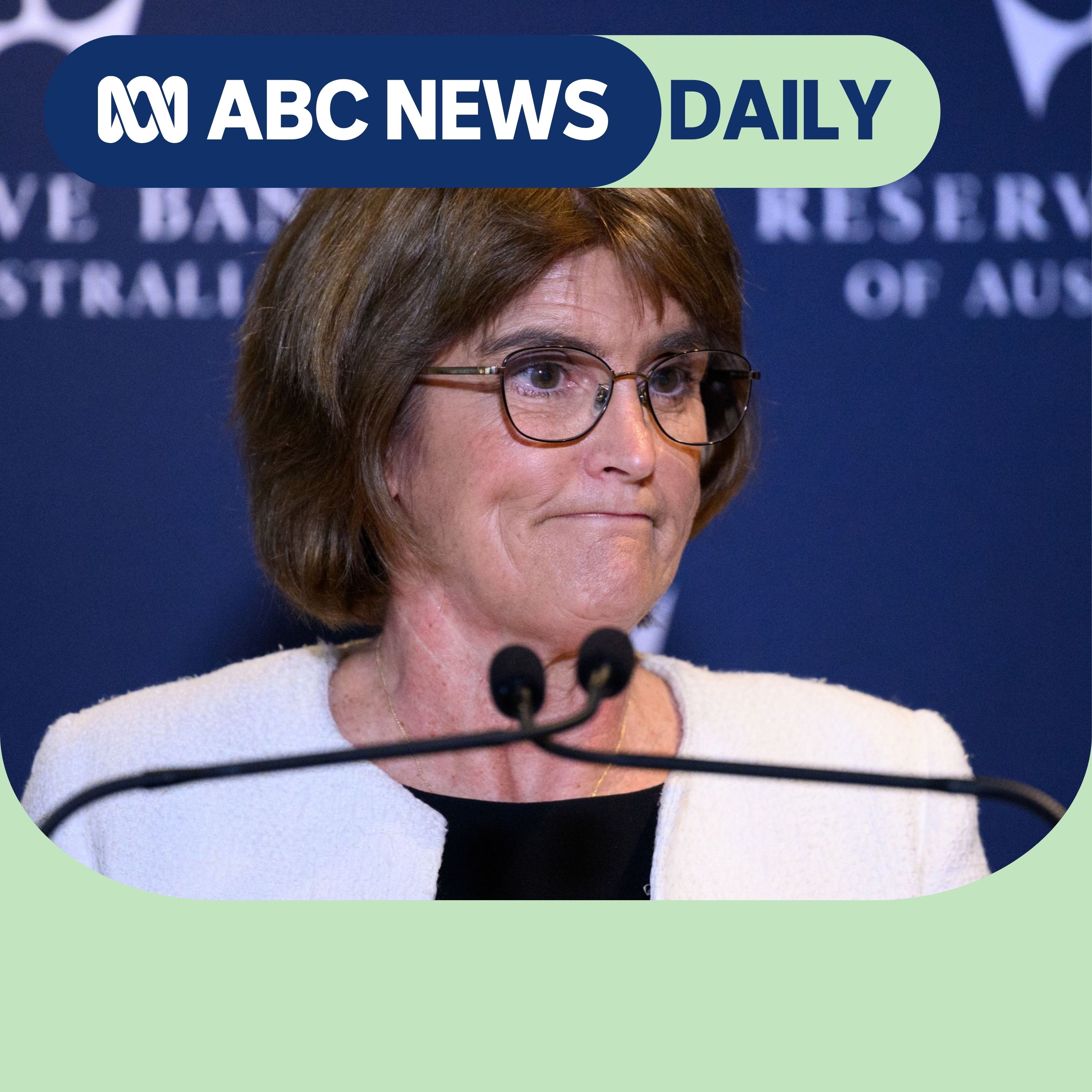
Overview of "Will the Iran war drive interest rates even higher?"
This ABC News Daily episode (hosted by Sam Hawley) features Chief Business Correspondent Ian Verrender explaining why the RBA raised the cash rate by 25 basis points to 4.1% and how the Middle East war could push inflation—and therefore interest rates—even higher. The conversation covers the RBA board split, the transmission from energy shocks to broad inflation, historical parallels, differing economist views, and likely economic consequences for Australia.
Key takeaways
- The RBA raised the cash rate by 25 bps to 4.1% — part of reversing three cuts from last year (this is the second consecutive monthly rise).
- The Board decision was close (narrow majority for a hike), reflecting genuine uncertainty among members about timing and severity of inflation risk.
- The RBA cited the Middle East conflict as a source of upside inflation risk: energy price spikes would feed through to most goods and services.
- Higher interest rates cannot increase oil supply; their role is to reduce demand so it better matches constrained supply—this typically slows growth and raises unemployment.
- Whether the RBA hikes again depends on incoming inflation data and how the war and global supply chains evolve; a third near-term hike is possible but not guaranteed given the Board’s split.
What was discussed
Why the RBA hiked now
- The Bank is worried about upside inflation risk from the Middle East conflict and stronger-than-expected labour market conditions.
- Officials prefer acting early (to avoid being caught running behind, as happened after Russia’s invasion of Ukraine) rather than waiting for inflation to emerge more clearly.
Board dynamics and timing
- The decision was contested: some members argued for waiting for more data (including upcoming inflation prints and developments in the conflict), while others wanted to pre-empt an inflationary shock.
- The RBA’s statement repeatedly referenced "uncertainty," underscoring that the move was partly precautionary.
How energy shocks create inflation
- Fuel and energy are inputs for nearly all production and services; rising energy costs increase production costs and consumer prices across many sectors.
- Disruptions in oil and gas flows (and related items like fertiliser and plastics) can choke supply chains and raise global commodity prices.
Historical context
- Comparable past inflationary episodes include the 1973 OPEC shock and the 1979 Iranian revolution; both produced large global inflation spikes.
- Current concerns are heightened because a severe disruption (e.g., closure of the Strait of Hormuz) could have larger, broader impacts than past events.
Differing economist views
- Some economists argue a recession may be required to bring inflation down to target.
- Others say Australia’s previous rate settings were effective and that overly aggressive tightening risks unnecessary recession and unemployment.
- Australia’s central bank has a dual mandate (inflation and employment), which produces different policy trade-offs than inflation-only central banks.
Economic outlook and implications
- If energy prices stay elevated and feed through to inflation, more RBA tightening may follow to tamp down demand.
- Higher rates aim to reduce demand, not increase supply—consequently, tightening typically results in slower GDP growth and higher unemployment.
- Supply-chain effects linger: even short disruptions can have prolonged inflationary impacts.
- Given the close Board vote, any further hikes will likely be data-dependent and politically delicate.
Practical advice for listeners
- Expect borrowing costs to stay elevated and potentially rise further—review mortgage and loan settings and consider interest-rate risk (e.g., fixed vs variable).
- Build or preserve emergency savings and reassess household budgets for higher fuel and grocery prices.
- Watch upcoming inflation releases, RBA statements, and developments in the Middle East for signals on future rate moves.
Notable quotes
- Ian Verrender: "The word uncertainty pops up a hell of a lot" (describing the RBA statement).
- On policy trade-offs: central banks "have to really kill off demand" to match supply when supply is constrained—implying painful economic effects.
Production credits
- Interview: Ian Verrender (ABC Chief Business Correspondent); Host: Sam Hawley.
- Produced by Sydney Pead and Cinnamon Nippard; audio production by Sam Dung; supervising producer David Coney.