Summary — "Why Trump keeps blowing up Venezuelan boats" (ABC News Daily)
Overview
ABC's episode examines recent U.S. military strikes on vessels off Venezuela that President Donald Trump says were carrying illicit drugs. Rachel Van Landingham, a former U.S. Air Force judge advocate and law professor, explains why these strikes raise serious legal, constitutional and policy concerns — including the U.S. effectively declaring an armed conflict with drug cartels and using lethal military force against alleged traffickers in international waters.
Key points & main takeaways
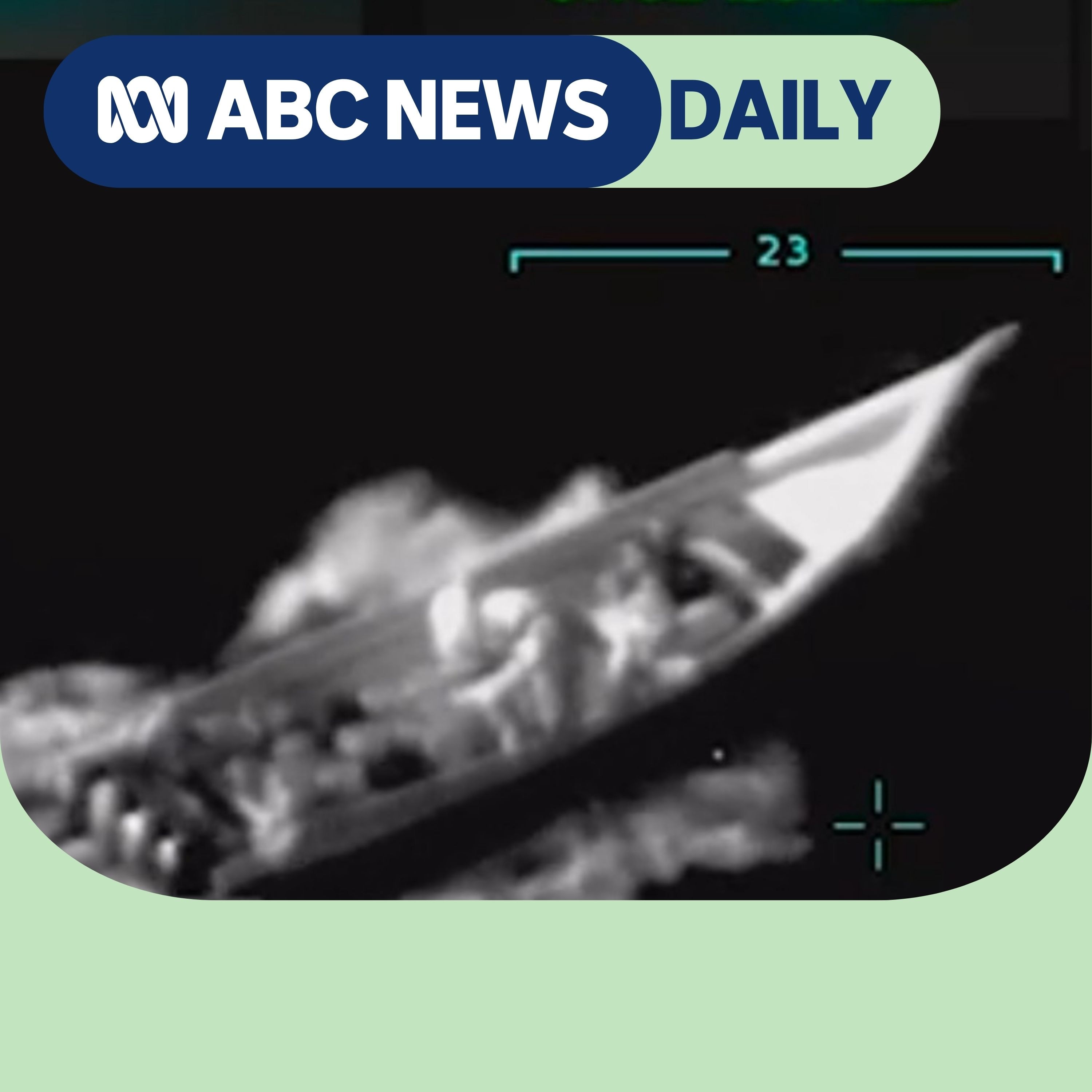
- The U.S. has carried out multiple naval strikes on boats in the Caribbean (first reported strike killed 11 people); footage shows vessels exploding and burning.
- The administration labels the targets “narco‑terrorists” and says the strikes are intended to stop drugs entering the U.S.
- Rachel Van Landingham argues this approach is legally and constitutionally problematic:
- Using the military to hunt and kill alleged criminals abroad resembles wartime targeting, not law enforcement.
- The President cannot unilaterally authorize an act of war against another state or a loosely defined “cartel” without Congress (constitutional war powers).
- International law limits use of force against another state or its nationals; claiming an armed conflict with cartels doesn’t automatically legalize lethal strikes.
- The term “narco‑terrorism” is being stretched to justify lethal force against non‑armed criminal traffickers.
- Evidence publicly provided for the strikes is limited; many strikes appear to have occurred when the people onboard were not posing an imminent threat.
- Domestic and international checks are limited:
- Courts are unlikely to block or meaningfully constrain presidential action in this area (issues of presidential immunity).
- The U.S. is not a party to the International Criminal Court, reducing international legal remedies.
- Policy critique: strikes focus on maritime targets but most illicit drugs enter the U.S. overland from Mexico (per DOJ), so this tactic does not address the largest supply routes.
- Broader point: using the military for policing and extrajudicial killings risks authoritarian precedent and international destabilization.
Notable quotes & insights
- From President Trump (as quoted in the episode): “We’re stopping drugs coming into America, if that’s okay.”
- Trump framed one strike as “an act of kindness” because drugs “are destroying American families.”
- Rachel Van Landingham: “Our armed forces are not law enforcement agencies. They are not empowered to hunt down suspected criminals and then kill them without trial.”
- Senator (cited by Van Landingham): “Let us ensure that this nation does not stumble into war by the reckless act of a single man.”
- Van Landingham on labeling: “Narco‑terrorism is a word that's being abused, a phrase that scares people.”
Topics discussed
- Recent U.S. naval strikes on suspected drug‑smuggling boats
- Legal status of using military force against smugglers/cartels
- Constitutional war powers (President vs Congress)
- International law governing use of force between states
- Differences between counter‑terrorism warfare and law enforcement
- Accountability limits (U.S. courts, ICC)
- Drug trafficking routes (Mexico vs Venezuela)
- Political and ethical implications of extrajudicial killings
- Policy alternatives (interdiction, prosecution, demand reduction)
Action items & recommendations
- For Congress:
- Exercise oversight and push back on unilateral military action that resembles declaring war without authorization.
- Clarify limits on use of U.S. military for law enforcement purposes.
- For the public:
- Put pressure on elected representatives to demand transparency, evidence and legal justification for strikes.
- For policymakers:
- Prioritize lawful interdiction, seizure and prosecution rather than lethal military strikes against suspected traffickers.
- Address domestic demand via healthcare/mental health policy and addiction treatment — reducing demand is a necessary part of reducing deaths from illicit drugs.
- For legal/foreign policy community:
- Reassert international law norms to prevent normalization of extrajudicial killings and erosion of rules governing use of force.
Bottom line
The strikes against boats alleged to be smuggling drugs from Venezuela raise major constitutional and international‑law questions. Experts warn that labeling traffickers “narco‑terrorists” to justify lethal military action stretches legal authority, risks authoritarian precedent, fails to target the main supply routes (overland from Mexico), and offers no durable fix to the underlying demand for drugs in the U.S. Congressional action and public pressure are presented as the most realistic check on this course.