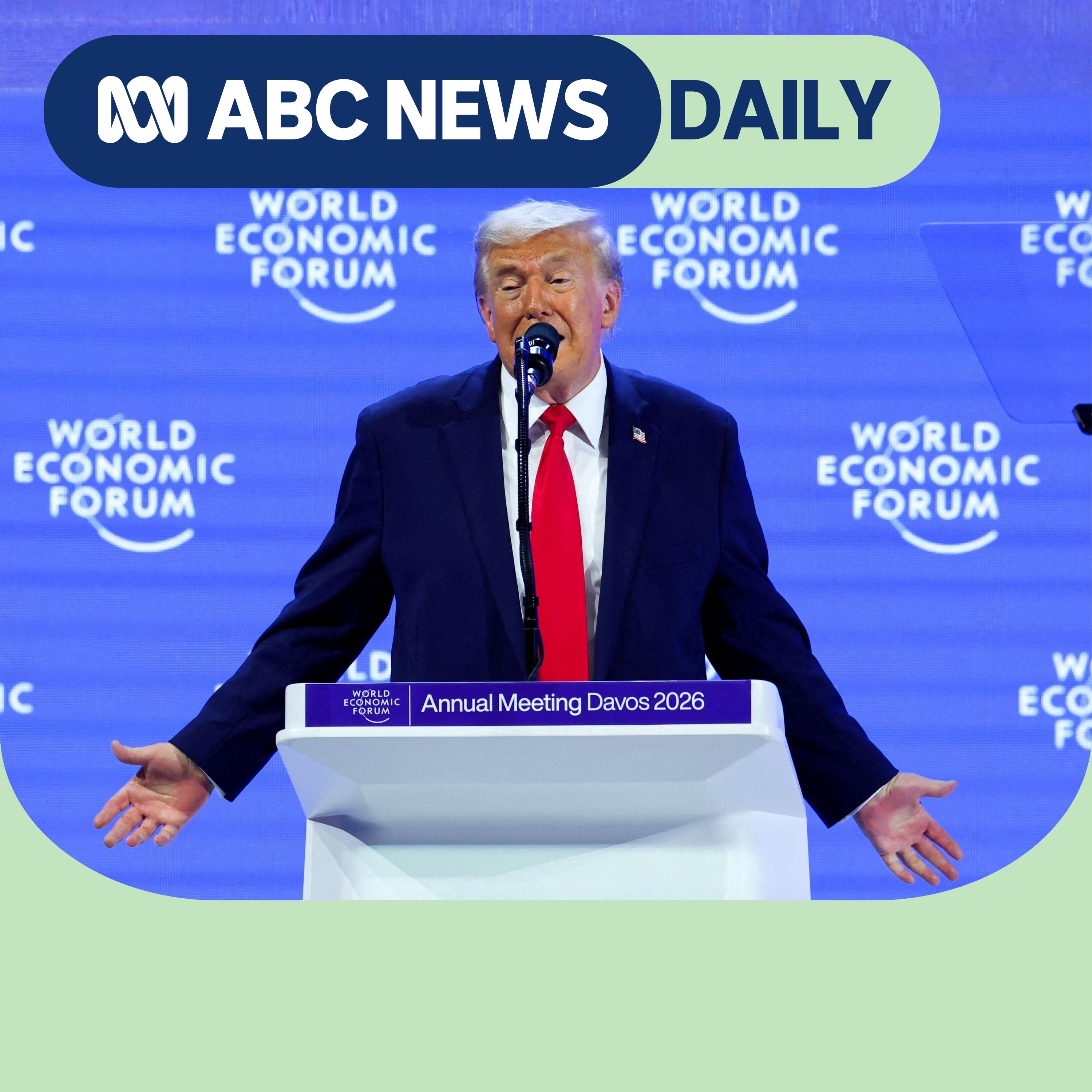
Overview of Trump’s bid to control the Western Hemisphere
This ABC News Daily episode (host Sam Hawley) features Monica Duffy‑Toft, Professor of International Politics at the Fletcher School, on how the Trump administration is attempting to reassert U.S. dominance in the Western Hemisphere. Using recent provocative moves — renaming geographic features, threatening territorial grabs (Greenland), targeting the Panama Canal, and coercive military actions in Latin America — the episode argues the administration is pursuing a deliberate, muscular foreign policy that aims to carve the world into regional spheres of influence centered on the U.S., China and Russia.
Key points and main takeaways
- The administration’s foreign policy is “muscular” and explicitly aims to reassert U.S. primacy in the Western Hemisphere (cited in the National Security Strategy 2025).
- Examples discussed in the episode (as presented by the show) include rhetorical renamings (e.g., Gulf of Mexico → “Gulf of America”), threats or proposals concerning Greenland and the Panama Canal, and direct coercive military actions in Venezuela.
- These moves reflect an effort to recreate hemispheric dominance (rebranded by Trump as the “Donro/Donroe Doctrine,” a revival of the Monroe Doctrine idea) and to limit Chinese and Russian influence in the Americas.
- Monica Duffy‑Toft argues the administration is testing this doctrine through forceful coercion (Venezuela cited as a test case) and expects domino effects (e.g., destabilizing Venezuela to pressure Cuba).
- Despite the rhetoric and actions, Duffy‑Toft identifies three strong reasons why a stable, three‑spheres global order cannot succeed today.
Why reimposing spheres of influence will not work (three reasons)
- Historical context is different
- The Yalta‑era creation of spheres arose from wartime exigency among leaders who feared another world war. Today’s situation lacks that unifying pressure and legitimacy.
- Leadership and motivations
- Current leaders (Trump, Xi, Putin) admire centralized, autocratic power and favor coercive tools. Their style fuels aggressive competition but doesn’t replicate the wartime consensus that once stabilized spheres.
- Economic and technological interdependence
- The modern world is tightly connected by trade, finance, and technology; control of territory alone cannot guarantee influence or stability. Geography‑only approaches are therefore outdated.
Risks and implications highlighted
- Erosion of the rules‑based international order and a tilt toward “might makes right,” echoing warnings from global leaders (e.g., Macron, referenced via Davos remarks).
- Increased risk of miscalculation, escalation and “playing with fire,” including potential nuclear saber‑rattling or broader great‑power clashes.
- Reduced space for middle and small powers to maneuver; they will likely be forced to hedge between major powers (Australia cited as an example that must balance U.S. security ties with deep economic links to China).
- Long‑term distrust: even if current policy shifts later, the broken trust may outlast any single administration.
Notable quotes and succinct insights
- “They’ve demonstrated … the willingness to use force.” — on Venezuela as a test of doctrine.
- “It’s a new form of imperialism where you sort of abrogate the sovereignty.” — distinguishing spheres of influence from classical imperial control.
- “The safeguards are coming off. And that’s not the way to conduct statesmanship.” — on the danger of rapid policy unravelling.
What to watch / action items for policymakers and observers
- Monitor further U.S. coercive actions in Latin America and any follow‑on attempts to control resources (e.g., Venezuelan oil) and thwart allies of adversary states (e.g., Cuba).
- Watch reactions from China and Russia in the Western Hemisphere and adjacent regions (diplomatic, economic, or covert moves).
- Track how middle powers (Australia, Canada, Brazil, Mexico) adjust policy — hedging strategies, alignment shifts, and regional diplomacy.
- Observe whether the National Security Strategy’s emphasis on hemispheric dominance becomes institutionalized or reverses under domestic or international pushback.
Guest and production credits
- Guest: Monica Duffy‑Toft, Professor of International Politics; Director, Centre for Strategic Studies, Fletcher School, Tufts University.
- Host/Producer: Sam Hawley; producers Sydney Peat and Sam Dunn; audio production by Cinnamon Nippard; supervising producer David Cody.
- Program: ABC News Daily (ABC Listen).